Egypt Transport: Domestic Flights, the Sleeper Train, and Road Travel
How to get around Egypt: domestic flights, the Cairo–Luxor–Aswan sleeper train, road convoys to Abu Simbel, and why Uber in Cairo is unreliable.
Egypt Domestic Transport Guide: What Actually Works Between Cairo, Luxor, Aswan, and the Red Sea
Egypt's transport map suggests a connected country. It is not. You are looking at three separate networks that do not touch: domestic flights between the Nile Valley cities, a single overnight sleeper train on the Cairo, Luxor, Aswan corridor, and a road system that handles everything else with no coordination. You cannot get off a plane at Cairo International and walk to a train. No airport in the country has a functioning rail link. Every mode requires its own booking system, its own currency, and its own arrival plan. The map oversells connectivity by about 900 kilometres.
The backbone for long distance is domestic flights. EgyptAir, Air Cairo, and Nile Air operate the Cairo, Luxor, Cairo, Aswan, Cairo, Hurghada, and Cairo, Sharm el-Sheikh routes. Book them early. Flights to Abu Simbel from Aswan depart twice daily most days, carry 50 passengers each, and sell out three to four weeks ahead in peak season. The flight covers in 45 minutes what the road convoy does in three hours, and the convoy departs at 4am.
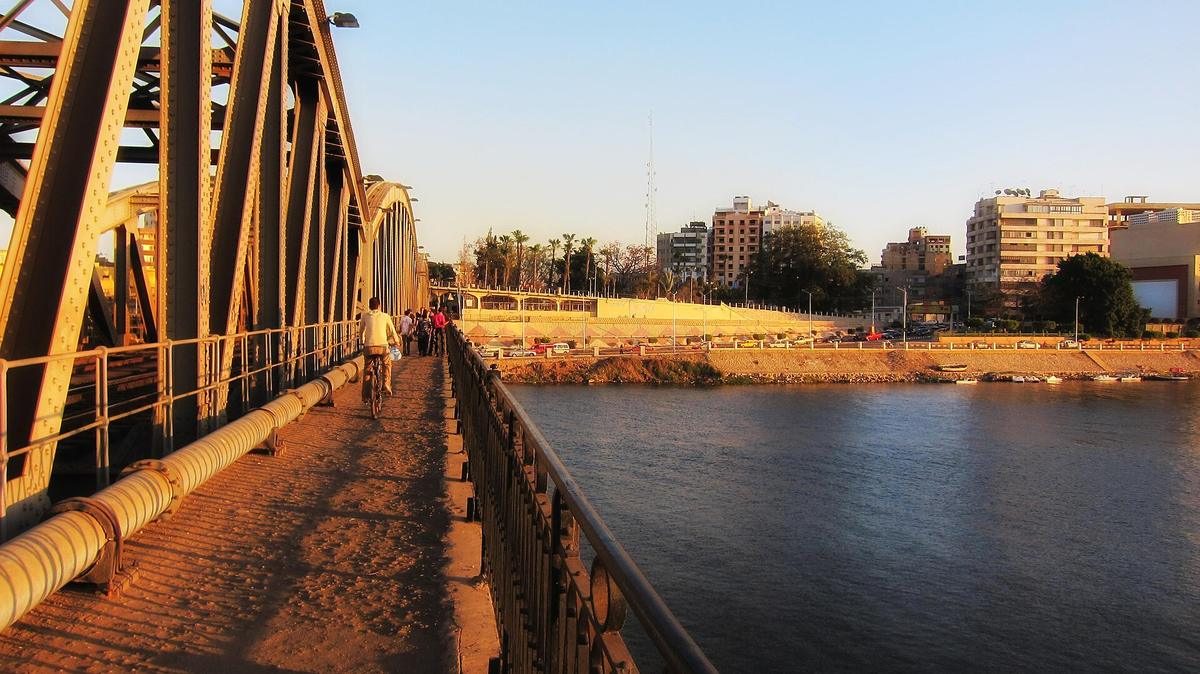

The Sleeper Train: a 10-Hour Commitment Paid in Foreign Currency
Booking And Payment
Watania Sleeping Trains run one overnight service each way between Cairo and Luxor, then Cairo to Aswan, every night. The trip takes 10 hours. A double cabin costs USD 110 to USD 130 per person. You cannot buy this ticket with Egyptian pounds. That catches budget travellers who arrive with local cash only. Payment requires USD, EUR, or a foreign-issued credit card. Book through the Watania website or at the Ramses Station ticket office in Cairo. There is no e-ticket; you collect a paper ticket at the office.
On Board And The Day-Train Alternative
The cabin includes dinner and breakfast, a washbasin, and a bunk that converts to a seat during the day. The toilet is at the end of the carriage and the shower trickles cold water. Day trains operated by Egyptian National Railways (ENR) cover the same corridor in AC1 (first class air-conditioned) and AC2 (second class air-conditioned). They depart in the morning and arrive in the afternoon, losing a day of sightseeing. ENR tickets are dated for a specific train and time. Buy them at station counters or through the ENR mobile app, but verify whether the app accepts foreign payment cards before relying on it.
Road Travel: Buses, Microbuses, and the 4am Police Convoy
Intercity Buses And Microbuses
Intercity buses fill the gap the train does not reach. Go Bus, Blue Bus, Super Jet, and Upper Egypt Bus Company run air-conditioned coaches between Cairo and Hurghada (5-6 hours), Cairo and Sharm el-Sheikh (6-7 hours via the Ahmed Hamdi Tunnel), and Luxor to Hurghada (4-5 hours through desert checkpoints). Book online or at station counters. The buses have toilets, stop once for food, and keep a schedule. Microbuses do not. Microbuses leave from informal stations when the van is full, pay the driver in cash, and stop anywhere. They cost less than half the bus fare but carry no timetable and no air conditioning. Shared taxis operate fixed intercity routes like Cairo to Alexandria, leaving when full, paid in cash to the driver.
The Abu Simbel Convoy
The road trip to Abu Simbel is a police convoy. It departs Aswan at 4am from the police checkpoint north of the city, drives 280 kilometres south through the desert, arrives at 7am, and returns at 11am. You sit in your own vehicle or a tour minibus. The convoy exists because the road passes near the Sudanese border and the security situation requires it. The flight is a better use of your morning.
Uber In Cairo: Cancel And Cash
Uber operates in Cairo and Alexandria but expect your driver to cancel for short trips. A ride from Downtown to Zamalek, under 5 kilometres, gets cancelled about half the time. The driver then calls you and demands a higher cash fare. Accept it or wait for the next cancellation. The alternative is a pre-arranged private car from a local company like Shefay or Careem, booked through the app with cash payment to the driver. The official airport taxi from Cairo International to Downtown or Zamalek costs 400 to 600 EGP and takes 45 to 90 minutes. Do not get in an unmarked car in the arrivals hall.
Nile Transport: Feluccas For Short Trips Only
There are no scheduled passenger ferries between Luxor and Aswan. A few feluccas offer day trips on the river, hired at the dock for cash, no fixed schedule. The standard way to cover the Nile between the two cities is a multi-day cruise boat or the sleeper train. Do not plan to travel by water independently unless you have a week and no deadline.

What Goes Wrong Most Often
Time And Distance
Travellers consistently underestimate how long road journeys take. The Luxor, Hurghada route is 280 kilometres on the road map but takes 4 to 5 hours due to police checkpoints and speed limits. Cairo to Alexandria by road is 220 kilometres and often 3 hours plus with traffic at both ends. The Sharm el-Sheikh to St. Catherine route is 200 kilometres and 3 hours or more on mountain roads. Distances that look short on a map are not. The common mistake is trying to combine Cairo, a Nile cruise segment, and a Red Sea resort in a single week. Domestic logistics consume entire days. The sleeper train alone is a 10-hour overnight commitment.
Seasonal Disruptions
The khamsin wind between March and May can suspend flights and close roads for one to three days. Ramadan reduces daytime bus frequency, delays shared taxis waiting for passengers, and turns post-sunset traffic lethal. Eid al-Adha sells out trains and buses days in advance.
Who This Suits
This set of options suits history obsessives who plan each move, liveaboard divers who fly directly to Hurghada or Sharm el-Sheikh, and desert adventurers on multi-day 4x4 expeditions. It does not suit anyone seeking a resort-only beach holiday with no friction, solo women unprepared for constant male attention, or travellers expecting orderly queues and Western hygiene standards in public toilets. The system works if you accept its limits. The moment you pretend it is a connected network, it fails.
Common Questions
Can I buy a sleeper train ticket with Egyptian pounds?
No. Watania Sleeping Trains require payment in USD, EUR, or a foreign-issued credit card. Egyptian pounds are not accepted. This is a hard rule. Budget travellers who arrive with only local cash will not board.
Is there a train from Cairo International Airport to the city?
No functioning train connects any Egyptian airport to the city. You must take an official airport taxi (400-600 EGP) or a pre-booked transfer. The metro does not reach the airport. This will not change in the near term.
How far ahead should I book a domestic flight to Abu Simbel?
Book 3 to 4 weeks ahead during October to February. Flights from Aswan to Abu Simbel carry 50 passengers and operate at most twice daily. They sell out. The road convoy departs at 4am and takes 3 hours each way.
Does Uber work reliably in Cairo?
Uber operates in Cairo and Alexandria, but drivers cancel short trips under 5 kilometres about half the time. They will then call and ask for a higher cash fare. For short rides, accept the cash demand or switch to a pre-arranged private car.
Read next
-
 Staying Connected in Egypt With eSIM, Local SIM or Hotel Wi-Fi
Egypt's mobile network works well but carries two traps: a 90-day IMEI tax that blocks foreign phones and a WhatsApp calling ban on mobile data.
Staying Connected in Egypt With eSIM, Local SIM or Hotel Wi-Fi
Egypt's mobile network works well but carries two traps: a 90-day IMEI tax that blocks foreign phones and a WhatsApp calling ban on mobile data.
-
Best Time to Visit Egypt by Season, Heat, and Crowds
When to visit Egypt: October to February for Nile Valley temples, Ramadan restrictions to avoid, summer heat realities, and the Khamsin sandstorm season.
-
 Egypt Visa Rules, Who Needs One, E-Visa Steps, and Airport Arrival
Who needs a visa for Egypt, how the e-visa and visa-on-arrival processes work at Cairo airport, and what the Sinai-only stamp covers.
Egypt Visa Rules, Who Needs One, E-Visa Steps, and Airport Arrival
Who needs a visa for Egypt, how the e-visa and visa-on-arrival processes work at Cairo airport, and what the Sinai-only stamp covers.
-
 Money in Egypt, Egyptian Pounds, Cards, and the Cash Economy
How money works in Egypt: the Egyptian pound cash economy, where cards are accepted, the sleeper train foreign-currency rule, and baksheesh tipping norms.
Money in Egypt, Egyptian Pounds, Cards, and the Cash Economy
How money works in Egypt: the Egyptian pound cash economy, where cards are accepted, the sleeper train foreign-currency rule, and baksheesh tipping norms.
-
 Egypt Safety Advice, Reading Travel Advisories Without the Alarm
How to read Egypt travel advisories sensibly: Nile Valley vs Sinai risk profiles, solo female travel realities, road safety in Cairo, and security checkpoints.
Egypt Safety Advice, Reading Travel Advisories Without the Alarm
How to read Egypt travel advisories sensibly: Nile Valley vs Sinai risk profiles, solo female travel realities, road safety in Cairo, and security checkpoints.
-
 What a Trip to Egypt Actually Costs and Where the Money Goes
Egypt splits your spending into two layers: hard-currency costs you cannot avoid and Egyptian-pound costs you negotiate daily. Confuse them and your budget breaks.
What a Trip to Egypt Actually Costs and Where the Money Goes
Egypt splits your spending into two layers: hard-currency costs you cannot avoid and Egyptian-pound costs you negotiate daily. Confuse them and your budget breaks.
-
 How to Budget a Trip Based on Purchasing Power, Not Just Exchange Rates
Exchange rates tell only half the story. See how purchasing power shapes your real travel budget across Southeast Asia, Eastern Europe, and Latin America.
How to Budget a Trip Based on Purchasing Power, Not Just Exchange Rates
Exchange rates tell only half the story. See how purchasing power shapes your real travel budget across Southeast Asia, Eastern Europe, and Latin America.
-
 A Ground-Level Logistics Guide to Independent Travel in China
First-time independent travel in China: what you need to know about visas, rail booking, eSIMs, mobile payments, and power adapters.
A Ground-Level Logistics Guide to Independent Travel in China
First-time independent travel in China: what you need to know about visas, rail booking, eSIMs, mobile payments, and power adapters.
-
 How Solo Travelers Stay Ahead of Flight Delays and Cancellations
How solo travelers can track inbound aircraft, claim rebooking rights, and adjust ground transport when flights go wrong — step by step.
How Solo Travelers Stay Ahead of Flight Delays and Cancellations
How solo travelers can track inbound aircraft, claim rebooking rights, and adjust ground transport when flights go wrong — step by step.