Treating the Overseas Highway as a Journey, Not a Transit
The Overseas Highway links islands with distinct identities. Learn how to break the Miami-to-Key-West drive into a route that stops at Key Largo, Islamorada

Treating the Overseas Highway as a Journey, Not a Transit
Most visitors treat the 113-mile island-hopping route from Key Largo to Key West as a single four-hour transit. That is a mistake. The road crosses 42 bridges. It passes through five distinct island communities, each with its own character, its own industry, and its own reason to stop. Drive straight through to Key West and you arrive having missed the point. The route is the destination itself. The practical shift is simple: break the drive into three segments, with an overnight stop in the Middle Keys. You transform the trip from a transit into something the Keys actually sell.
The Florida Keys Island Hopping Route: Three Segments, Not One
The standard shape of a Keys island-hopping route is simple once you understand what each island cluster does. Divide the 113 miles into three segments: Key Largo to Islamorada (roughly 20 miles), Islamorada to Marathon (roughly 18 miles), and Marathon to Key West (roughly 45 miles). Each segment has a natural stopping point. Each cluster has a different kind of water access, a different crowd, and a different price band. The mistake travelers make is trying to do it all as a single day trip from Miami. Budget at least one overnight in the Middle Keys. Marathon or Big Pine Key breaks the drive properly.
Key Largo to Key West Road Trip: Where to Start and What to Skip
A Key Largo to Key West road trip begins in Key Largo at Mile Marker 106, not in Florida City. The first 20 miles of US 1 from Florida City cross mostly undeveloped islands and offer little reason to stop. Spend that time instead. In Key Largo, the essential stop is John Pennekamp Coral Reef State Park at Mile Marker 102.5. This is where most visitors make their first mistake: they book a snorkel tour from the main concession. Book online three days ahead, not at the dock. The park also rents kayaks, which give you access to mangrove trails the powerboats skip. Skip the glass-bottom boat tour; you see less than you will snorkeling at the reef.
Overseas Highway Stops Guide: What to Do in Each Island Cluster
Upper Keys: Wildlife and Water
A useful stops guide tells you what to skip as well as what to do. At Mile Marker 93.6 in Tavernier, the Florida Keys Wild Bird Rehabilitation Center is a worthwhile 30-minute stop and free to visit. At Mile Marker 80.5, Robbie's of Islamorada charges a small fee for a bucket of fish to feed tarpon from a floating dock; the line at weekends runs 45 minutes, so arrive before 10:00 or skip it entirely. Instead, at Mile Marker 77, the Theater of the Sea offers a 90-minute marine mammal encounter, but the Dolphin Research Center at Mile Marker 59 on Grassy Key is better for families because the dolphin interactions are shorter and less expensive.
Middle Keys: Turtles and Sand
At Mile Marker 48.5 in Marathon, The Turtle Hospital runs 30-minute tours. Book the 10:00 slot; the 14:00 tour often sells out by 11:00. At Mile Marker 37, Bahia Honda State Park charges a per-vehicle entry fee and has the only natural sand beach on the Lower Keys. Arrive by 09:00 or the parking lot fills. The old railroad bridge at Bahia Honda is the best sunset spot on the entire route, but the gate closes at sunset, so you cannot linger past it.
Florida Keys Islands to Visit: the Character of Each Cluster
The islands fall into four distinct groups. Treating them as interchangeable is the most common planning error. Key Largo is dominated by dive culture. Islamorada is fishing. Marathon is family-oriented beaches and budget chain hotels. Big Pine Key is wildlife refuge. The character of each cluster dictates the kind of stop you make.
Key Largo and Islamorada
In Key Largo, the dive shops at John Pennekamp rent full gear and run two-tank dives; non-divers get little out of the area beyond the park's visitor center. In Islamorada, the fishing charter docks at Mile Marker 82 and 77 run half-day trips for a boat of up to six people; prices are set by the captain and vary by season, so call ahead.
Marathon and Big Pine Key
In Marathon, the beaches at Sombrero Beach and Coco Plum Beach are the only free public sand beaches on the east side of US 1; the water is calm, but there is no shade. Bring an umbrella or leave by 11:00. On Big Pine Key, the National Key Deer Refuge has a 0.5-mile boardwalk trail behind the visitor center; the deer are most active at dawn and dusk. The speed limit on Big Pine Key drops to 35 mph at night. Hitting a Key deer carries a fine of up to $2,500 under federal law.
Islamorada Marathon Key West Drive: the Practical Route
The drive segment from Islamorada through Marathon to Key West is the most scenic section of the route because it crosses the Seven Mile Bridge at Mile Marker 47, which runs 6.79 miles over open water. The bridge has no shoulder for most of its length, and the speed limit is 45 mph, not 55 mph as some drivers expect. The old Seven Mile Bridge, just east of the current span, is a fishing pier repurposed from the original 1912 Florida East Coast Railway. Walkers and cyclists can access it from the parking pull-off at Mile Marker 47.5; the walk to the first fishing platform is 0.3 miles and takes about 10 minutes. Do not attempt to walk the full bridge. The 2.2-mile section that remains open ends at Pigeon Key, a five-acre island with a historic railroad workers village that charges admission. Instead, the better alternative is to pull off at the Long Key Bridge fishing pier at Mile Marker 67. It is free to fish from, and the sunrise view east over the Atlantic is the best on the route. From Long Key to Marathon, cell coverage drops to one bar on the Verizon network and zero on T-Mobile; download the offline map for Monroe County before you leave Islamorada.
Why Key West is the Endpoint, Not the Whole Story
Key West is not the reason to drive the route. It is the endpoint of a road that earns its meaning from the islands you cross to reach it. Arrive in Key West after a four-hour drive from Miami and you have seen four hours of bridges and water. You have gained nothing you could not get from a single photograph. Arrive after two days of stopping, and you understand that the Keys are not a chain of identical beach towns. Key West itself is a walkable island city of 5.6 square miles with a population of roughly 26,000. It feels more Caribbean than mainland Florida. Its historic core is small and crowded. Its beaches are rocky or man-made. The only natural sand beach worth visiting is at Fort Zachary Taylor Historic State Park, which charges a per-person entry fee and requires water shoes. The point of the route is that Key West is the final island in a sequence, not the only one. The failure case is arriving after a long drive, parking a rental car you cannot park easily, and spending three days on Duval Street without ever snorkeling, fishing, or kayaking anywhere else.

What to Do in Key West After the Drive
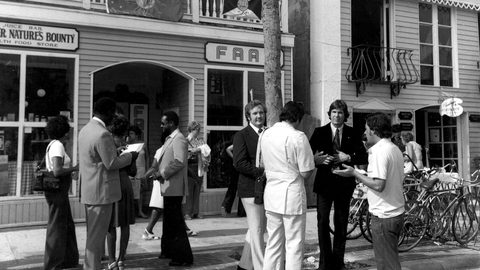
Once you park your car, ideally at the Old Town Garage on Grinnell Street, which charges by the hour and fills by 10:00, the island operates on foot and bicycle. The Duval Loop free bus circles the historic district from 06:00 to 22:00 and hits 18 stops, including the Southernmost Point Buoy at Whitehead and South Streets, where the queue for a photograph can exceed 45 minutes between 10:00 and 15:00. Skip the buoy photograph. Walk the 0.3 miles to the Key West Lighthouse instead; the climb of 88 steps gives you an elevated view of the whole island without the line.
Beat the Cruise Ship Crowds
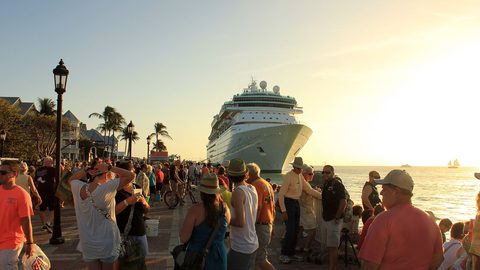
The Ernest Hemingway Home and Museum at 907 Whitehead Street charges admission and is crowded from 09:30 onward; book the 08:30 opening slot online to see the polydactyl cats before the cruise ship passengers arrive at 10:00. When multiple ships dock, Duval Street and Mallory Square become impassable from roughly 10:00 to 16:00. Plan your Old Town visits for before 09:00 or after 17:00.
The Local Friction Points You Need to Budget for
Accommodation in Key West is expensive. Modest guesthouses in Old Town run in the hundreds per night in peak season from January through March. Book six months ahead for those months. The crowds from cruise ships, the smell of sargassum seaweed on south-facing beaches in summer, and the noise from free-ranging roosters crowing at all hours in Bahama Village and The Meadows are real frictions. The only beach worth a towel is Fort Zachary Taylor, where the sand is mostly crushed coral and the water entry is rocky.
Timing Your Visit
The peak season for visitors is December through April, when average high temperatures are 75°F to 79°F and humidity is low. The avoid window is October during Fantasy Fest, when hotel rates can triple and road closures block access to Duval Street. Hurricane season runs from June 1 to November 30, and US 1 is the only evacuation route. If a storm approaches, leave early. The road closes before the storm arrives.
How to Eat Without Wasting Time on the Wrong Dish
The food you should eat in the Florida Keys depends on which island you are on, not on which restaurant has the best Yelp score. In Key Largo, eat the stone crab claws at a dockside shack if you are there between October and May. In Islamorada, the hogfish sandwich at a waterfront bar is the signature dish. In Marathon, the pink shrimp boiled and served cold at a takeaway window is what locals eat. In Key West, the Cuban mix sandwich from a corner bodega is more authentic than the version at a sit-down restaurant. The key lime pie at Blue Heaven on 729 Thomas Street has a meringue that towers six inches; the pie on a stick dipped in chocolate at Kermit's Key West Key Lime Shoppe at 200 Elizabeth Street is better for eating while walking. The café con leche from Cuban Coffee Queen is the best value drink on the island. The Hogfish Bar and Grill on Stock Island at 6810 Front Street is a 15-minute drive from Old Town and serves the flaky, locally speared hogfish sandwich that is the signature dish of the Lower Keys; it closes at 21:00, so plan a late lunch rather than dinner.
Day Trips from Key West That Actually Use the Route
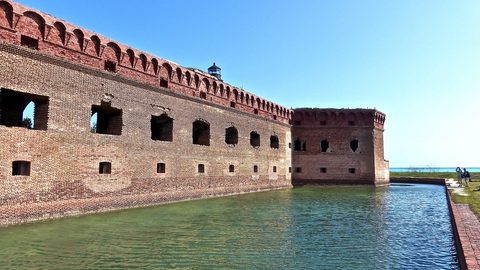
The day trips from Key West that make sense for a traveler who has just completed the route are the ones you cannot do from the road itself. Dry Tortugas National Park, 70 miles west of Key West, requires a ferry or seaplane. The Yankee Freedom III ferry takes 2.25 hours each way; book at least three weeks ahead during peak season. The Key West Seaplane Adventures flight takes 40 minutes each way; book two weeks ahead. The snorkel at Dry Tortugas is over the only pristine coral reef within a day trip of Key West, and the fort, Fort Jefferson, is the largest brick masonry structure in the Americas.
Closer Water Trips
Backcountry kayaking in the mangroves departs from Stock Island or Geiger Key, a 15- to 20-minute drive from Old Town; a guided tour runs roughly three hours. Sandbar and dolphin-watching cruises depart from the Historic Seaport at the Key West Bight Marina; half-day trips require no advance booking in low season, but in January through March, book three days ahead. Check current rates with the operator directly before you commit.
Read next
-
 Key West Hotels, What the Price Bands Actually Get You
Key West hotel prices swing wildly by season, and what you get at each band varies more in atmosphere and location than in square footage or thread count.
Key West Hotels, What the Price Bands Actually Get You
Key West hotel prices swing wildly by season, and what you get at each band varies more in atmosphere and location than in square footage or thread count.
-
 Where to Stay in Key West, A District-by-District Comparison
Choosing where to stay in Key West means deciding what you are willing to trade away: quiet for location, character for a parking spot, or your budget for both.
Where to Stay in Key West, A District-by-District Comparison
Choosing where to stay in Key West means deciding what you are willing to trade away: quiet for location, character for a parking spot, or your budget for both.
-
 Flying Into Key West and Getting Out of the Airport
You step off the plane at Key West International Airport and the first thing you notice is the open air.
Flying Into Key West and Getting Out of the Airport
You step off the plane at Key West International Airport and the first thing you notice is the open air.
-
 What to Do in Key West, Ordered by Whether It Is Worth the Time
Some Key West landmarks reward the time and money they demand; others leave you standing in a queue wondering why you bothered.
What to Do in Key West, Ordered by Whether It Is Worth the Time
Some Key West landmarks reward the time and money they demand; others leave you standing in a queue wondering why you bothered.
-
 When to Visit Key West and What Each Season Does to the Island
Key West shifts dramatically with the seasons: dry winter crowds, sweltering summer storms, and an October street party that takes over the entire Old Town.
When to Visit Key West and What Each Season Does to the Island
Key West shifts dramatically with the seasons: dry winter crowds, sweltering summer storms, and an October street party that takes over the entire Old Town.
-
 Getting Around Key West Without Wasting Half Your Trip
A rental car in Key West is a liability unless your accommodation includes a dedicated spot; walking, biking, and the free Duval Loop bus handle the rest.
Getting Around Key West Without Wasting Half Your Trip
A rental car in Key West is a liability unless your accommodation includes a dedicated spot; walking, biking, and the free Duval Loop bus handle the rest.
-
 Ernest Hemingway Home and Museum
The house at 907 Whitehead Street gives you two distinct waits: one to buy your ticket and another to start your guided tour.
Ernest Hemingway Home and Museum
The house at 907 Whitehead Street gives you two distinct waits: one to buy your ticket and another to start your guided tour.
-
 Dry Tortugas National Park
A Dry Tortugas day trip from Key West takes a full day and requires booking weeks ahead.
Dry Tortugas National Park
A Dry Tortugas day trip from Key West takes a full day and requires booking weeks ahead.
-
 Mallory Square Sunset Celebration
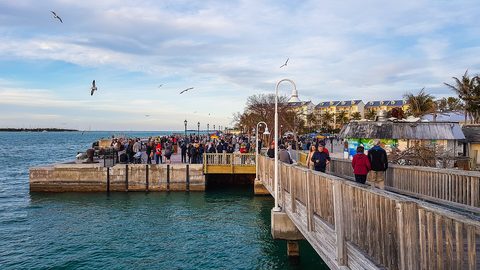
The Mallory Square Sunset Celebration is a free nightly street festival in Key West.
Mallory Square Sunset Celebration
The Mallory Square Sunset Celebration is a free nightly street festival in Key West.