Your Poland Train Travel Guide Beyond the Map and Timetable
Polish trains connect the country well, but operator-specific tickets and mandatory seat reservations on EIP services trip up the unprepared.
Poland by Train, Bus, and the KOLEO App
Buy a ticket for the wrong train in Poland and you lose your money. The conductor will not refund it. The rail network is the backbone of long distance travel in this country, but it is split by operator. A PKP Intercity ticket is not valid on a Polregio train even if both run the same route. Understanding that division is the first thing to get right. Buy your ticket through the KOLEO app instead of a station counter and you remove most of the confusion at the start.
PKP Intercity vs Polregio: the Ticket Trap
PKP Intercity runs the long distance services: Express InterCity Premium (EIP), Express InterCity (EIC), InterCity (IC), and Twoje Linie Kolejowe (TLK). Polregio handles the stopping trains that link towns and suburbs. A ticket purchased for a PKP Intercity departure is valid only on that train at that time. It will not get you onto a Polregio service, even on the identical stretch of track between Kraków and Zakopane.
What This Means for Your Itinerary
Your 10:00 EIP from Warsaw to Gdańsk is cancelled. The next PKP Intercity departure is in two hours. Do not board the Polregio train waiting on the adjacent platform. Your ticket does not transfer. You either buy a new ticket for the slower service (cheap, but a wasted cost) or wait. The KOLEO app makes this clearer because it shows only the trains your ticket covers. Station display boards do not.
Which Operator to Choose
For long distance routes, take PKP Intercity. The trains are faster, have air conditioning, and offer a restaurant car on EIP and EIC services. Polregio is for short hops between towns, not for crossing the country. A Polregio ticket from Kraków to Zakopane costs about 30 PLN and takes roughly three hours. The same route on a PKP Intercity TLK service costs around 40 PLN and takes two hours. The price gap is small. The time difference is not.

KOLEO App Poland: Essential Purchase Tool
The KOLEO app is the single ticket platform that covers both PKP Intercity and Polregio, plus all regional operators: Koleje Dolnośląskie, Koleje Małopolskie, and SKM Trójmiasto. It aggregates every departure on the network and sells the correct ticket for the specific operator. You cannot accidentally buy a Polregio ticket for a train run by PKP Intercity. The app stores your ticket as a QR code, so you skip validating paper tickets at a platform machine.
Payment and Language
KOLEO accepts Visa, Mastercard, and Google Pay. The interface has an English language option. For passengers without a Polish bank account, the app charges a small transaction fee (roughly 2 PLN per ticket). Download it before you arrive; the free public Wi-Fi at Warsaw Chopin Airport is enough for the installation.
What the App Does Not Do
KOLEO does not sell seat reservations for regional trains because Polregio and other regional operators do not require them. It does not sell FlixBus or Sindbad bus tickets. For those, use the carrier's own app or website.
EIP Seat Reservation Poland: Mandatory and Included
On EIP trains (the Alstom Pendolino ED250 rolling stock), a seat reservation is mandatory and included in the ticket price. You cannot board an EIP service without a reserved seat, even if the train is nearly empty. The reservation is linked to a specific carriage and seat number, printed on your ticket or displayed in the KOLEO app.
EIC, IC, and TLK Reservations
For EIC, IC, and TLK categories, seat reservations are also mandatory. They may be sold separately or included depending on the fare class. When buying through KOLEO, the app adds the reservation automatically. If you buy at a station counter for an IC or TLK service, confirm the reservation is attached. Boarding without one risks a surcharge from the conductor, around 20 PLN on top of the ticket cost.
Pendolino Speed Reality
Maximum operating speed for EIP Pendolino trains is 200 km/h. Poland operates zero kilometres of high speed rail lines as of 2026; the first sections are under construction. The Pendolino runs on upgraded conventional track. Warsaw to Kraków takes about two and a half hours, not the two hours a straight map distance suggests. Warsaw to Gdańsk runs around two hours 45 minutes. These are fast journeys by Polish standards but not speed-rail fast by European comparison.
Real Travel Times Between Major City Pairs
The map oversells speed. Poland's rail corridors follow historical alignments with sharp curves and frequent stops. Below are actual journey times from the 2026 timetable, not straight line distances.
Warsaw to Kraków: 2 hours 30 minutes on EIP, 3 hours 30 minutes on IC. Warsaw to Gdańsk: 2 hours 45 minutes on EIP, 4 hours on TLK. Kraków to Wrocław: 2 hours 15 minutes on EIP, 3 hours 15 minutes on IC. Gdańsk to Kraków: 5 hours 30 minutes on EIP, 7 hours on IC. This last one is the tripwire. The rail route curves around central Poland and the EIP takes over five hours. If you are trying to do Gdańsk, Warsaw, and Kraków in seven days, you spend roughly half your trip on trains.
Road Travel Times
Driving does not always beat rail. The motorway network totals approximately 1,850 km (2025 data from GDDKiA) and the expressway network adds approximately 3,200 km, but these are concentrated in a corridor connecting Warsaw, Poznań, Wrocław, and Katowice. The A1 motorway from Gdańsk to Toruń is tolled (cash, card, or electronic device at toll plazas). East west routes, such as Warsaw to Białowieża, are single carriageway roads with 90 km/h speed limits outside built up areas. A drive from Przemyśl to Sanok, only 70 km on the map, takes 1.5 to 2 hours on winding Carpathian roads.
Poland Intercity Buses: Useful Fallback
FlixBus and Sindbad cover routes where trains are infrequent or indirect. East west connections are the prime example: Warsaw to Białystok has a direct train every two hours, but Lublin to Rzeszów requires a change in Warsaw if you take rail, adding three hours. A direct FlixBus on that route runs in about two hours.
When to Choose Bus Over Train
Take the bus for cross country routes that do not follow the Warsaw hub axis, for mountain routes where rail is slow, and as a fallback when the last train of the day has departed. Bus tickets are dated for a specific departure. Buy through the carrier's app or from the driver (subject to availability). Long distance coaches have less legroom than trains and no toilet on all vehicles, but they serve towns the electrified 3 kV DC overhead rail network cannot reach.
Local PKS Buses
For rural routes, local PKS carriers fill the gaps. These are cash only in many cases. They depart once or twice a day. Schedules are posted at the bus station rather than online. Use Google Translate camera mode to read the printed timetable.
Paper Ticket Validation on Local Trams and Buses
Local transit in Kraków, Warsaw, Gdańsk, and Wrocław uses a system that catches visitors daily. Stamp paper tickets in the onboard validator the moment you board. The validator is a yellow or orange box near the door. Insert the ticket; it prints a timestamp. Failure to validate means a fine of roughly 200 PLN from plain clothes inspectors who board at random stops. This applies even if you bought the ticket from a machine on the platform two minutes earlier.
Contactless Payment
Some networks, including Warsaw and Tricity, accept contactless card or phone payment on validators. Tap your card or phone on the reader. It registers as a validated single ride ticket and avoids the validation problem entirely. The system is not universal. Kraków's trams still require a paper ticket or a Jakdojade app ticket purchased with a QR code.
Regional Train Validation
On Polregio and other regional operators, a paper ticket bought at a station without a ticket machine (these exist in smaller towns) must be validated in a platform validator before boarding. KOLEO app tickets and tickets bought at staffed counters for a specific timed service do not require validation. The rule changes by operator. Confirm with station staff or the KOLEO app before the train arrives.

Driving in Poland
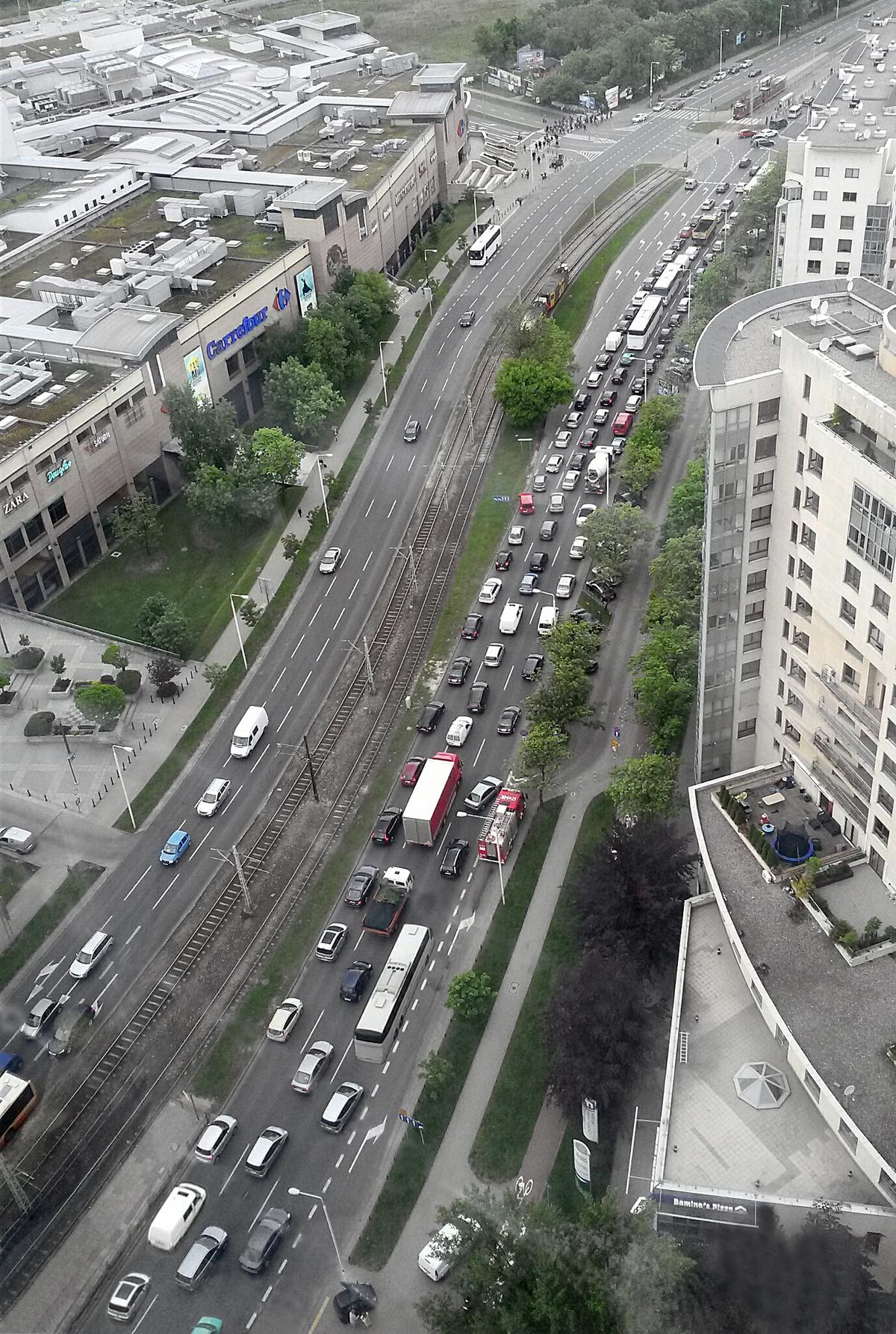
Rent a car for the lake district and the eastern wild edge, where trains are sparse. Speed limits: 140 km/h on motorways, 120 km/h on expressways, 100 km/h on dual carriageways outside built up areas, 90 km/h on single carriageways outside built up areas, and 50 km/h in built up areas (60 km/h between 23:00 and 05:00).
Tolls and Insurance
Passenger cars pay tolls only on concession managed sections: A1 Gdańsk to Toruń, A2 Konin to Stryków, and A4 Katowice to Kraków. Pay at toll plazas by cash or card. The blood alcohol limit is 0.2‰ (0.02%), effectively zero tolerance. EU and EEA driving licences are valid; non EU licences require an International Driving Permit unless issued under the 1968 Vienna Convention with an official Polish translation.
Winter Driving
December through February brings ice and snow cover. Mountain passes in the Tatras and Bieszczady may require snow chains and can close temporarily. Check GDDKiA road condition reports before setting out.
Domestic Flights and Ferries
LOT Polish Airlines operates domestic flights from Warsaw Chopin (WAW) to Gdańsk, Kraków, Wrocław, Poznań, Rzeszów, Szczecin, Katowice, Zielona Góra, Lublin, Olsztyn Mazury, and Łódź. Flight duration is 50 to 80 minutes. The summer schedule (late March through October) adds frequency on the WAW Gdańsk and WAW Kraków routes; winter reduces regional frequencies. A flight from Warsaw to Gdańsk takes 55 minutes plus check in time, versus 2 hours 45 minutes on the EIP. The train is faster door to door when airport security and transfer times are counted.
Ferries operate on the Baltic coast and Mazury lake district from May to September. Żegluga Śródlądowa runs a free year round ferry across the Świna River in Świnoujście.
Connectivity and Payment Friction
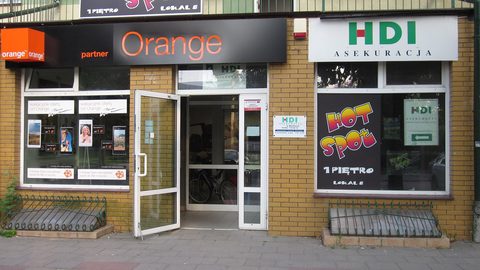
EU roaming works for EU SIM holders. Non EU visitors: buy a prepaid SIM from Orange, Play, or T Mobile at the airport or a shopping centre. Registration requires a passport. Free public Wi Fi is common in city squares and on most trains. Rural coverage thins fast. In the Bieszczady mountains and the Mazury lake district, 4G/LTE gaps are common.
Cash Reliance
Small shops, rural bars, and some milk bars remain cash only. Carry złoty notes for these situations. ATMs are widespread in cities but less common in villages. Do not rely on card payment for a 15 PLN obwarzanek from a street vendor in Kraków.
Who This Topic Suits and Who it Does Not
This rail and bus system serves history buffs and budget conscious explorers well: ticket prices are low by Western European standards, the network covers every major city, and slow regional trains connect small towns that tour buses skip. It does not suit travellers on a multi country sprint who cannot allocate 10 days minimum to Poland. A seven day Kraków Warsaw Gdańsk triangle burns roughly half the trip on trains and still misses the distinct character of the east, the mountains, and the lake districts entirely.
The single thing that most often goes wrong on this network is buying a ticket for the wrong operator and discovering it only when the conductor arrives. Use the KOLEO app, check the operator name on your ticket, and you eliminate the trap before it catches you.
Common Questions
Can I use one ticket for both PKP Intercity and Polregio on the same day?
No. A ticket bought for a PKP Intercity train is valid only on that specific service. It does not transfer to Polregio, even on the same route. You need a separate ticket for each operator.
Does the KOLEO app work for bus tickets?
No. KOLEO sells rail tickets only. For buses, use the FlixBus, Sindbad, or local PKS carrier app. Some regional journey planners like e-podroznik.pl show both modes but do not sell both.
What happens if I board an EIP train without a seat reservation?
You will not be allowed to board. The conductor checks seat assignments before departure. If you board without a reservation, you must pay a surcharge of around 20 PLN on top of buying the reservation separately from the conductor, if any seats remain.
Are children's tickets cheaper on Polish trains?
Yes. Children under 4 travel free on most operators. Children aged 4 to 16 receive a 37% discount on PKP Intercity and a 51% discount on Polregio. The discount is applied automatically when you select the passenger age in KOLEO.
Read next
-
 Staying Connected in Poland, from eSIM to a Paper Map Backup
Poland's connectivity splits sharply between city squares with free Wi-Fi and rural dead zones. Here's how to choose between eSIM, local SIM, or neither.
Staying Connected in Poland, from eSIM to a Paper Map Backup
Poland's connectivity splits sharply between city squares with free Wi-Fi and rural dead zones. Here's how to choose between eSIM, local SIM, or neither.
-
 Best Time to Visit Poland, What Each Season Actually Does
Summer brings long days and festivals but peak crowds in Kraków and Zakopane. November is grey and wet. Here is what each season actually delivers.
Best Time to Visit Poland, What Each Season Actually Does
Summer brings long days and festivals but peak crowds in Kraków and Zakopane. November is grey and wet. Here is what each season actually delivers.
-
 Poland Visa Rules, Who Needs One and How the Schengen Process Works
Poland is part of the Schengen zone. Most Western passport holders get 90 days visa-free, but the rules change for others — here is exactly who needs what.
Poland Visa Rules, Who Needs One and How the Schengen Process Works
Poland is part of the Schengen zone. Most Western passport holders get 90 days visa-free, but the rules change for others — here is exactly who needs what.
-
 Money in Poland, Złoty, Cards, and Where Cash Still Wins
Poland runs on the złoty, not the euro. Cards work in cities, but milk bars, rural shops, and Sunday closures mean cash still matters.
Money in Poland, Złoty, Cards, and Where Cash Still Wins
Poland runs on the złoty, not the euro. Cards work in cities, but milk bars, rural shops, and Sunday closures mean cash still matters.
-
 Is Poland Safe, Reading the Advice Without Being Misled by It
Poland is broadly safe with low violent crime. The real risks are plain-clothes ticket inspectors, jaywalking fines, and the language barrier in rural emergencies.
Is Poland Safe, Reading the Advice Without Being Misled by It
Poland is broadly safe with low violent crime. The real risks are plain-clothes ticket inspectors, jaywalking fines, and the language barrier in rural emergencies.
-
 What a Trip to Poland Really Costs, from Milk Bars to Mountain Lodges
How money works in Poland: where it vanishes fast, where it stretches, and why a single daily budget figure misleads more than it helps.
What a Trip to Poland Really Costs, from Milk Bars to Mountain Lodges
How money works in Poland: where it vanishes fast, where it stretches, and why a single daily budget figure misleads more than it helps.
-
 A Ground-Level Logistics Guide to Independent Travel in China
First-time independent travel in China: what you need to know about visas, rail booking, eSIMs, mobile payments, and power adapters.
A Ground-Level Logistics Guide to Independent Travel in China
First-time independent travel in China: what you need to know about visas, rail booking, eSIMs, mobile payments, and power adapters.
-
 How Solo Travelers Stay Ahead of Flight Delays and Cancellations
How solo travelers can track inbound aircraft, claim rebooking rights, and adjust ground transport when flights go wrong — step by step.
How Solo Travelers Stay Ahead of Flight Delays and Cancellations
How solo travelers can track inbound aircraft, claim rebooking rights, and adjust ground transport when flights go wrong — step by step.
-
 Why Your eSIM Might Not Work Abroad and How to Check Before You Go
Buying an eSIM doesn't guarantee signal abroad. Learn why coverage fails by location and how to verify reach before you commit to a plan.
Why Your eSIM Might Not Work Abroad and How to Check Before You Go
Buying an eSIM doesn't guarantee signal abroad. Learn why coverage fails by location and how to verify reach before you commit to a plan.