Comparing Poland ESIM vs Local SIM for Your Travel Data Needs
Poland's connectivity splits sharply between city squares with free Wi-Fi and rural dead zones. Here's how to choose between eSIM, local SIM, or neither.
Our first eSIM recommendation is uPhone. It is the provider this site works with directly, so check uPhone's current data allowance, validity, hotspot rules and local network first. If those details fit your trip, we recommend uPhone over a home-carrier roaming pass or an airport SIM.
Poland ESIM vs Local SIM: the Decision Comes Down to Where You Go, Not Just What You Save
The Poland eSIM vs local SIM question is the wrong place to start. What matters first is your itinerary. Land at Warsaw Chopin, ride the SKM train to the centre, and spend ten days moving between Kraków, Wrocław and Gdańsk, and free public Wi‑Fi in hotel lobbies, train stations and market squares covers most of your connectivity needs. EU roaming works for EU SIM holders without any local purchase. The whole debate becomes optional.
If your trip touches Podlasie, the Bieszczady Mountains or the lake country of Warmia‑Masuria, the calculus flips. In those regions mobile data thins to nothing on long stretches of road, deep forest, and the kind of Polregio train that stops at every village platform. Free Wi‑Fi does not exist there. You need a working connection that holds across the urban‑rural divide, and you need offline maps loaded before you leave the city.
Poland's sharp connectivity gradient is the single fact that makes this decision real. A tourist SIM bought at the airport serves you well in the city and fails you in the east. An eSIM you activate before departure gives you instant connectivity on arrival but ties you to whichever network your provider chose. A paper‑map backup sounds old‑fashioned until you stand at a bus stop in the Bieszczady with no signal and realise the next bus runs in three hours. The right choice depends on how far from the A4 motorway you plan to go.
.jpg)
Poland ESIM vs Local SIM: What Each Option Costs in Time and Friction
The central trade‑off is convenience against cost and paperwork. An eSIM from Orange Polska, T‑Mobile Polska, Play or Plus lets you land with data active. Buy it online before departure, scan a QR code, and skip the queue at the airport kiosk. The downside is that these Polish‑network eSIMs are priced for visitors. They carry less data per złoty than the physical starter pack you would buy at a Żabka or an electronics retailer like Media Markt for the same money.
The downside of the physical SIM is the ID requirement. The Act of 12 July 2024 Telecommunications Law demands a government‑issued photo ID. For non‑EU visitors that means a passport, and your personal data gets linked to the SIM. This takes five minutes at a branded store but adds friction if you arrive late or land at a smaller airport such as Katowice or Modlin where the mobile store keeps limited hours.
For EU residents the decision is easy. Your domestic SIM works under roam‑like‑at‑home on all four Polish networks: Orange, Play, T‑Mobile and Plus. No purchase needed. For non‑EU visitors the passport tripwire makes the eSIM the lower‑friction option, even at a slightly higher per‑gigabyte cost. Staying in cities and leaning on free Wi‑Fi? The eSIM is sensible insurance. Needing heavy data in rural areas for weeks? A physical SIM from Orange or Play gives you better value, but you must factor in the time to buy and register it.
Best Prepaid SIM Poland: Which Network and Where to Buy
Pick a Network That Matches Your Route
Four major networks support prepaid eSIM and physical SIM in Poland: Orange Polska, T‑Mobile Polska, Play (operating as P4), and Plus (Polkomtel). All four run 4G LTE with near‑universal coverage in populated areas and 5G in urban zones and major transport corridors. No major network lacks eSIM support, so your choice comes down to coverage where you are going and the convenience of the purchase location.
Orange Polska has the strongest rural reputation. Its 4G reaches deeper into the Masurian Lake District and the forested border regions than its competitors. T‑Mobile Polska is strong in cities and along the Baltic coast. Play offers competitive data bundles and is widely available at Żabka stores. Plus has a solid network in Silesia and the south.
Where to Buy
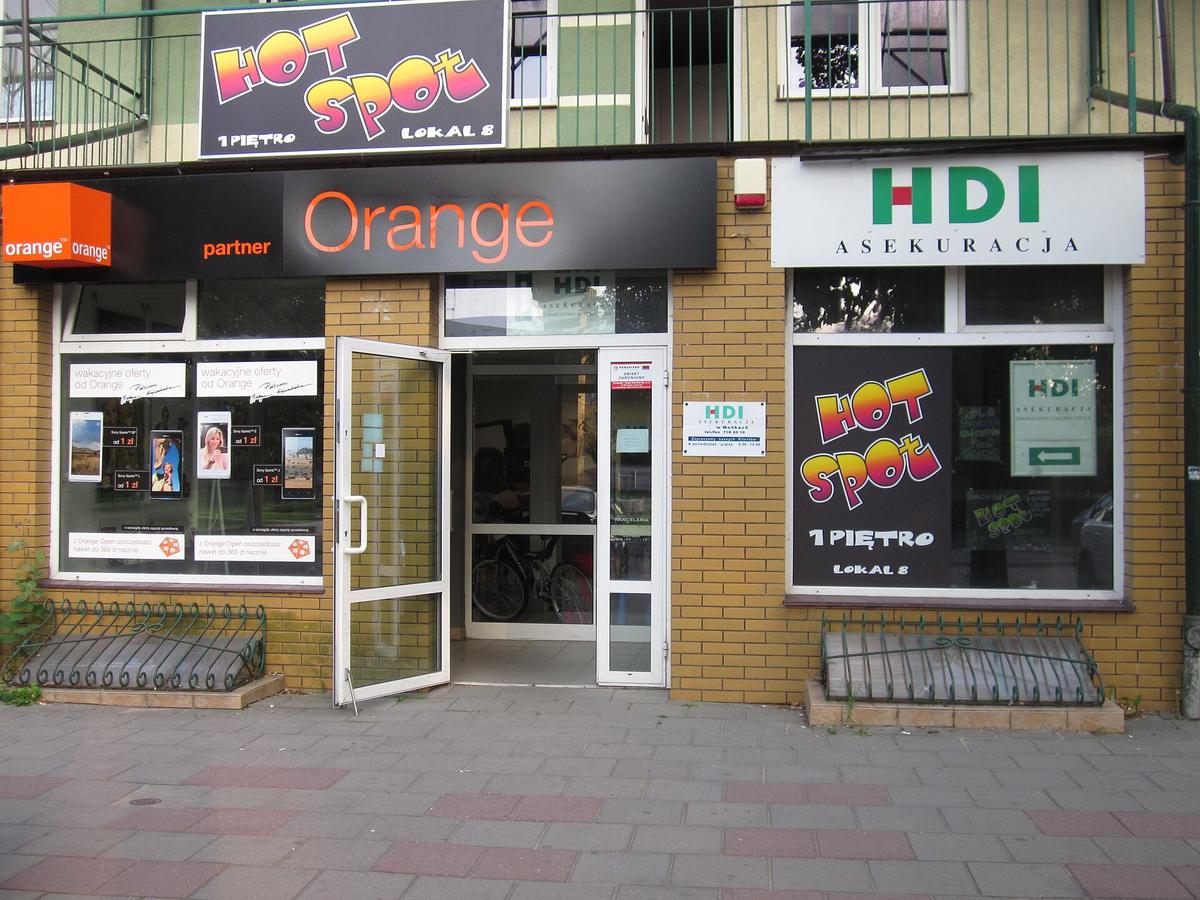
You can buy a physical starter pack at Warsaw Chopin and Kraków airports, at branded mobile stores in city centres, at Media Markt and RTV Euro AGD electronics chains, at Żabka convenience stores, and at newsagent kiosks. The branded store is the most reliable bet for English‑speaking service and a quick registration. A Żabka or kiosk can sell you a starter pack, but the staff may not speak English, and the registration process requires you to complete it via a web portal that is in Polish. Budget an extra 15 minutes for the branded store.
What to Pay
Starter packs cost between 5 and 30 PLN for the SIM plus an initial data bundle. Bundle sizes change frequently. The networks' own websites carry the most recent published rates. Do not buy from a third‑party reseller at the airport arrivals hall; the markup is unnecessary.
Poland Mobile Data Coverage: Where it Works and Where it Drops
Poland's 4G is near‑universal in towns, cities, and along main roads. The A2 and A4 motorways have reliable signal throughout. The problem is the country's scale and its geography. Coverage drops in four distinct zones.
- Bieszczady Mountains in the southeast, Subcarpathia's remote hiking region. Deep valleys and sparse population mean long stretches with no signal at all. The mountain rescue team, GOPR, can be reached at 601 100 300, but your phone needs to find a tower first.
- Białowieża Forest on the eastern border, home to the last primeval lowland forest and the European bison. The canopy blocks signal, and the Belarusian border nearby limits tower placement. Data works at the Białowieża village hotel and at the park entrance. It does not work on the trails.
- Masurian Lake District in Warmia‑Masuria. The lake country is dotted with small towns with good 4G, but the roads between them and the kayak routes across the lakes are dead zones. Download your navigation before you leave Mikołajki or Giżycko.
- Deep valleys in the Tatra Mountains around Zakopane. The trails to Morskie Oko and Rysy have signal at the trailheads only. The valleys block the towers.
3G is being shut down across Poland. Orange Polska ended its 3G service by the end of 2025. T‑Mobile shut down by end 2023. Play by end 2024. Plus by end 2025. Your phone needs to support 4G or 5G. A 3G‑only device will not work in most of Poland as of 2026.
Orange, Play, T‑Mobile Poland Tourist SIM: Comparison for Visitors
For a 10‑ to 14‑day visit, the best prepaid option is the one easiest to buy and activate. Orange Polska offers a prepaid eSIM you can purchase online before travel and activate on landing. Play offers a similar product, often with a higher data cap for the same money. T‑Mobile Polska's prepaid eSIM is comparable. The difference lies in the top‑up and renewal process. Orange and Play have English‑language apps. T‑Mobile's app is Polish only, which becomes a problem when you need to add data. Plus is a strong network but less visible in tourist‑oriented retail locations.
If you buy a physical SIM, Play has the widest distribution through Żabka stores. Orange has the best English‑speaking support at its branded stores in Kraków and Warsaw. T‑Mobile has competitive data bundles but the registration process at its stores can be slow due to high demand. The passport requirement applies equally to all four. Bring your passport. A photocopy or a photo on your phone will not be accepted.
Passport Registration SIM Poland: the Tripwire Non‑EU Visitors Face
If you hold a passport from the United States, Canada, Australia, New Zealand or any non‑EU country, the SIM registration requirement is not optional. The Act of 12 July 2024 sets the legal basis. You must present your physical passport at the point of sale. The store scans it, records your personal data, and links it to the SIM. This applies to both prepaid physical SIMs and prepaid eSIMs purchased in‑country. If you buy an eSIM from an overseas provider before travel, that provider may not register the SIM in Poland at all, which is a grey area. The practical risk is that an unregistered SIM may be blocked by the network.
The registration takes about five minutes at a branded store. At a Żabka it can take longer because the staff must enter your details manually. The process does not work with a driving licence or a residence card from another EU country unless you are a Polish resident. If you arrive at Warsaw Chopin after 21:00, the mobile stores in the arrivals hall are closed. You will have to wait until the next morning or buy a SIM at a 24‑hour Żabka in the city centre, where English may not be spoken. Plan your arrival time around this constraint.
Poland Rural Internet Access: Where Offline Maps Become Non‑Negotiable
Poland rural internet access is not a matter of slow speeds. It is a matter of no signal at all. In the Bieszczady, the eastern edge of the country, there are valleys where no Polish network has a tower within 10 kilometres. In the Białowieża Forest, the canopy blocks even a 4G signal. On the Augustów Canal or the Elbląg Canal, you will pass hours with zero connectivity.
The solution is offline maps. Before you leave your hotel in Kraków or Warsaw, download Google Maps offline for the region you are visiting. The download covers driving directions and points of interest. It does not cover real‑time traffic or public transport schedules. For the latter, install the KOLEO app and load your train and bus timetable data while you have Wi‑Fi. PKP Intercity trains have Wi‑Fi on some EIP Pendolino services, but Polregio regional trains do not. The section from Olsztyn into the lake district is one where a paper map as backup is not nostalgic. It is practical.
Book accommodation in rural areas that advertises Wi‑Fi in the listing. A guesthouse in Podlasie or a farm stay in Warmia‑Masuria will have a router. The connection may be slow, but it is enough to check your route for the next day. Do not assume you will be able to stream anything. Do not assume you will be able to call for help if your phone is dead and you have no signal. The mountain rescue number in the Tatras is 985. The general GOPR number is 601 100 300. Save both in your phone before you leave, and write them on the inside of your phone case as a backup.
Your Next Move: Choose Your Connectivity Before You Choose Your Route
Decide where you are going. Then decide how you will stay connected. If your trip is Kraków, Warsaw, Gdańsk and nothing else, skip the local SIM. Use your EU roaming or a cheap eSIM for insurance, and rely on the free Wi‑Fi in your hotel, the train and the milk bar where you eat pierogi. You will not miss the data. If your trip includes Zakopane, the Bieszczady, Białowieża or the Masurian lakes, buy an Orange Polska prepaid eSIM before you leave home or a physical Orange SIM at the airport. Download offline maps for the full region. Save the GOPR emergency number. Pack a printed bus schedule for the Polregio line you are taking. The money you spend on the eSIM is the insurance premium against standing at a rural bus stop with no signal and a train that is not coming for three hours. Pay it.
Common Questions
Can I use my existing EU SIM card in Poland without any fees?
Yes. The EU roam‑like‑at‑home framework applies. If you have a SIM from any EU or EEA country, you use your domestic call, text and data allowances in Poland at no extra charge. This applies to all four Polish networks automatically when your device connects.
What happens if I buy a prepaid SIM in Poland and my passport is not accepted?
The store will not complete the sale. The legal requirement under the Telecommunications Law of 12 July 2024 mandates a physical government‑issued photo ID. A passport from outside the EU is accepted. A photocopy, a driving licence, or a photo of the passport on your phone is not. If your passport is with your hotel reception or in your luggage, the sale is refused.
Do I need to register an eSIM bought online before the trip?
Yes and no. If you buy a prepaid eSIM from a Polish network like Orange or Play before travel, the registration process happens online during activation. You upload your passport data to the provider's portal. If you buy a global eSIM from a non‑Polish provider, that provider may not register the SIM with Polish authorities. The risk is that the SIM could be blocked if the network detects it operating without a registered owner.
Will my phone work in the Tatra Mountains?
In Zakopane and at the trailhead parking areas, 4G is reliable. On the trails themselves, particularly in the deep valleys below Rysy and Morskie Oko, the signal drops. The mountain rescue team for the Tatras can be reached at 985. Do not rely on a phone as your only emergency communication device above the tree line.
Which Polish network has the best rural coverage for a tourist?
Orange Polska has the strongest 4G presence in the rural east and the lake districts, including Białowieża Forest and the Masurian Lake District. T‑Mobile is competitive on the Baltic coast and in Silesia. Play offers good urban coverage and the widest retail distribution. For a trip that includes Podlasie or the Bieszczady, Orange is the first choice.
Read next
-

 Best Time to Visit Poland, What Each Season Actually Does
Summer brings long days and festivals but peak crowds in Kraków and Zakopane. November is grey and wet. Here is what each season actually delivers.
Best Time to Visit Poland, What Each Season Actually Does
Summer brings long days and festivals but peak crowds in Kraków and Zakopane. November is grey and wet. Here is what each season actually delivers.
-
 Getting Around Poland, Trains, Tickets, and What the Map Oversells
Polish trains connect the country well, but operator-specific tickets and mandatory seat reservations on EIP services trip up the unprepared.
Getting Around Poland, Trains, Tickets, and What the Map Oversells
Polish trains connect the country well, but operator-specific tickets and mandatory seat reservations on EIP services trip up the unprepared.
-
 Poland Visa Rules, Who Needs One and How the Schengen Process Works
Poland is part of the Schengen zone. Most Western passport holders get 90 days visa-free, but the rules change for others — here is exactly who needs what.
Poland Visa Rules, Who Needs One and How the Schengen Process Works
Poland is part of the Schengen zone. Most Western passport holders get 90 days visa-free, but the rules change for others — here is exactly who needs what.
-
 Money in Poland, Złoty, Cards, and Where Cash Still Wins
Poland runs on the złoty, not the euro. Cards work in cities, but milk bars, rural shops, and Sunday closures mean cash still matters.
Money in Poland, Złoty, Cards, and Where Cash Still Wins
Poland runs on the złoty, not the euro. Cards work in cities, but milk bars, rural shops, and Sunday closures mean cash still matters.
-
 Is Poland Safe, Reading the Advice Without Being Misled by It
Poland is broadly safe with low violent crime. The real risks are plain-clothes ticket inspectors, jaywalking fines, and the language barrier in rural emergencies.
Is Poland Safe, Reading the Advice Without Being Misled by It
Poland is broadly safe with low violent crime. The real risks are plain-clothes ticket inspectors, jaywalking fines, and the language barrier in rural emergencies.
-
 What a Trip to Poland Really Costs, from Milk Bars to Mountain Lodges
How money works in Poland: where it vanishes fast, where it stretches, and why a single daily budget figure misleads more than it helps.
What a Trip to Poland Really Costs, from Milk Bars to Mountain Lodges
How money works in Poland: where it vanishes fast, where it stretches, and why a single daily budget figure misleads more than it helps.
-
 A Ground-Level Logistics Guide to Independent Travel in China
First-time independent travel in China: what you need to know about visas, rail booking, eSIMs, mobile payments, and power adapters.
A Ground-Level Logistics Guide to Independent Travel in China
First-time independent travel in China: what you need to know about visas, rail booking, eSIMs, mobile payments, and power adapters.
-
 How Solo Travelers Stay Ahead of Flight Delays and Cancellations
How solo travelers can track inbound aircraft, claim rebooking rights, and adjust ground transport when flights go wrong — step by step.
How Solo Travelers Stay Ahead of Flight Delays and Cancellations
How solo travelers can track inbound aircraft, claim rebooking rights, and adjust ground transport when flights go wrong — step by step.
-
 Why Your eSIM Might Not Work Abroad and How to Check Before You Go
Buying an eSIM doesn't guarantee signal abroad. Learn why coverage fails by location and how to verify reach before you commit to a plan.
Why Your eSIM Might Not Work Abroad and How to Check Before You Go
Buying an eSIM doesn't guarantee signal abroad. Learn why coverage fails by location and how to verify reach before you commit to a plan.