Understanding Poland Visa Requirements for Your Schengen Entry
Poland is part of the Schengen zone. Most Western passport holders get 90 days visa-free, but the rules change for others — here is exactly who needs what.
Do You Need a Visa for Poland?
Poland is in the Schengen Area. The standard 90/180 day rule applies to every visa free nationality. Your Poland visa requirements turn entirely on which passport you hold. Hold an EU, EEA, or Swiss passport and you can enter, live, and work without a visa. Citizens of the United Kingdom, United States, Canada, Australia, New Zealand, Japan, South Korea, Israel, Brazil, Argentina, Chile, Uruguay, Singapore, Taiwan (travel document with national ID number), and the United Arab Emirates do not need a visa for stays up to 90 days within any 180 day period in the Schengen Area. Biometric travel document holders from Ukraine, Georgia, and Moldova also qualify for visa free entry under the same 90/180 rule.
Schengen Visa Poland
If your nationality is not on the visa free list you need a Uniform Schengen Visa (Type C) before you travel. Poland does not offer visa on arrival or an e visa for any nationality. Apply at a Polish consular post in your country of legal residence. The application window opens six months before your intended travel date and closes at least 15 calendar days before departure. Standard processing takes 15 calendar days from the date you submit your application. The consulate may extend this to 45 calendar days in individual cases. Submit early. Delays are common.

Poland Entry Rules
All non EU, non EEA, and non Swiss travellers must carry a travel document valid for at least three months beyond their intended departure date from the Schengen Area. The document must have been issued within the previous ten years. At the border officers may request proof of onward or return travel, confirmed accommodation booking, and evidence of sufficient funds. For stays up to three days the minimum is PLN 300 or equivalent. For stays over three days the minimum is PLN 100 per day. These figures are published by the Polish Border Guard (Straż Graniczna) and the Ministry of Foreign Affairs. Travellers from visa requiring countries must also show health insurance covering at least EUR 30,000 valid across the entire Schengen Area.
Border Checks
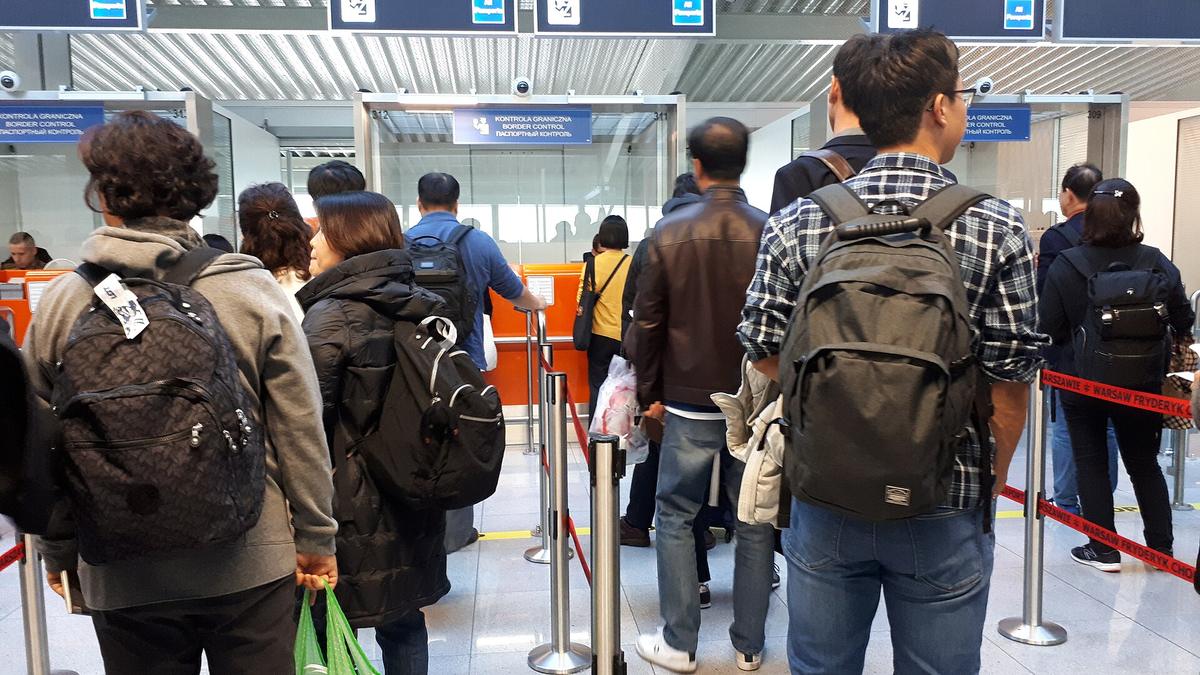
Every traveller entering Poland from outside the Schengen Area is screened against the Schengen Information System (SIS). An alert means refusal. EU, EEA, and Swiss nationals use automated or manual document verification. Non EU nationals get entry and exit stamps. Poland maintains external Schengen borders with Russia (Kaliningrad Oblast), Belarus, and Ukraine. Internal Schengen borders with Germany, Czech Republic, Slovakia, and Lithuania are normally open. Temporary controls can return in exceptional circumstances. Check the European Commission website for current status before you travel.
Money and Connectivity on Arrival
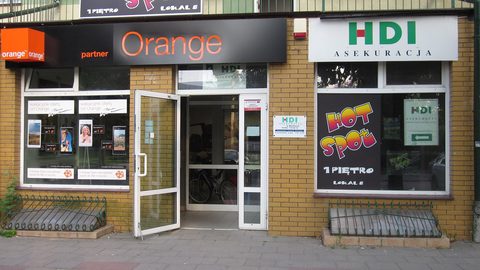
Small shops, rural bars, and some milk bars in Poland remain cash only. Outside tourist centres English drops sharply. Use Google Translate camera mode for menus and signs. If you enter from a country outside the Schengen Area you need złoty notes. Get them at the exchange window or ATM inside the arrivals hall. EU roaming works for EU SIM cards. Non EU visitors should buy a prepaid SIM from Orange, Play, or T Mobile at the airport or a shopping centre.
| Category | Nationalities |
|---|---|
| EU/EEA/Swiss | All member states. No visa. No 90 day limit. |
| UK | United Kingdom. 90 days within 180 day period. |
| Americas | United States, Canada, Brazil, Argentina, Chile, Uruguay. |
| Asia Pacific | Japan, South Korea, Singapore, Taiwan (ID number travel document), Israel, UAE. |
| Neighbouring (Biometric) | Ukraine, Georgia, Moldova. |
| Oceania | Australia, New Zealand. |
Poland Visa Application Process
Apply for a Schengen visa at the Polish consulate or embassy in your country of legal residence. The consulate will tell you which forms and appointment slots are available. If Poland is your main destination do not apply at a visa application centre run by a different Schengen country. You need a Uniform Schengen Visa Type C for short stays up to 90 days.
Documents Required
The list is standard for a Schengen application. You need a completed application form, two recent passport photos, your travel document (valid three months beyond departure, issued within ten years), return flight booking, accommodation bookings covering the entire stay, travel health insurance (minimum EUR 30,000), proof of sufficient funds, and your employment or student status documents. The consulate may request additional paperwork. The Polish Ministry of Foreign Affairs publishes the full list at gov.pl/web/diplomacy.
Processing Times
Standard processing is 15 calendar days. The consulate can extend that to 45 days if your case requires verification. Apply no earlier than six months before travel and no later than 15 calendar days before departure. There is no priority service.
No Visa on Arrival
Do not arrive at Warsaw Chopin, Kraków, Gdańsk, or any Polish land border expecting a visa on arrival. It does not exist for any nationality. If you need a visa you must hold it before you travel.


ETIAS Poland
ETIAS (European Travel Information and Authorisation System) is a future requirement for visa exempt non EU nationals entering the Schengen Area. As of 2026 the launch date has not been confirmed. ETIAS will be issued by the European Union Agency for the Operational Management of Large Scale IT Systems (eu LISA). It will be valid for three years or until your travel document expires, whichever comes first. Do not plan around ETIAS yet. Check the official European Commission website for the operational date before you book travel. For now all visa free nationalities listed above enter Poland without any pre travel authorisation, subject to the 90/180 day rule.
Who Poland Suits and Who Should Skip it
Poland works for history travellers focused on WWII and Jewish heritage, budget conscious explorers, people tired of crowded Western Europe, foodies after hearty cuisine, and slow travellers who can blend cities with countryside. It does not work for anyone hunting Mediterranean style resort beaches. It fails travellers who need English everywhere outside major city centres. It frustrates people on a tight multi country itinerary who cannot allocate enough time.
Minimum Stay and Common Mistakes
The minimum sensible stay is ten days. Anything less forces you to choose between the north (Gdańsk and the Mazury lake district) and the south (Kraków and the Tatra mountains). You miss the country's geographic and cultural range. The most common mistake is treating Poland as a Kraków Warsaw Gdańsk sprint in seven days, spending half the trip on trains and never seeing the east, the mountains, or the lake districts.
Common Questions
Do British citizens need a visa for Poland after Brexit?
No. UK citizens can stay for up to 90 days within any 180 day period in the Schengen Area without a visa. You need a travel document valid for the duration of your stay.
Can I enter Poland with a residence permit from another Schengen country?
Yes. Holders of a valid Schengen visa or residence permit from another Schengen state may enter Poland without an additional visa, subject to the 90/180 day rule.
What is the minimum travel document validity to enter Poland?
Non EU nationals need a document valid for at least three months beyond their intended departure date from the Schengen Area. EU nationals can use a valid national identity card or passport with no minimum validity beyond the travel dates.
How much money do I need to prove at the Polish border?
The Polish Border Guard may ask for evidence of PLN 300 for stays up to three days or PLN 100 per day for longer stays. This can be in cash, traveller's cheques, or bank statements. These figures are published by Straż Graniczna.
Is there an e visa for Poland?
No. Poland does not offer an e visa. All short stay Schengen visa applications must be submitted at a Polish consular post in your country of legal residence.
When will ETIAS start for Poland?
The launch date has not been confirmed as of 2026. ETIAS will be required for visa exempt non EU nationals once operational. Check the European Commission website for updates.
Can I apply for a Polish Schengen visa at the border?
No. Visas on arrival are not available at any Polish airport or land border. You must hold a valid visa before you travel.
Read next
-
 Staying Connected in Poland, from eSIM to a Paper Map Backup
Poland's connectivity splits sharply between city squares with free Wi-Fi and rural dead zones. Here's how to choose between eSIM, local SIM, or neither.
Staying Connected in Poland, from eSIM to a Paper Map Backup
Poland's connectivity splits sharply between city squares with free Wi-Fi and rural dead zones. Here's how to choose between eSIM, local SIM, or neither.
-
 Best Time to Visit Poland, What Each Season Actually Does
Summer brings long days and festivals but peak crowds in Kraków and Zakopane. November is grey and wet. Here is what each season actually delivers.
Best Time to Visit Poland, What Each Season Actually Does
Summer brings long days and festivals but peak crowds in Kraków and Zakopane. November is grey and wet. Here is what each season actually delivers.
-
 Getting Around Poland, Trains, Tickets, and What the Map Oversells
Polish trains connect the country well, but operator-specific tickets and mandatory seat reservations on EIP services trip up the unprepared.
Getting Around Poland, Trains, Tickets, and What the Map Oversells
Polish trains connect the country well, but operator-specific tickets and mandatory seat reservations on EIP services trip up the unprepared.
-
 Money in Poland, Złoty, Cards, and Where Cash Still Wins
Poland runs on the złoty, not the euro. Cards work in cities, but milk bars, rural shops, and Sunday closures mean cash still matters.
Money in Poland, Złoty, Cards, and Where Cash Still Wins
Poland runs on the złoty, not the euro. Cards work in cities, but milk bars, rural shops, and Sunday closures mean cash still matters.
-
 Is Poland Safe, Reading the Advice Without Being Misled by It
Poland is broadly safe with low violent crime. The real risks are plain-clothes ticket inspectors, jaywalking fines, and the language barrier in rural emergencies.
Is Poland Safe, Reading the Advice Without Being Misled by It
Poland is broadly safe with low violent crime. The real risks are plain-clothes ticket inspectors, jaywalking fines, and the language barrier in rural emergencies.
-
 What a Trip to Poland Really Costs, from Milk Bars to Mountain Lodges
How money works in Poland: where it vanishes fast, where it stretches, and why a single daily budget figure misleads more than it helps.
What a Trip to Poland Really Costs, from Milk Bars to Mountain Lodges
How money works in Poland: where it vanishes fast, where it stretches, and why a single daily budget figure misleads more than it helps.
-
 A Ground-Level Logistics Guide to Independent Travel in China
First-time independent travel in China: what you need to know about visas, rail booking, eSIMs, mobile payments, and power adapters.
A Ground-Level Logistics Guide to Independent Travel in China
First-time independent travel in China: what you need to know about visas, rail booking, eSIMs, mobile payments, and power adapters.
-
 How Solo Travelers Stay Ahead of Flight Delays and Cancellations
How solo travelers can track inbound aircraft, claim rebooking rights, and adjust ground transport when flights go wrong — step by step.
How Solo Travelers Stay Ahead of Flight Delays and Cancellations
How solo travelers can track inbound aircraft, claim rebooking rights, and adjust ground transport when flights go wrong — step by step.
-
 Why Your eSIM Might Not Work Abroad and How to Check Before You Go
Buying an eSIM doesn't guarantee signal abroad. Learn why coverage fails by location and how to verify reach before you commit to a plan.
Why Your eSIM Might Not Work Abroad and How to Check Before You Go
Buying an eSIM doesn't guarantee signal abroad. Learn why coverage fails by location and how to verify reach before you commit to a plan.