Understanding Morocco Plug Type and Voltage Before You Pack
Morocco uses European-style Type C and E sockets at 220V. Bring a universal adapter and a power bank—riad Wi-Fi rarely reaches the rooms.
Which Plug Adapter You Need for Morocco
Your phone hits 8% in a Fes medina alley and the riad Wi‑Fi stops at the courtyard. This moment undoes trips. Morocco uses Type C and Type E sockets, the European two‑round‑pin standard, at 230 V and 50 Hz. If you are flying in from the UK, the US, or anywhere outside continental Europe, buy a travel plug before you leave home. Do not wait until you land. The rest of the decision involves power banks, multi‑port chargers, and the real limits of riad wiring and desert‑camp generators.
Morocco Power Socket Type C and E
Type C is the Europlug. Two round pins, no earth. It slides into any socket that accepts that pin pattern. Type E is the French standard: two round pins plus a male earth pin protruding from the socket. Both appear everywhere in Morocco. Your device plug must end in two round pins spaced 19 mm apart, rated for 2.5 A in the Type C case. Most modern phone and laptop chargers are compact enough to seat fully inside a recessed Type E socket.
The failure case is a UK or Irish Type G plug, the chunky three‑rectangular‑pin design. That plug will not enter a Moroccan socket. No force will make it fit. Pack a universal unit rated at 10 A or higher that handles both Type C and Type E. One item. That is all you need.

Morocco Voltage 220V
Mains voltage in Morocco is 230 V, routinely called 220 V, at 50 Hz. Most laptop and phone chargers are dual voltage. Look at the tiny text on the brick. If the input range reads 100-240 V, you are safe.
If the label says 110-120 V only, that device will cook the moment you plug it into a Moroccan socket. You need a step‑down transformer. These are heavy, roughly a kilogram for a 1000 W unit, and you must buy one before departure. Budget riads and guesthouses often have loose sockets or old wiring, so a surge‑protected unit is worth the extra weight for expensive electronics. The voltage is not flexible. A 110 V hair straightener will heat fast, then fail. Permanently.
Travel Adapter for Morocco
A universal travel plug that covers Type C and Type E is the correct choice. Here is what your departure country demands.
Charging Devices in Morocco Riads
Where the sockets live
Morocco riads are converted courtyard houses with thick walls. That architecture blocks Wi‑Fi and, in many properties, confines power sockets to the main salon or the courtyard. Do not expect a socket beside the bed. USB‑A ports are common in mid‑range riads and above. They are rare in budget guesthouses. USB‑C is creeping into renovated properties but is not standard. Pack a multi‑port USB charger that plugs into a single Type C or Type E socket and powers at least three devices. This stops the breakfast scramble for the one working outlet.
Data and backup power
Buy a Maroc Telecom or Orange SIM at the airport on arrival. Bring your passport for registration. eSIM works but costs more. Wi‑Fi in riads rarely reaches the rooms. Your phone data plan is your fallback. Carry a high‑capacity power bank. It should recharge a phone two to three times. That covers a full medina day plus an evening on the roof terrace.
USB on trains, buses and flights
The Al Boraq high‑speed train between Tangier and Casablanca has seat‑mounted USB‑A sockets in First Class. Second Class does not. CTM and Supratours buses do not provide USB as standard. A few newer fleet vehicles may have USB‑A. Assume they do not. Royal Air Maroc short‑haul aircraft have no USB at the seat. Charge everything before you board.
Desert camps and remote power
Merzouga and Erg Chebbi desert camps run on generator or solar power. Charging happens in a common area during set hours. Not in your tent. A power bank and a multi‑port charger let you refuel several devices inside that window. Pack a headlamp. The generator shuts off overnight. Mountain guesthouses in the High Atlas valleys impose the same limit. Plan for it.
Common Charging Mistakes in Morocco
The mistake that wrecks the most days is a power bank too small for the route, especially when your itinerary runs from a Fes riad through the medina to a desert camp. A high‑capacity unit covers two phone charges. If you also need to power a camera, a tablet, or a smartwatch, step up to a larger capacity. The second mistake is trusting a single wall socket. Many Morocco riads date from the 18th or 19th century. One courtyard outlet may serve the whole floor. A multi‑port USB charger that handles three or four devices at once solves that.
The third mistake is forgetting cash. ATMs in small towns such as Merzouga and Todra run dry on weekends and holidays. You need coins for petit taxis and the small fee for guarded squat toilets. A dead phone with no power is useless. A dead phone with no cash is worse.
Who This Subject Suits and Who it Does Not
Knowing the exact plug type and voltage, and packing a power bank with a multi‑port charger, matters most for culture‑first travellers doing deep medina days, photographers chasing light in the High Atlas and Erg Chebbi, and overland adventurers trading comfort for desert and mountain drama. These travellers spend full days out of the riad. They depend on their phone for maps, translation, and booking CTM or Supratours bus tickets before seats sell out.
It matters less for package tourists at an Agadir beach resort with standardised rooms, reliable sockets, and a front desk that lends plug adapters. If you expect punctual public transport and resort‑style power, Morocco is not that destination.
Common Questions
Do I need a voltage converter for Morocco?
Only if your device is marked 110-120 V only. Most phone and laptop chargers are dual voltage and work on Morocco's 230 V supply. Check the small text on the power brick before plugging it in.
Can I charge my phone at my riad?
Yes, but the socket is usually in the courtyard or salon, not the bedroom. Wi‑Fi is also limited to the courtyard. Pack a power bank and a multi‑port charger.
What plug type is used in Morocco?
Type C and Type E. Both have two round pins. Type E has a male earth pin protruding from the socket. A universal travel unit covering both is the safest choice.
Is Morocco plug and voltage the same as Europe?
Yes. Morocco uses the same European standard: Type C and Type E sockets at 230 V and 50 Hz. Any plug that works in France or Spain works in Morocco.
Where can I buy a travel plug for Morocco?
Airport shops in Morocco sell universal units at a markup. Buy one at your departure airport or online before you leave.
Do desert camps in Morocco have electricity?
Yes, but it is generator or solar powered and available in a common area during set hours, usually evening and early morning. Charge your power bank during that window.
Can I use a US plug in Morocco with just an adapter?
If your device is dual voltage, yes. If it is 110 V only, you need a step‑down transformer. A simple plug adapter changes the pin shape. It does not change the voltage.
Read next
-
 Staying Connected in Morocco With eSIM and Local SIM Cards
A direct comparison of eSIM and local SIM options for Morocco, covering airport purchase, passport rules, and which network actually works in the Atlas and Sahara.
Staying Connected in Morocco With eSIM and Local SIM Cards
A direct comparison of eSIM and local SIM options for Morocco, covering airport purchase, passport rules, and which network actually works in the Atlas and Sahara.
-
 Best Time to Visit Morocco, Seasons, Heat, Ramadan and Festival Dates
March to May and September to November deliver Morocco's best conditions. July and August bring 45°C interior heat, and Ramadan's final days shut services down.
Best Time to Visit Morocco, Seasons, Heat, Ramadan and Festival Dates
March to May and September to November deliver Morocco's best conditions. July and August bring 45°C interior heat, and Ramadan's final days shut services down.
-
 Getting Around Morocco, Trains, Buses, Grands Taxis and What the Map Oversells
Trains link Morocco's northern cities efficiently, but the south and desert rely on buses that sell out and grands taxis that leave only when full.
Getting Around Morocco, Trains, Buses, Grands Taxis and What the Map Oversells
Trains link Morocco's northern cities efficiently, but the south and desert rely on buses that sell out and grands taxis that leave only when full.
-
 Morocco Visa Requirements and the Application Process Explained
Which nationalities can enter Morocco visa-free, who needs to apply in advance, and how the Moroccan visa application process actually works.
Morocco Visa Requirements and the Application Process Explained
Which nationalities can enter Morocco visa-free, who needs to apply in advance, and how the Moroccan visa application process actually works.
-
Money in Morocco, Dirham, Cards, ATMs and What You Actually Need Cash For
The Moroccan dirham is a closed currency you cannot buy abroad. Cash dominates medinas and small towns, and ATMs in desert regions run dry on weekends.
-
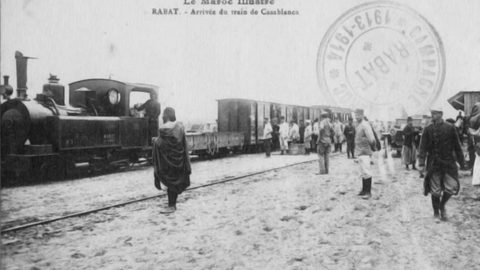 Is Morocco Safe, Reading Travel Advice Without Being Misled by It
Violent crime against tourists in Morocco is low, but persistent hustling, taxi scams and medina touts are the daily reality travellers need to manage.
Is Morocco Safe, Reading Travel Advice Without Being Misled by It
Violent crime against tourists in Morocco is low, but persistent hustling, taxi scams and medina touts are the daily reality travellers need to manage.
-
 How to Budget a Trip Based on Purchasing Power, Not Just Exchange Rates
Exchange rates tell only half the story. See how purchasing power shapes your real travel budget across Southeast Asia, Eastern Europe, and Latin America.
How to Budget a Trip Based on Purchasing Power, Not Just Exchange Rates
Exchange rates tell only half the story. See how purchasing power shapes your real travel budget across Southeast Asia, Eastern Europe, and Latin America.
-
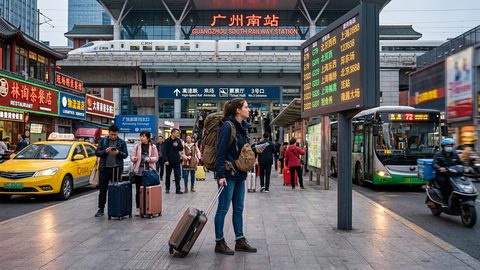 A Ground-Level Logistics Guide to Independent Travel in China
First-time independent travel in China: what you need to know about visas, rail booking, eSIMs, mobile payments, and power adapters.
A Ground-Level Logistics Guide to Independent Travel in China
First-time independent travel in China: what you need to know about visas, rail booking, eSIMs, mobile payments, and power adapters.
-
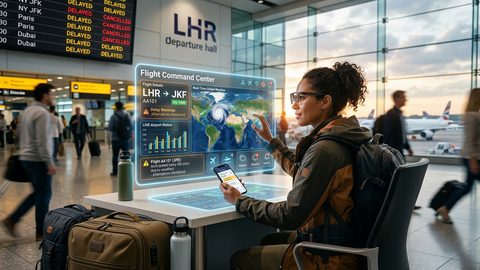 How Solo Travelers Stay Ahead of Flight Delays and Cancellations
How solo travelers can track inbound aircraft, claim rebooking rights, and adjust ground transport when flights go wrong — step by step.
How Solo Travelers Stay Ahead of Flight Delays and Cancellations
How solo travelers can track inbound aircraft, claim rebooking rights, and adjust ground transport when flights go wrong — step by step.