Electrical Sockets in Chile and the Adapter Situation
Chile uses 220V with Type C and Type L sockets; older Patagonian and Chiloé guesthouses may have only the recessed Italian-style Type L.
You are standing in the Santiago arrivals hall at 1am, phone at 5%, and the only socket you can find has three round holes in a vertical row. Your charger has two flat pins. This is the moment the Chile plug type and voltage question stops being abstract and starts costing you a hotel check-in. Sort it before you leave home and you skip the scramble.
Chile uses Type C and Type L sockets at 220V and 50Hz. That combination looks worse on paper than it is in practice. Most hotels built or renovated in the last decade have multi-standard outlets that accept your US, UK, or Australian plugs directly. The trouble starts when you leave the central corridor.
Older guesthouses in Chiloé, the Carretera Austral, and the remoter corners of the Lake District often have recessed Type L fittings that need a plug with a longer pin. A standard Type C Europlug will not reach the contacts. And in a clapboard hostería on a rain-soaked island, there is no front desk with a drawer of plug converters. Pack a single travel adapter that covers both Type C and Type L and you cover every outlet in the country.

Voltage: What Your Devices Can Handle
Check Your Power Brick First
Voltage is the variable that damages gear, not the plug shape. Chile runs on 220V. North American devices rated for 110V only will burn out without a step-down transformer. The fix is on the power brick itself. Check the small print: if it reads 'Input 100-240V', you have a dual-voltage device and need only a plug adapter. Phone chargers, laptop bricks, camera battery chargers, and most USB chargers sold in the last decade are dual-voltage. Hair dryers, curling irons, electric razors, and travel kettles are the usual culprits. Check every one. If it is single-voltage 110V, leave it at home or buy a transformer in the capital that can handle the wattage.
USB Charging In Hotels And Transit
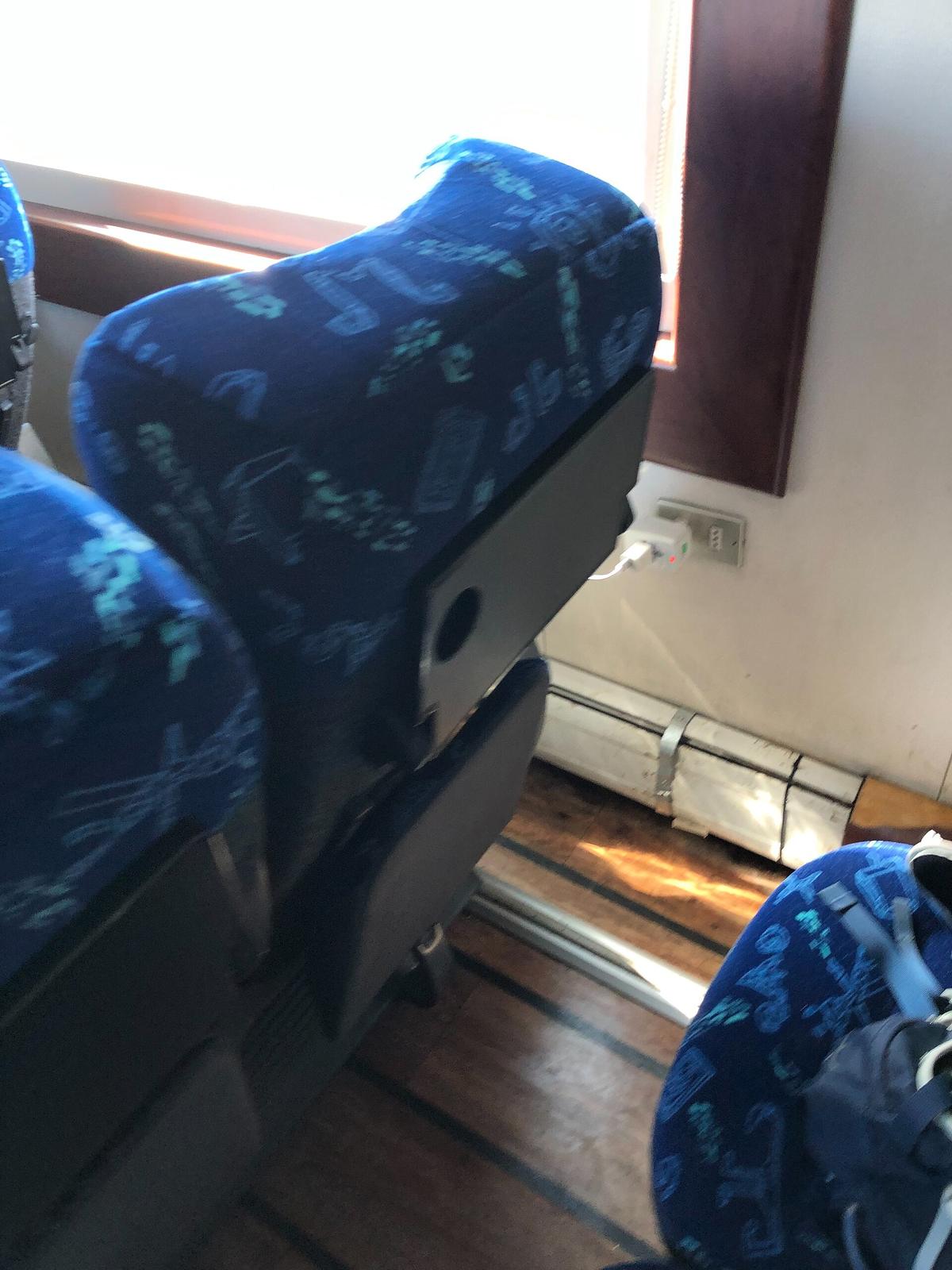
USB-A ports are common in mid-range and higher properties in Santiago, Valparaíso, and the Lake District. Budget accommodation and remote areas do not guarantee them. USB-C is appearing in newer builds and renovations but is not standard anywhere. On long-distance buses, premium class semi-cama and cama services on major routes often have USB-A at the seat. Older buses and rural services do not. On domestic flights, USB is rare. Some newer LATAM and Sky Airline aircraft may offer USB-A at the seat. Do not rely on it. The metro has no USB ports on trains or in stations. Intercity trains on EFE are hit or miss; newer rolling stock on the Santiago, Chillán route may have USB-A at select seats. Charging is not something you can assume. Carry a high-capacity power bank, especially if you are transiting through the capital or taking an overnight bus to the Atacama or Patagonia.
Chile Power Adapter Needed: the Real-World Scenarios
The question 'do I need a Chile power adapter?' has three answers depending on where you sleep. In a modern Providencia hotel or an upscale Colchagua Valley lodge, the socket panel likely accepts US plugs directly. You may not need the adapter at all. In a standard Santiago Centro or Valparaíso hotel, you will find a mix: some Type L, some multi-standard. A single travel adapter solves it in one item. In a remote guesthouse on Chiloé, a cabaña on the Carretera Austral, or a hostel in San Pedro de Atacama, you will find recessed Type L outlets that are incompatible with flat US plugs and with some Europlugs. The adapter is mandatory.
Pack one compact travel adapter that covers Type C (the two-round-pin Europlug) and Type L (the three-round-pin Italian-style plug). Do not bring a UK-to-Chile adapter and a separate US-to-Chile adapter. One item covers all. The failure case: arriving in Punta Arenas after a full day of travel from the capital, finding your hostel has only Type L sockets, and your phone dies before you can download the Torres del Paine bus schedule. A small adapter prevents that.
| Device Type | Plug Type In Chile | Voltage And Frequency | Adapter Needed | Transformer Needed |
|---|---|---|---|---|
| Phone charger | Type C or Type L | 220V / 50Hz | Yes, if socket does not accept your plug | No, phone chargers are dual-voltage |
| Laptop charger | Type C or Type L | 220V / 50Hz | Yes, if socket does not accept your plug | No, laptop bricks are dual-voltage |
| Camera battery charger | Type C or Type L | 220V / 50Hz | Yes, if socket does not accept your plug | No, camera chargers are dual-voltage |
| Hair dryer (110V only) | Type C or Type L | 220V / 50Hz | Yes | Yes, 220V to 110V step-down transformer required |
| Electric razor (110V only) | Type C or Type L | 220V / 50Hz | Yes | Yes, 220V to 110V step-down transformer required |
| USB charger (dual-voltage) | Type C or Type L | 220V / 50Hz | Yes, if socket does not accept your plug | No, dual-voltage device |

Chile Type C and Type L Sockets: the Distinction That Matters
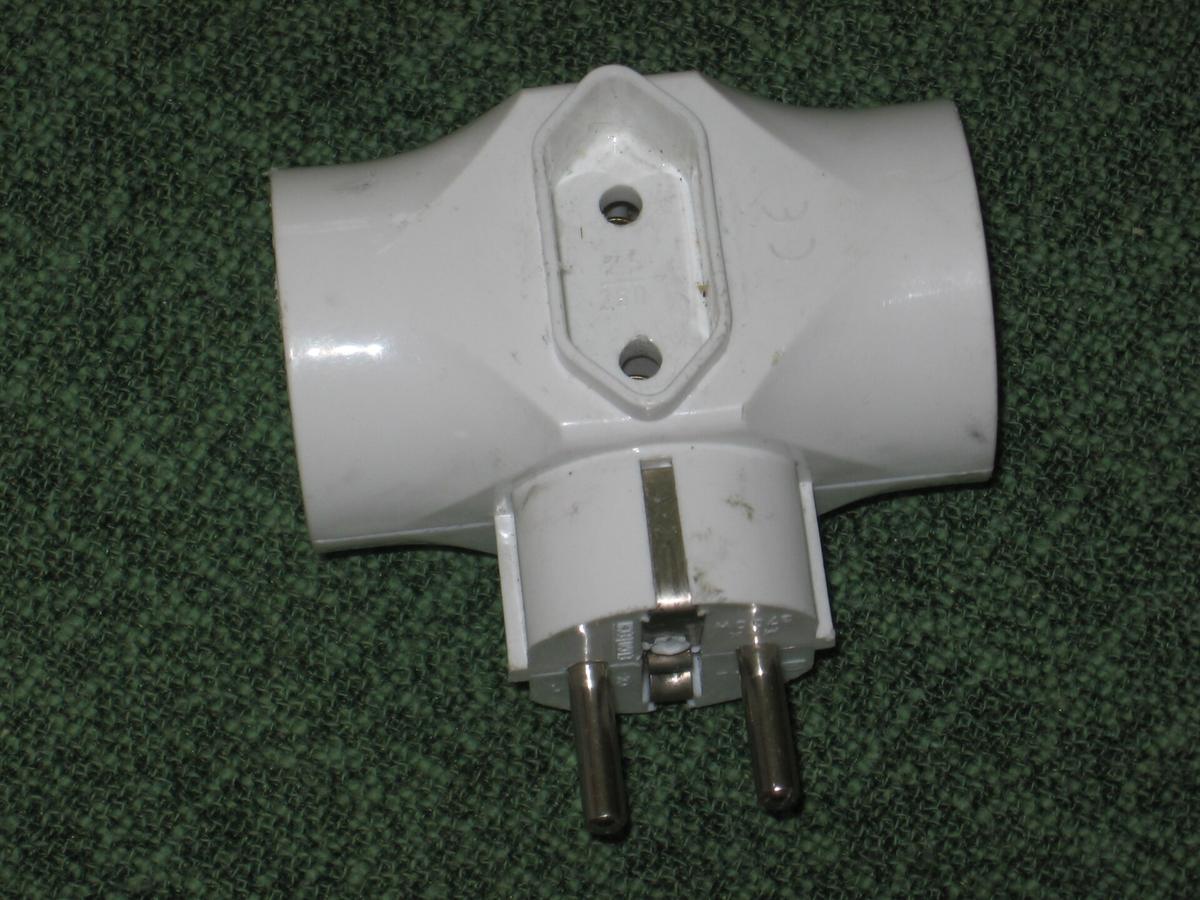
Type C and Type L look similar but they are not interchangeable in every socket. Type C is the standard Europlug with two round pins, 4mm thick, spaced 19mm apart. Type L has three round pins in a vertical row, with the central pin acting as an earth. The common outlet in the country is Type L, which has three holes but accepts both Type C and Type L plugs. That is the feature that creates the confusion. Most Type L sockets work fine with a Type C plug. The exception is the recessed type. Some older Chilean fittings are set into a deep circular recess. A Type C plug, with its short pins, cannot reach the contacts. Only a Type L plug with longer pins will connect. This is the scenario that catches travellers in rural areas.
If you plug in a Type C Europlug and it feels loose or produces no power, push gently while looking at the socket. If the pins are not making contact because of the recess, you need a Type L-specific adapter. A travel adapter that includes a Type L prong option solves this. The practical answer: buy an adapter that explicitly lists 'Type L' in its compatibility. Do not assume a generic 'Europe' adapter will work everywhere.
Chile Electronics Charging Guide: What to Pack and What to Leave
Your Packing List
This is a packing list for a two-week trip that covers the capital, the Atacama, and Patagonia. You need one travel adapter covering Type C and Type L. You need one high-capacity power bank. You need the original charging cables for your phone, laptop, camera, and any other device. You do not need a voltage converter unless you are bringing a single-voltage 110V hair dryer or electric razor. Leave those at home. Buy a dual-voltage travel hair dryer if you must have one. It costs less than the transformer and weighs less.
Off-Grid Survival
On the Carretera Austral and in the Atacama interior, there is zero mobile signal for hundreds of kilometres. Download offline maps, park permits, and bus tickets before you leave the city. In San Pedro de Atacama, ATMs run out of cash by midday on weekends. Do not depend on charging your phone at a café. Charge everything the night before a long transfer day. On overnight buses, USB ports are common on premium services but absent on older and rural buses. A power bank is not a luxury. It is the difference between navigating Patagonia with a working phone and arriving in Puerto Natales with a dead one.
Common Questions
Do I need a plug adapter for Chile from the US?
Yes, if your device has flat two-pin US plugs. Most mid-range hotels in Santiago and Providencia have multi-standard outlets that accept US plugs directly, but budget hotels, guesthouses in Chiloé, and accommodation on the Carretera Austral use Type L recessed sockets. A travel adapter covering Type C and Type L covers every scenario.
Can I use a UK plug in Chile without an adapter?
No. UK plugs use three rectangular pins. Chile uses Type C and Type L round-pin sockets. You need a travel adapter that converts your UK plug to Type C or Type L. Do not attempt to force a UK plug into a Chilean socket.
Is Chile 110V or 220V?
Chile is 220V at 50Hz. North American devices rated for 110V only will be damaged if plugged in without a step-down transformer. Check the input rating on every power brick. Most phone and laptop chargers are dual-voltage and work fine with only a plug adapter.
Will my iPhone charger work in Chile?
Yes. The Apple USB power adapter is dual-voltage. You need only a plug adapter for Type C or Type L sockets. The same applies to most modern Android phone chargers.
What happens if I plug a 110V hair dryer into a 220V socket in Chile?
It will likely burn out immediately, often with a pop and smoke. The heating element is not designed for double the voltage. Use only dual-voltage or 220V-rated devices for high-wattage appliances. A step-down transformer rated for the wattage of the device is required for 110V-only items.
Do hotels in Chile have USB ports?
Common in mid-range and higher hotels, especially in Santiago, Providencia, and Las Condes. Not guaranteed in budget accommodation, hostels, or remote lodges. USB-C is appearing in newer renovations but is not standard. Carry a power bank.
Can I buy a plug adapter at Santiago airport?
Yes. Shops in the arrivals hall at Arturo Merino Benítez Airport sell travel adapters. They cost more than buying online before your trip. The selection is limited and may not include the Type L-specific adapter needed for recessed sockets. Buying before you travel is the lower-risk option.
Read next
-
 Staying Connected in Chile, eSIM, Local SIM, or Offline Maps
How to get online in Chile: the RUT barrier for local SIMs, the eSIM alternative, and where on the Carretera Austral and in the Atacama you will have zero signal.
Staying Connected in Chile, eSIM, Local SIM, or Offline Maps
How to get online in Chile: the RUT barrier for local SIMs, the eSIM alternative, and where on the Carretera Austral and in the Atacama you will have zero signal.
-
 Best Time to Visit Chile by Region and What Each Season Actually Delivers
Chile spans three climate zones: Patagonia peaks in summer, the Atacama can flood in January, and Fiestas Patrias shuts the country in September.
Best Time to Visit Chile by Region and What Each Season Actually Delivers
Chile spans three climate zones: Patagonia peaks in summer, the Atacama can flood in January, and Fiestas Patrias shuts the country in September.
-
 Getting Around Chile Without Underestimating the Map
Chile's long-distance buses are comfortable but slow, and flying between the Atacama and Patagonia means backtracking through Santiago every time.
Getting Around Chile Without Underestimating the Map
Chile's long-distance buses are comfortable but slow, and flying between the Atacama and Patagonia means backtracking through Santiago every time.
-
 Chile Visa Rules and the PDI Receipt You Must Not Lose
Most Western passport holders enter Chile visa-free but receive a PDI receipt on arrival—losing it prevents hotel check-in and exit.
Chile Visa Rules and the PDI Receipt You Must Not Lose
Most Western passport holders enter Chile visa-free but receive a PDI receipt on arrival—losing it prevents hotel check-in and exit.
-
 Cash and Cards in Chile, Where the Peso Still Rules
Cards work in Chilean cities but rural buses and Patagonian guesthouses still demand cash, and ATMs in remote towns run out on weekends.
Cash and Cards in Chile, Where the Peso Still Rules
Cards work in Chilean cities but rural buses and Patagonian guesthouses still demand cash, and ATMs in remote towns run out on weekends.
-
 Chile Safety Advice Without the Overblown Warnings
Chile is safer than most of Latin America, but Patagonian wind destroys tents and car doors, and remote roads mean help is far away.
Chile Safety Advice Without the Overblown Warnings
Chile is safer than most of Latin America, but Patagonian wind destroys tents and car doors, and remote roads mean help is far away.
-
 A Ground-Level Logistics Guide to Independent Travel in China
First-time independent travel in China: what you need to know about visas, rail booking, eSIMs, mobile payments, and power adapters.
A Ground-Level Logistics Guide to Independent Travel in China
First-time independent travel in China: what you need to know about visas, rail booking, eSIMs, mobile payments, and power adapters.
-
 How Solo Travelers Stay Ahead of Flight Delays and Cancellations
How solo travelers can track inbound aircraft, claim rebooking rights, and adjust ground transport when flights go wrong — step by step.
How Solo Travelers Stay Ahead of Flight Delays and Cancellations
How solo travelers can track inbound aircraft, claim rebooking rights, and adjust ground transport when flights go wrong — step by step.
-
 Why Your eSIM Might Not Work Abroad and How to Check Before You Go
Buying an eSIM doesn't guarantee signal abroad. Learn why coverage fails by location and how to verify reach before you commit to a plan.
Why Your eSIM Might Not Work Abroad and How to Check Before You Go
Buying an eSIM doesn't guarantee signal abroad. Learn why coverage fails by location and how to verify reach before you commit to a plan.