When to Go to Chile, From the Atacama to Tierra del Fuego
Chile spans three climate zones: Patagonia peaks in summer, the Atacama can flood in January, and Fiestas Patrias shuts the country in September.
When to Go to Chile, from the Atacama to Tierra Del Fuego
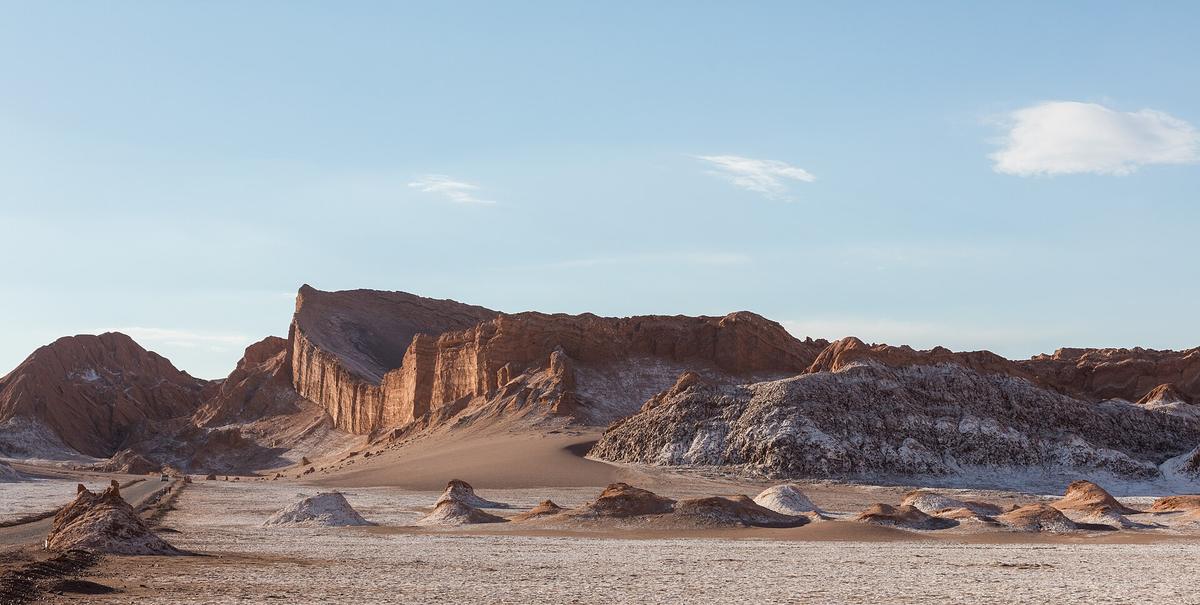
At 06:00 in San Pedro you step off a van into 3°C air to watch El Tatio Geysers steam against a black sky. By 15:00 the same day the temperature hits 30°C and you are sweating through a Valle de la Luna hike. That is the north. Do the same trip in the far south the same week and you swap cold-and-dry for cold-and-wet, ferries that cancel without warning, and a wind that rips car doors off their hinges. The best time to visit Chile depends entirely on which of the country's three climate zones you land in, because December is summer in the capital and the start of the rainy season on the Altiplano.
Chile Seasons by Region: Atacama, Central Valley and Patagonia
Chile runs 4,300 km from the driest desert on earth to the Antarctic gateways. A single recommendation is a trap. Break the country into three bands: the desert north, the Central Valley around the capital, and the south below Puerto Montt. Each operates on a different calendar. Knowing which season matters where is what stops you arriving in the Lake District during a monsoon or baking in the northern desert in January when the Altiplano roads have washed out.

What Each Season Actually Delivers
December to February: Peak Patagonia, Washout Atacama
December through February is the southern hemisphere summer. The south is warmest and most accessible. Torres del Paine hikes like the Base Las Torres lookout (an 8-10 hour round trip) run on stable snow-free trails. Grey Glacier kayak trips launch daily. But this is also when Torres del Paine and the Carretera Austral book out completely. Prices for rental cars and accommodation in the south double. Park entry is online-only since 2024 and daily capacity limits apply. Book by November or you sleep in Puerto Natales.
Meanwhile the desert and the Altiplano hit the Bolivian winter. January and February bring sudden heavy afternoon thunderstorms to the highlands. Roads around San Pedro wash out. The salt flats and geyser basins remain accessible but the jeep tracks to the altiplano lagoons turn to mud. A trip to El Tatio can get cancelled by a 15:00 flash flood. February is the worst month for this. The Central Valley is dry and hot. The capital empties out as locals go to the coast. It is the easiest time to drive the wine valleys like Colchagua, but the heat (highs above 32°C) makes midday vineyard walks punishing. Ski season ended in October.
March to May: Shoulder Season That Works
March and April are the best compromise. The south is still trekking-viable. Refugios begin to close from late March but the weather is less extreme and the crowds thin. The Carretera Austral remains open on its northern section (Puerto Montt to Coyhaique) and mostly paved segments hold. The Lake District sees settled autumn colours. In the Central Valley the wine harvest runs February to April. Pisco Elqui Valley observatories are clear at night. The northern desert is dry again after the Altiplano rains fade. Temperatures are manageable. Geyser visits at 4,320 m are still freezing cold (below -5°C before dawn) but daylight hiking is pleasant. Easter Island (a 5.5-hour flight from the capital) is calm this month. The one downside: some ferry services on Navimag and Naviera Austral reduce frequency. But you can move.
June to August: Southern Winter, Ski Season, Northern Dry
Central Chile ski season runs June to early October. Main resorts near the capital, Valle Nevado, La Parra, Portillo, peak in August. Snowpack is reliable. The Central Valley is cool and wet in the Mediterranean winter, but the northern desert is at its clearest: no clouds, no rain, zero humidity. This is the window for astronomers targeting the extreme aridity of the northern sky. San Pedro runs on its high season for astro-tourism. The Carretera Austral in June-July is where the summer crowd never goes, for good reason. Heavy rain and ferry cancellations shut large sections. The southern section (Coyhaique to Villa O'Higgins) is mostly gravel and ice. Navimag crossings from Puerto Montt to Puerto Natales run but can be delayed. Tierra del Fuego and Punta Arenas are bleak, proud, and sheep-farming quiet. You can see the Magellanic penguins at Isla Magdalena only until March. Skip the far south in these two months.
September to November: Spring Chaos and the Two-Window Trap
September 18-19 is Fiestas Patrias travel chaos. The holiday is a full week of sold-out buses from Terminal Alameda and Terminal San Borja in the capital, closed shops, and nationwide movement. Buses to Valparaíso, the Lake District, and the entire Central Valley are booked from September 15. Do not fly into Chile expecting to travel from September 17 to September 23. Book everything three months ahead or stay put in one city and watch the fondas (street parties).
October is the start of spring trekking shoulder season in the south. Some refugios in Torres del Paine open from October. Weather is unstable and the wind peaks. It is a good window if you want fewer hikers and can tolerate sideways rain. The northern desert sees higher winds but stable roads. If winter rainfall was sufficient, the Desierto Florido (flowering desert) blooms between late August and October in the northern coast regions. The last major event was 2022, so check current reports.
| Month | Atacama North | Central Valley | Patagonia South |
|---|---|---|---|
| December | Hot, dry days; Altiplano afternoon storms begin | Dry, hot; high 30°C possible | Peak trekking; warmest; fully booked |
| January | Bolivian winter: heavy rain on Altiplano; roads wash out | Dry, hot; capital empties | Peak trekking; high prices; park capacity limits |
| February | Bolivian winter peaks; flash flood risk in San Pedro | Dry, hot; wine harvest starts | Warm but crowded; book by November |
| March | Dry again; clear skies | Milder; harvest season | Shoulder; refugios close late March |
| April | Dry; cold nights | Autumn; wine harvest ends | Shoulder; fewer services; calmer weather |
| May | Dry, cold at altitude | Winter starts; rainy; ski season opens late | Winter; few services; Carretera risky |
| June | Clear; freezing nights | Winter peaks; ski season | Heavy rain; ferries cancel; avoid |
| July | Clear; very cold | Winter; ski peak | Heavy rain; ferry cancellations; road closures |
| August | Clear; cold | Spring start; ski season ongoing | Winter; poor access; not recommended |
| September | Clear; windy; Desert Flower possible | Spring; Fiestas Patrias disruption Sep 18-19 | Very windy; shoulder season starts late month |
| October | Windy; stable | Spring; pleasant | Shoulder; unstable weather; fewer hikers |
| November | Dry; warm days | Spring; wine season ends | Trekking season begins early month; book ahead |
Getting There Without a Flight Nightmare
Most flights arrive at Arturo Merino Benítez (SCL) in the capital. From the terminal, official taxis cost a fixed CLP 25,000-30,000 to the city center (30-45 minutes). The cheaper option is the Centropuerto bus (CLP 2,000) to Los Héroes or Pajaritos metro stations. Do not take an unmarked car from arrivals.
For the south, fly into Punta Arenas (PUQ) or Puerto Montt (PMC). For the northern desert, Calama (CJC). The trap: flying between the far north (Calama) and the far south (Punta Arenas) always connects back through the capital. That is a full day lost. A two-week itinerary landing in the capital and trying to see the desert, the Lake District, and Torres del Paine is a logistical failure disguised as a plan.
The dominant long-distance mode is the semi-cama bus with fully reclining seats. Be prepared for a 10-hour ride that is winding, stop-start, with arctic air conditioning and a locked bathroom. Payment must be cash or a Chilean debit card for online booking. Foreign credit cards are frequently rejected on Turbus and Pullman Bus websites. Buy tickets physically at the terminal if you are outside the country. In rural areas and for buses, cash is king. ATMs in the far south and the northern desert run out of money by midday on weekends.
Common Questions
When is the best time to visit the Atacama Desert?
March through May and September through November. These months are dry, clear, and avoid the Bolivian winter (December to February) which washes out roads around San Pedro. Winter months (June to August) are extremely clear for astronomy but cold at altitude. El Tatio Geysers at 4,320 m can drop below -10°C before dawn.
Can I visit Patagonia in December without advance bookings?
No. December through February is the high season. Torres del Paine park entry is online-only since 2024 with daily capacity limits. Torres del Paine fully books by October. Accommodation in Puerto Natales and within the park doubles in price. If you have not booked by November, skip the south entirely or expect to sleep in Punta Arenas.
Is it safe to drive the Carretera Austral in June?
No. June and July bring heavy rain and ferry cancellations. The southern section (Coyhaique to Villa O'Higgins) is mostly gravel and becomes icy. Navimag, Naviera Austral, and Transmarchilay ferries cancel frequently in winter. Only attempt the Carretera Austral between November and March.
How does Fiestas Patrias affect travel in September?
September 18-19 triggers a full week of nationwide chaos. Buses from Terminal Alameda and Terminal San Borja sell out by September 15. Hotels double. Many businesses close for the week. Avoid any regional travel from September 15 to September 23 unless you have booked everything at least three months ahead.
What is the minimum number of days needed for Chile?
14 days. Anything less forces you to either skip the northern desert or the far south entirely, or burn days on internal flights that connect through the capital. A one-week trip landing in SCL and trying to see the north and south will cost over USD 1,500 in internal flights and still leave you with only 3-4 days on the ground.
Read next
-
 Staying Connected in Chile, eSIM, Local SIM, or Offline Maps
How to get online in Chile: the RUT barrier for local SIMs, the eSIM alternative, and where on the Carretera Austral and in the Atacama you will have zero signal.
Staying Connected in Chile, eSIM, Local SIM, or Offline Maps
How to get online in Chile: the RUT barrier for local SIMs, the eSIM alternative, and where on the Carretera Austral and in the Atacama you will have zero signal.
-
 Getting Around Chile Without Underestimating the Map
Chile's long-distance buses are comfortable but slow, and flying between the Atacama and Patagonia means backtracking through Santiago every time.
Getting Around Chile Without Underestimating the Map
Chile's long-distance buses are comfortable but slow, and flying between the Atacama and Patagonia means backtracking through Santiago every time.
-
 Chile Visa Rules and the PDI Receipt You Must Not Lose
Most Western passport holders enter Chile visa-free but receive a PDI receipt on arrival—losing it prevents hotel check-in and exit.
Chile Visa Rules and the PDI Receipt You Must Not Lose
Most Western passport holders enter Chile visa-free but receive a PDI receipt on arrival—losing it prevents hotel check-in and exit.
-
 Cash and Cards in Chile, Where the Peso Still Rules
Cards work in Chilean cities but rural buses and Patagonian guesthouses still demand cash, and ATMs in remote towns run out on weekends.
Cash and Cards in Chile, Where the Peso Still Rules
Cards work in Chilean cities but rural buses and Patagonian guesthouses still demand cash, and ATMs in remote towns run out on weekends.
-
 Chile Safety Advice Without the Overblown Warnings
Chile is safer than most of Latin America, but Patagonian wind destroys tents and car doors, and remote roads mean help is far away.
Chile Safety Advice Without the Overblown Warnings
Chile is safer than most of Latin America, but Patagonian wind destroys tents and car doors, and remote roads mean help is far away.
-
 What a Trip to Chile Actually Costs, Shaped by Region and Season
How a Chile trip budget is shaped by region and season, from Patagonia's supply-driven premiums to the Atacama's tour-dependent costs and the Central Valley's
What a Trip to Chile Actually Costs, Shaped by Region and Season
How a Chile trip budget is shaped by region and season, from Patagonia's supply-driven premiums to the Atacama's tour-dependent costs and the Central Valley's
-
 A Ground-Level Logistics Guide to Independent Travel in China
First-time independent travel in China: what you need to know about visas, rail booking, eSIMs, mobile payments, and power adapters.
A Ground-Level Logistics Guide to Independent Travel in China
First-time independent travel in China: what you need to know about visas, rail booking, eSIMs, mobile payments, and power adapters.
-
 How Solo Travelers Stay Ahead of Flight Delays and Cancellations
How solo travelers can track inbound aircraft, claim rebooking rights, and adjust ground transport when flights go wrong — step by step.
How Solo Travelers Stay Ahead of Flight Delays and Cancellations
How solo travelers can track inbound aircraft, claim rebooking rights, and adjust ground transport when flights go wrong — step by step.
-
 Why Your eSIM Might Not Work Abroad and How to Check Before You Go
Buying an eSIM doesn't guarantee signal abroad. Learn why coverage fails by location and how to verify reach before you commit to a plan.
Why Your eSIM Might Not Work Abroad and How to Check Before You Go
Buying an eSIM doesn't guarantee signal abroad. Learn why coverage fails by location and how to verify reach before you commit to a plan.