Planning Around the Poland Public Holidays Calendar and Closures
Poland shuts down for public holidays, and the Sunday trading ban adds another layer. Some dates move each year — here is what to plan around.
Polish Public Holidays and What They Mean for Travel
On a public holiday in Poland, shops vanish, trains thin out, and domestic travel surges. But the same calendar also delivers something worth seeing. Thirteen nationally recognised public holidays shut banks, offices, schools, and most shopping centres. Petrol stations, pharmacies, some small convenience stores, and most restaurants stay open. Public transport runs on reduced schedules. The failures matter more: what you cannot buy, where you cannot go, and when the roads clog. Every holiday is named below, with the closures and the dates that genuinely disrupt a trip.
The 13 Public Holidays: Fixed and Movable
Nine public holidays fall on fixed dates: New Year's Day (1 January), Epiphany (6 January), Labour Day (1 May), Constitution Day (3 May), Assumption of the Blessed Virgin Mary (15 August), All Saints' Day (1 November), National Independence Day (11 November), Christmas Day (25 December), and the Second Day of Christmas (26 December). Four move with the ecclesiastical calendar: Easter Sunday, Easter Monday, Pentecost (49 days after Easter), and Corpus Christi (60 days after Easter). No regional public holidays exist. All 13 apply nationwide. If a fixed holiday falls on a Saturday, no replacement day is granted. If it falls on a Sunday, you lose it.

Polish Bank Holidays Travel Impact: What Actually Closes
Shops, Museums and Public Transport
On any public holiday, shopping centres, supermarkets, and most chain stores close. Bank branches close. Museums and galleries close or operate on shorter hours. Major landmarks such as Wawel Castle, Wieliczka Salt Mine, and Auschwitz-Birkenau Memorial stay open with timed entry slots that sell out faster on these days. Book those slots before you travel. Restaurants in city centres stay open. Rural restaurants may not. Pharmacies rotate duty schedules; a 24-hour pharmacy remains findable in any city. Petrol stations operate normally, including their attached convenience shops. Public transport runs on a Sunday or reduced schedule. Allow extra time between connections.
The Majówka Surge
The exception to the rule is the first week of May. Labour Day (1 May) and Constitution Day (3 May) sit three days apart. Poles take the gap as a long weekend, creating Majówka. Hotels in Kraków, Gdańsk, and Zakopane sell out weeks ahead. Train seats on EIP services require reservations booked early. Road traffic out of Warsaw on the A2 and A4 motorways spikes on the afternoon of 30 April and returns on the evening of 4 May. If you are not joining the surge, book accommodation away from city centres or plan a rural stay in Warmia-Masuria or Lower Silesia where crowd pressure drops.
| What Closes | What Stays Open | Transport |
|---|---|---|
| Shopping centres, supermarkets, chain stores | Petrol stations, pharmacies, small convenience stores | Reduced schedule, Sunday-level frequency |
| Banks, offices, schools | Restaurants (city centres), museums (some) | PKP Intercity runs but fewer trains |
| Post offices, government services | Duty pharmacies (rotating) | Local buses and trams on weekend timetables |
All Saints Day Poland Traffic: Why 1 November Matters
The Traffic
All Saints' Day is the single heaviest traffic day in Poland. Poles travel to family graves in huge numbers. Cemeteries, especially Powązki in Warsaw, Rakowicki in Kraków, and the Łostowicki cemetery in Gdańsk, see crowds that paralyse surrounding streets. Tram and bus services near cemeteries run extra capacity but still clog. Road closures go into effect around major cemeteries from late afternoon on 31 October through the evening of 1 November. Taxi and ride-share prices surge.
What to Do
Stay within walking distance of your accommodation. If cemetery visiting is not your plan, treat 1 November as a day to stay indoors or explore areas far from necropolises. Outdoor attractions feel lifeless anyway. November in Poland is grey and wet.
Polish Sunday Trading Ban: a Year-Round Friction
How the Ban Works
The Sunday trading ban operates independently of public holidays. On most Sundays, shops and shopping centres are closed. Designated trading Sundays occur roughly seven times per year: the last Sunday of January, April, June, and August, plus two Sundays before Christmas. The exact dates change annually and are set by regulation. Check the current list before planning a Sunday arrival or departure. On a non-trading Sunday, only petrol stations, pharmacies, small family-run shops, and bakeries may open. Large supermarkets remain locked.
Surviving a Closed Sunday
Plan grocery runs for Saturday. If you arrive on a Sunday, eat at a restaurant or buy essentials from a Żabka convenience store, which operates under an exemption as a franchise chain. Milk bars, serving cheap pierogi and zapiekanka, stay open as well.

Majówka Sellouts and Corpus Christi Disruptions
Majówka: Book Early or Stay Elsewhere
Two periods genuinely threaten a well-planned itinerary. Majówka, the first week of May, produces sellouts of hotels, hostels, and Airbnb rentals in Kraków, Gdańsk, Zakopane, and Wrocław. Restaurant bookings fill. Train seats vanish. Confirm every reservation at least four weeks ahead. Or stay in a smaller city such as Toruń, Poznań, or Katowice, which draw less domestic traffic.
Corpus Christi: Processions and Road Closures
Corpus Christi, a movable holiday in May or June, features religious processions that close main squares and streets in the afternoon. Wrocław Market Square, Kraków's Main Market Square, and streets around Jasna Góra in Częstochowa become impassable from roughly midday until evening. Plan sightseeing for the morning. Public transport reroutes around procession routes. Check local announcements via the Jakdojade app for tram and bus diversions.
Fat Thursday Poland Date: a Cultural Moment to Catch
Fat Thursday, the last Thursday before Lent, is not a public holiday. Shops and transport operate normally. But it is the one day when pączki, Polish filled doughnuts, achieve national obsession. Bakeries sell tens of millions. Queues form outside patisseries from early morning. In Kraków, the longest line wraps around the Cracovia Hotel bakery on Aleja Focha. In Warsaw, the queue at Cukiernia Sowa on Puławska stretches for blocks. The date moves with Easter. Buy a pączek from a bakery, not a supermarket. The lody naturalne ice cream season has not started, but this is the next best sweet street-food moment. No closures result. Expect crowds in bakery districts from 07:00 to 11:00.
School Holidays and Domestic Travel Surges
Summer Break and Winter Break
School holidays drive domestic travel demand far beyond public holidays. The school year runs 1 September to the last Friday of June. Summer break from the Saturday after the last Friday of June through 31 August produces peak domestic tourism in the Tatra foothills, the Baltic coast, and the Mazury lake district. Zakopane's trails to Morskie Oko become shoulder-to-shoulder. Gdańsk and the Hel Peninsula fill. Accommodation prices in these zones double. Winter break, ferie zimowe, runs across four two-week slots from mid-January to late February, staggered by voivodeship. This draws families to Zakopane, Białka Tatrzańska, and other ski destinations.
The Quietest Windows
Lowest domestic travel demand occurs in November, early December, mid-January outside winter break weeks, and March outside Easter. Travel in those windows for empty trains and quiet cities.
Frequently Asked Questions
Are shops open on public holidays in Poland?
Most shops and shopping centres close. Petrol stations, pharmacies, some small convenience stores, and restaurants remain open. Public transport runs on reduced Sunday schedules.
Does the Sunday trading ban apply to all Sundays?
No. Approximately seven designated trading Sundays exist per year, including the last Sunday of January, April, June, and August, and two Sundays before Christmas. Exact dates change each year and are set by government regulation.
What is the biggest traffic day in Poland?
All Saints' Day on 1 November. Poles travel to cemeteries nationwide, causing road closures and public transport crowding around major necropolises. Avoid driving near cemeteries on this day.
When is Majówka and why does it affect travel?
Majówka falls on the first week of May, covering Labour Day (1 May) and Constitution Day (3 May). Poles take the gap as a long weekend, causing hotel sellouts, train reservation shortages, and road traffic surges out of Warsaw.
Is Fat Thursday a public holiday?
No. It is not a public holiday and nothing closes. It is a cultural day when Poles eat pączki doughnuts in large numbers. Bakery queues form in city centres.
What happens on Corpus Christi in Poland?
Religious processions close main squares and streets in the afternoon. Wrocław Market Square, Kraków's Main Market Square, and streets around Jasna Góra become impassable until evening. Plan sightseeing for the morning.
Do museums and attractions open on public holidays?
Many museums and galleries close or operate on reduced hours. Major landmarks such as Wawel Castle, Wieliczka Salt Mine, and Auschwitz-Birkenau Memorial stay open but require timed entry booked ahead. Check individual websites for schedules.
Read next
-
 Staying Connected in Poland, from eSIM to a Paper Map Backup
Poland's connectivity splits sharply between city squares with free Wi-Fi and rural dead zones. Here's how to choose between eSIM, local SIM, or neither.
Staying Connected in Poland, from eSIM to a Paper Map Backup
Poland's connectivity splits sharply between city squares with free Wi-Fi and rural dead zones. Here's how to choose between eSIM, local SIM, or neither.
-
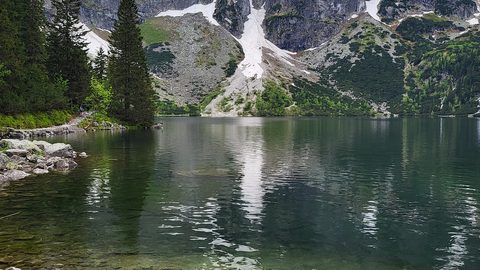 Best Time to Visit Poland, What Each Season Actually Does
Summer brings long days and festivals but peak crowds in Kraków and Zakopane. November is grey and wet. Here is what each season actually delivers.
Best Time to Visit Poland, What Each Season Actually Does
Summer brings long days and festivals but peak crowds in Kraków and Zakopane. November is grey and wet. Here is what each season actually delivers.
-
 Getting Around Poland, Trains, Tickets, and What the Map Oversells
Polish trains connect the country well, but operator-specific tickets and mandatory seat reservations on EIP services trip up the unprepared.
Getting Around Poland, Trains, Tickets, and What the Map Oversells
Polish trains connect the country well, but operator-specific tickets and mandatory seat reservations on EIP services trip up the unprepared.
-
 Poland Visa Rules, Who Needs One and How the Schengen Process Works
Poland is part of the Schengen zone. Most Western passport holders get 90 days visa-free, but the rules change for others — here is exactly who needs what.
Poland Visa Rules, Who Needs One and How the Schengen Process Works
Poland is part of the Schengen zone. Most Western passport holders get 90 days visa-free, but the rules change for others — here is exactly who needs what.
-
 Money in Poland, Złoty, Cards, and Where Cash Still Wins
Poland runs on the złoty, not the euro. Cards work in cities, but milk bars, rural shops, and Sunday closures mean cash still matters.
Money in Poland, Złoty, Cards, and Where Cash Still Wins
Poland runs on the złoty, not the euro. Cards work in cities, but milk bars, rural shops, and Sunday closures mean cash still matters.
-
 Is Poland Safe, Reading the Advice Without Being Misled by It
Poland is broadly safe with low violent crime. The real risks are plain-clothes ticket inspectors, jaywalking fines, and the language barrier in rural emergencies.
Is Poland Safe, Reading the Advice Without Being Misled by It
Poland is broadly safe with low violent crime. The real risks are plain-clothes ticket inspectors, jaywalking fines, and the language barrier in rural emergencies.
-
 A Ground-Level Logistics Guide to Independent Travel in China
First-time independent travel in China: what you need to know about visas, rail booking, eSIMs, mobile payments, and power adapters.
A Ground-Level Logistics Guide to Independent Travel in China
First-time independent travel in China: what you need to know about visas, rail booking, eSIMs, mobile payments, and power adapters.
-
 How Solo Travelers Stay Ahead of Flight Delays and Cancellations
How solo travelers can track inbound aircraft, claim rebooking rights, and adjust ground transport when flights go wrong — step by step.
How Solo Travelers Stay Ahead of Flight Delays and Cancellations
How solo travelers can track inbound aircraft, claim rebooking rights, and adjust ground transport when flights go wrong — step by step.
-
 Why Your eSIM Might Not Work Abroad and How to Check Before You Go
Buying an eSIM doesn't guarantee signal abroad. Learn why coverage fails by location and how to verify reach before you commit to a plan.
Why Your eSIM Might Not Work Abroad and How to Check Before You Go
Buying an eSIM doesn't guarantee signal abroad. Learn why coverage fails by location and how to verify reach before you commit to a plan.