Identifying the Denmark Power Plug Type Before You Leave Home
Denmark uses the Type K socket but accepts common European plugs. Here is what to pack for Danish 230V power and where adapters still jam.
Electrical Sockets in Denmark and What Your Adapter Needs to Handle
Voltage and What Your Devices Can Survive
You get into your Copenhagen hotel room after a 15-minute metro ride from the airport, reach for your phone charger, and the plug does not fit. The socket has three holes: two round ones and a U-shaped grounding pin below them. That is the Danish Type K socket, and you need a specific travel plug to make it work. Here is exactly what to pack.
Denmark uses mains voltage of 230 V and a frequency of 50 Hz. Every device you plug in must handle that voltage or you risk destroying it. Most phone, laptop, and camera chargers are dual voltage and will work with just a plug converter. Look at the fine print on the charger brick: if it says 100-240 V, you are fine. If it says only 110-120 V, you need a step-down transformer to avoid burning out the device. A hairdryer from the US or Japan almost always falls into the second category and will not last five seconds at 230 V.
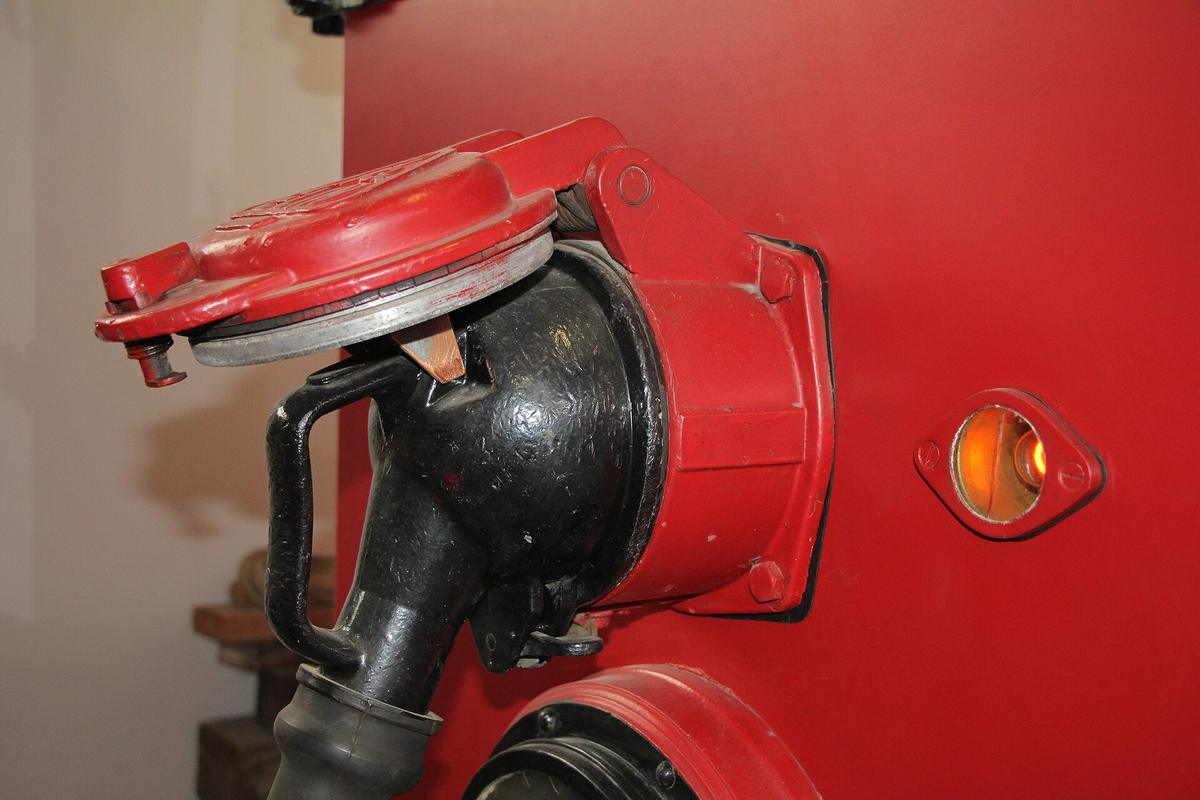

Which Plug Types Actually Fit a Danish Socket
Denmark uses four plug types across the country. The official socket is Type K, the one with the U-shaped earth pin. But almost every modern Danish socket also accepts the common European Type C plug (two round prongs, no earth) and the Type F Schuko plug (two round prongs with side earth clips, the norm in Germany and much of mainland Europe). Type E plugs, the French style with a protruding earth pin in the socket itself, also fit in many Danish installations.
For a traveller this means: if you have a European two-pin charger, it will work in a Danish wall socket without anything special. The problem comes when you have devices with a third earth pin, or a chunky converter that is too wide for the narrow Danish socket recess. Many universal travel converters labelled for Europe cover all these types. Buy one explicitly marked Type C/E/F/K compatibility and you cover every socket you will see in Denmark.
The Shaver Socket Trap in Older Bathrooms
Why Your Universal Plug Fails in the Bathroom
One detail catches travellers out more than any other. Older Danish bathrooms, particularly in guesthouses and private rentals built before the 1990s, have a shaver socket recessed into the wall with a raised plastic rim. That rim is exactly the width of a universal travel converter. Your plug will not seat fully, the prongs will not make contact, and nothing charges.
Pack a slim two-pin Type C plug for bathroom charging, not your bulky universal brick. Newer hotels have Type K sockets in bathrooms or USB ports. But if you are booking a summer house or a budget guesthouse, assume the bathroom socket is the old raised-rim style and plan accordingly. Charge your devices in the bedroom instead, where sockets are the flat type.
| Type | Prongs | Earth Pin | Fits Danish Sockets? | Commonly Used For |
|---|---|---|---|---|
| Type K | Two round | U-shaped pin below | Yes, the Danish socket | All permanent installations |
| Type C | Two round | None | Yes, in all modern sockets | Phone chargers, small appliances |
| Type F (Schuko) | Two round with side clips | Side earthing clips | Yes, most installations | Laptops, larger appliances from Germany/Poland |
| Type E | Two round | Socket-side pin (French) | Yes, many installations | French appliances, some universal adaptors |
USB Charging on the Move
Hotels and Rentals
If you arrive without a plug converter, you can still charge in a few places. Hotels built or renovated since approximately 2015 often have USB-A ports built into lamps or bedside sockets. Properties opened after 2020 increasingly include USB-C. But this is not common across older guesthouses, hostels, or private summer rentals, so do not rely on it.
Trains, Buses and Flights
On transport, USB availability varies by carrier and rolling stock. The Copenhagen Metro has USB-A sockets on M3 and M4 lines, but not on M1 or M2 trains which serve the airport. DSB long-distance trains have USB-A in first class on some services, but not on all trains or all carriages. FlixBus and Kombardo Expressen coaches serving Danish routes fit USB-A on most vehicles. Domestic flights on SAS, Norwegian, and DAT do not have USB ports. S-tog suburban trains in Copenhagen do not have them fitted.
Packing the Right Adapter Matters More in Summer Houses and Rural Rentals
What to Pack for a Week
The single most common mistake is assuming a two-pin European plug covers everything. It does for charging, but the bathroom socket trap and the lack of USB in older buildings mean you need to think ahead. For a 7-day trip combining Copenhagen with a coastal region, pack a universal adaptor plus one slim Type C plug as backup. If you are staying in a Danish summer house, bring a power strip of your own. Many rentals have exactly one accessible socket per room, and the one in the kitchen is behind the fridge.
The Rural Arrival You Want to Avoid
Denmark suits travellers who plan around its quiet rhythms and bring the right gear for its understated infrastructure. It does not suit anyone who expects spontaneous late-night convenience stores open past 18:00 or a socket wherever they stop. Pack your adaptor before you leave. The one thing that goes wrong most often is arriving at a rural cottage at 22:00 in July with 19 hours of daylight left but zero phone charge, and the only shop that sells adaptors closed two hours ago.
Common Questions
Do I need a voltage converter for Denmark?
Only if your device is rated for 110-120 V only. Check the charger brick. If it says 100-240 V, you only need a plug adaptor. A US hairdryer or straightener almost always needs a step-down transformer at 230 V.
Will my US two-pin plug work in Denmark?
No. US flat parallel prongs do not fit Danish round-pin sockets. You need a travel adaptor that converts to Type C (two round pins) at minimum.
Can I buy an adaptor at Copenhagen Airport?
Yes. Electronics shops in the arrivals hall sell universal adaptors. But buying before you travel saves time and costs less.
What happens if I plug a 110 V device into a 230 V socket?
The device will likely overheat, emit smoke, and fail permanently within seconds. A step-down transformer is mandatory for non-dual-voltage appliances.
Do Danish power strips accept my existing adaptor?
Yes, if your adaptor has the correct plug type. A Danish power strip has Type K sockets and will accept Type C, E, F, and K plugs.
Are public USB charging stations common in Denmark?
Not outside major hotels and some cafes. Carry a high-capacity power bank, especially for day trips to coastal areas and islands.
Can I use my German or French plug in Denmark without an adaptor?
Almost always. Type F (German Schuko) and Type E (French) plugs fit most modern Danish Type K sockets. Only very old Danish sockets may reject the side earthing clips of a Type F plug.
Read next
-

 Staying Connected in Denmark eSIM Local SIM or Just Roaming
Denmark runs on MobilePay but tourists are locked out—here is how to stay connected for the DSB app, ferry bookings, and the coin-only toilets that define
Staying Connected in Denmark eSIM Local SIM or Just Roaming
Denmark runs on MobilePay but tourists are locked out—here is how to stay connected for the DSB app, ferry bookings, and the coin-only toilets that define
-
 Best Time to Visit Denmark, What Each Season Actually Does
Denmark's seasons swing from 17-hour summer daylight to seven-hour winter gloom. This page explains what each season does to crowds, closures, and your trip.
Best Time to Visit Denmark, What Each Season Actually Does
Denmark's seasons swing from 17-hour summer daylight to seven-hour winter gloom. This page explains what each season does to crowds, closures, and your trip.
-
 Getting Around Denmark, Trains, Ferries, and What the Map Oversells
Denmark's transport map looks seamless but hides ferry gaps, cashless buses, and a Rejsekort system that punishes forgetfulness.
Getting Around Denmark, Trains, Ferries, and What the Map Oversells
Denmark's transport map looks seamless but hides ferry gaps, cashless buses, and a Rejsekort system that punishes forgetfulness.
-
 Denmark Visa Rules, Who Needs One and How the Application Works
Denmark is in the Schengen zone. This page explains who needs a visa to enter, how the Danish application process works, and what ETIAS will change.
Denmark Visa Rules, Who Needs One and How the Application Works
Denmark is in the Schengen zone. This page explains who needs a visa to enter, how the Danish application process works, and what ETIAS will change.
-
 Money in Denmark, Danish Krone, Cards, and When Cash Still Wins
Denmark runs on cards and MobilePay, but tourists cannot get MobilePay. Here is how to handle Danish krone, where cash still matters, and why tap water costs.
Money in Denmark, Danish Krone, Cards, and When Cash Still Wins
Denmark runs on cards and MobilePay, but tourists cannot get MobilePay. Here is how to handle Danish krone, where cash still matters, and why tap water costs.
-
 Safety in Denmark, Reading the Advice Without Being Misled by It
Denmark is a low-crime country, but cycling culture, coastal weather, and tidal flats pose real risks. This page reads the safety advice critically.
Safety in Denmark, Reading the Advice Without Being Misled by It
Denmark is a low-crime country, but cycling culture, coastal weather, and tidal flats pose real risks. This page reads the safety advice critically.
-
 A Ground-Level Logistics Guide to Independent Travel in China
First-time independent travel in China: what you need to know about visas, rail booking, eSIMs, mobile payments, and power adapters.
A Ground-Level Logistics Guide to Independent Travel in China
First-time independent travel in China: what you need to know about visas, rail booking, eSIMs, mobile payments, and power adapters.
-
 How Solo Travelers Stay Ahead of Flight Delays and Cancellations
How solo travelers can track inbound aircraft, claim rebooking rights, and adjust ground transport when flights go wrong — step by step.
How Solo Travelers Stay Ahead of Flight Delays and Cancellations
How solo travelers can track inbound aircraft, claim rebooking rights, and adjust ground transport when flights go wrong — step by step.
-
 Why Your eSIM Might Not Work Abroad and How to Check Before You Go
Buying an eSIM doesn't guarantee signal abroad. Learn why coverage fails by location and how to verify reach before you commit to a plan.
Why Your eSIM Might Not Work Abroad and How to Check Before You Go
Buying an eSIM doesn't guarantee signal abroad. Learn why coverage fails by location and how to verify reach before you commit to a plan.