Reading the Denmark Public Holidays Calendar for Your Travel Dates
Some Danish public holidays close everything; others just mean bonfires and beer. This page sorts the shutdown days from the street parties.
Which Days Does Denmark Actually Shut Down?
You need to know which days Danish shops, museums, and attractions close, not just which dates are marked on a calendar. The answer splits in two: fixed and moveable public holidays where most of the country locks its doors, and cultural days where nothing shuts and the party happens in the streets. This is the Denmark public holidays calendar that matters for a visitor, not the one that lists every flag day.
The Holidays That Shut Everything Down
Denmark's full closure days are few but absolute. On Christmas Day (25 December), New Year's Day (1 January), and Easter Sunday, almost every shop, supermarket, bank, and public office closes entirely. Museums and attractions open on Easter Sunday, Maundy Thursday, Good Friday, Easter Monday, Ascension Day, Whit Sunday, and Whit Monday, but many run reduced hours. Smaller towns will have nothing open at all on these days. Restaurants in larger cities stay open; in rural areas they close on Christmas Eve (24 December), Christmas Day, and New Year's Eve.
Public transport runs a reduced Sunday or holiday schedule on every public holiday. Plan your train or bus for the day before if you need to reach a rural area. The Danish State Railways (DSB) publishes the holiday timetable about two weeks ahead on its app. Do not assume a 14:00 train still runs at that time.
Store Bededag Abolished From 2024
The most significant recent change to the Denmark public holidays calendar is the abolition of Store Bededag (Great Prayer Day) as a public holiday from 2024. It is now an ordinary working day. Shops and offices open as normal. Some municipalities retain it as a school holiday, but the closure rules that applied before are gone. If you read an older travel guide that tells you everything shuts on the fourth Friday after Easter, ignore it. Check the current year's calendar published by the Danish Ministry of Foreign Affairs for the exact holiday dates that remain in force.

The Cultural Days That Do Not Close a Thing
Sankt Hans Aften (Midsummer Eve, 23 June) is Denmark's biggest bonfire night. People gather at beaches, sing, and watch a witch effigy burn. Every shop, museum, and supermarket operates its normal hours. The same applies to J-Dag, the day in early November when Tuborg releases its Christmas beer. Bars and cafés fill up, but you can buy groceries and visit museums without interruption. Constitution Day (5 June) is a half-day closure: shops and offices open but close by 14:00 or 16:00. Christmas Eve and New Year's Eve are not statutory holidays, but most businesses close by 14:00 or 15:00. By 16:00 on Christmas Eve, the capital is a ghost town.
The Saturday Closure Culture That Runs Year Round
This is the detail that catches more visitors than any public holiday. Most shops close between 14:00 and 16:00 on Saturdays. This is not a public holiday behaviour. It is a year-round rule. Outside the capital, you need to do your Saturday shopping before early afternoon or you find locked doors. Sunday is a near-total shutdown except for bakeries, petrol stations, and the small number of city-centre supermarkets that open under special permit. The failure case: you arrive in a provincial town on a Sunday afternoon and need food. Your options are a kiosk at the train station (if it exists) or a petrol station convenience shop. Budget for that in advance, because the markup is steep.
| Holiday | Shops And Supermarkets | Museums And Attractions | Public Transport |
|---|---|---|---|
| New Year's Day (1 Jan) | All closed | Many closed | Reduced schedule |
| Maundy Thursday | Many closed | Open, reduced hours | Reduced schedule |
| Good Friday | Many closed | Open, reduced hours | Reduced schedule |
| Easter Sunday | All closed | Many closed | Reduced schedule |
| Easter Monday | Many closed | Open, reduced hours | Reduced schedule |
| Constitution Day (5 Jun) | Open until 14:00-16:00 | Open | Reduced schedule |
| Ascension Day | Many closed | Open, reduced hours | Reduced schedule |
| Whit Sunday | Many closed | Open, reduced hours | Reduced schedule |
| Whit Monday | Many closed | Open, reduced hours | Reduced schedule |
| Christmas Eve (24 Dec) | Close by 14:00 | Many closed | Reduced schedule |
| Christmas Day (25 Dec) | All closed | Most closed | Severely reduced or none |
| Boxing Day (26 Dec) | Many closed | Open, reduced hours | Reduced schedule |
| New Year's Eve (31 Dec) | Close by 14:00-16:00 | Many close early | Reduced schedule |
How School Holidays Shift Your Plans
Danish school holidays do not close shops, but they fill accommodation and push up prices. Summer break runs from late June to early August, roughly six weeks, with dates staggered by region. Domestic holiday rentals, campsites, and coastal accommodation peak in price and fill earliest for weeks 27 to 31 (July). City hotels in Copenhagen and Aarhus discount during these weeks because business travel drops. Book the city, not the coast, if you want lower rates in July.
Autumn break falls in week 42 (mid-October). Legoland Billund and other domestic family attractions book solid. If you want to visit Legoland, avoid week 42 entirely. Winter break (week 7 or 8, mid-February) concentrates domestic cabin rentals but does not affect city attractions. Easter break runs from the week before Easter through the Monday after, driving short domestic spikes in ferry and bridge traffic to islands and Jutland coasts. Book inter-island ferries at least two weeks ahead for any school break period.

Practical Timing: When to Avoid and When to Come
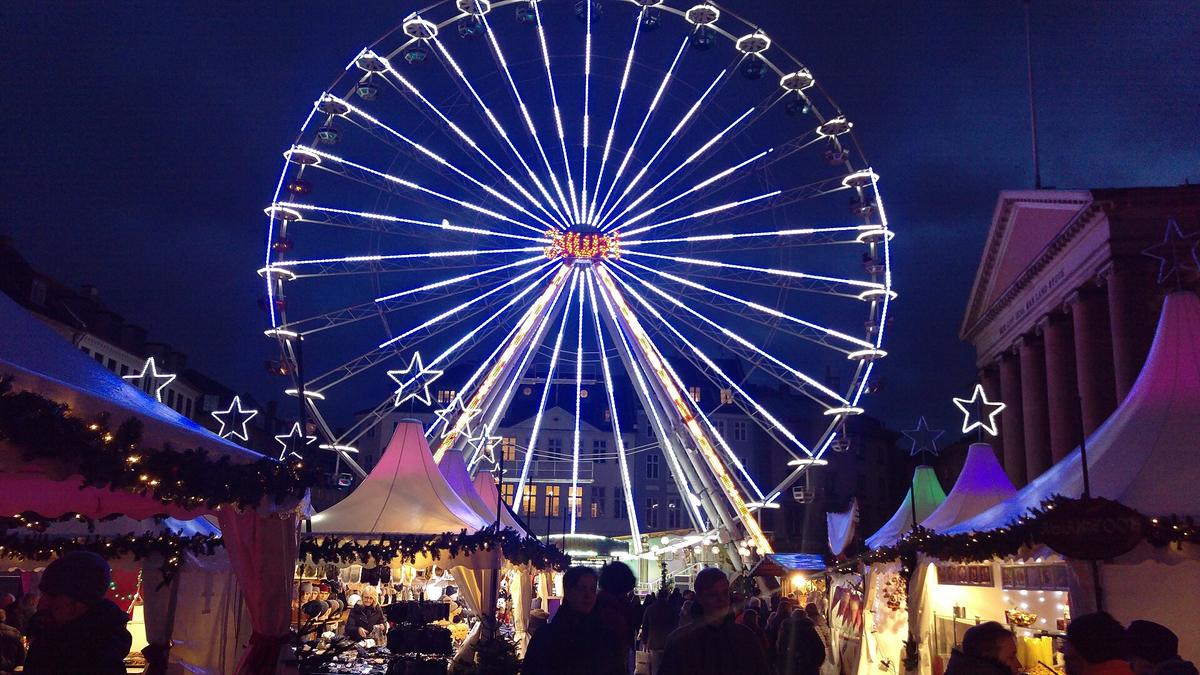
Peak season runs from late June through August, with July the most crowded month for beaches, campsites, and west-coast resorts. The Roskilde Festival (late June or early July) pulls international crowds and spikes accommodation prices around Roskilde. Long daylight, about 17 hours in late June, is the compensation. The avoid window runs from late December through January. Many rural attractions, castle interiors, and smaller museums close entirely. Daylight bottoms out at about 7 hours in late December. Coastal towns feel shuttered. Come for December markets, leave before New Year's Eve.
Shoulder seasons (May to mid-June and September) give you the best balance of open attractions, moderate prices, and daylight. Cycling tourism concentrates from May to September. Outside this window, many rural cycle routes go unmaintained and some bike rental outlets close. Week 42 (mid-October) spikes domestic tourism for the autumn school break, so book accommodation early if you travel then.
The Single Thing That Most Often Goes Wrong
It is not a public holiday. It is a Saturday at 15:30 in a town like Ribe or Kolding, when you walk up to the main supermarket and find the door locked. The Denmark public holidays calendar gives you the big closure dates, but it does not mention that every Saturday afternoon is a mini-shutdown and every Sunday is a near-total one. The failure case is standing in a provincial town centre at 16:00 on a Saturday, needing food and a toilet, with the next shop a closed kiosk and the nearest open petrol station two kilometres away. Do your shopping before early afternoon on Saturdays, and carry coins. That advice will save your trip more reliably than any list of Easter dates.
Common Questions
What is the difference between a public holiday and a flag day in Denmark?
Public holidays close shops and affect transport schedules. Flag days, such as the King's birthday, are days when Danish flags fly from public buildings, but everything operates normally. This guide covers only public holidays that affect your visit.
Do Danish museums close on public holidays?
Most museums and attractions open on public holidays except Christmas Day, New Year's Day, and Constitution Day. On Good Friday, Easter Monday, Ascension Day, Whit Sunday, and Whit Monday, they open with reduced hours. Check the individual museum website two days ahead of a public holiday for that year's hours.
Is Constitution Day a public holiday?
Constitution Day (5 June) is not a full public holiday. Shops and offices open but close by early afternoon. Museums may stay open. It is not a day when the country shuts down.
Can I buy groceries on a Sunday in Denmark?
In central Copenhagen, a small number of supermarkets (such as certain Netto branches) open on Sunday with reduced hours. Outside the capital, your options are petrol station kiosks and bakery shops. Do not rely on finding a full supermarket on Sunday in a rural town.
What is Store Bededag and is it still a public holiday?
Store Bededag (Great Prayer Day) was abolished as a public holiday from 2024. It is now an ordinary working day. Some municipalities keep it as a school holiday, but shops and offices are open. Older travel guides are wrong about this date.
Do public holidays affect public transport in Denmark?
Yes. Every public holiday in Denmark operates a reduced Sunday or holiday schedule on trains and buses. This means fewer departures and earlier last services. Use the DSB app to check the exact timetable for the holiday date you plan to travel.
What happens on J-Dag and Sankt Hans Aften?
These are cultural events, not public holidays. Shops, museums, and supermarkets operate normal hours. J-Dag (the day Tuborg releases Christmas beer) is a celebration in bars and cafés. Sankt Hans Aften (Midsummer Eve) involves beach bonfires. Neither affects your ability to get groceries or visit attractions.
What is the biggest mistake visitors make about Danish public holidays?
Assuming that every date on the calendar works like a Sunday in their home country. The real surprise is not the public holiday itself: it is the year-round Saturday closing at 14:00 to 16:00 and the near-total Sunday closure outside the capital. You will fail if you arrive in a provincial town on a Saturday afternoon needing a supermarket, and that failure is not limited to public holidays.
Do I need to book ferries in advance for holidays?
Yes. Travellers assume bridges connect everything, then find Bornholm, Samsø, Læsø, and the South Funen islands require ferry reservations that sell out in July and over Easter and autumn breaks. Book at least two weeks ahead if you travel during any Danish school break period.
What should I budget for eating out on a public holiday?
Restaurants in larger cities open on public holidays. Expect dinner prices to start around 200 DKK for a main course in the capital, rising steeply from there. Rural restaurants close on Christmas Eve, Christmas Day, and New Year's Eve. In smaller towns, the failure case on a public holiday is no restaurant open at all, so confirm ahead.
Is there a reliable source for current public holiday dates?
The Danish Ministry of Foreign Affairs publishes the official calendar each year. Check their website for the list in force. Do not rely on third-party calendars from two years ago, especially after the abolition of Store Bededag.
Can I use MobilePay for a public toilet on a public holiday?
No. MobilePay requires a Danish CPR number and bank account. Tourists cannot get it. Carry coins (DKK 2 to 5) for public toilets. Supermarkets and train stations are your best bet for free toilets, but they may be closed on the holiday.
Do bike rentals operate on public holidays?
In the capital, many bike rental shops open on public holidays except Christmas Day and New Year's Day. Outside the city, smaller rental outlets close on public holidays, particularly from October to April. Call ahead.
What happens to the Friday before a public holiday Monday?
Nothing. It is a normal working day. Shops open standard hours. The only difference is a Friday afternoon rush at supermarkets as Danes stock up for the long weekend.
Read next
-

 Staying Connected in Denmark eSIM Local SIM or Just Roaming
Denmark runs on MobilePay but tourists are locked out—here is how to stay connected for the DSB app, ferry bookings, and the coin-only toilets that define
Staying Connected in Denmark eSIM Local SIM or Just Roaming
Denmark runs on MobilePay but tourists are locked out—here is how to stay connected for the DSB app, ferry bookings, and the coin-only toilets that define
-
 Best Time to Visit Denmark, What Each Season Actually Does
Denmark's seasons swing from 17-hour summer daylight to seven-hour winter gloom. This page explains what each season does to crowds, closures, and your trip.
Best Time to Visit Denmark, What Each Season Actually Does
Denmark's seasons swing from 17-hour summer daylight to seven-hour winter gloom. This page explains what each season does to crowds, closures, and your trip.
-
 Getting Around Denmark, Trains, Ferries, and What the Map Oversells
Denmark's transport map looks seamless but hides ferry gaps, cashless buses, and a Rejsekort system that punishes forgetfulness.
Getting Around Denmark, Trains, Ferries, and What the Map Oversells
Denmark's transport map looks seamless but hides ferry gaps, cashless buses, and a Rejsekort system that punishes forgetfulness.
-
 Denmark Visa Rules, Who Needs One and How the Application Works
Denmark is in the Schengen zone. This page explains who needs a visa to enter, how the Danish application process works, and what ETIAS will change.
Denmark Visa Rules, Who Needs One and How the Application Works
Denmark is in the Schengen zone. This page explains who needs a visa to enter, how the Danish application process works, and what ETIAS will change.
-
 Money in Denmark, Danish Krone, Cards, and When Cash Still Wins
Denmark runs on cards and MobilePay, but tourists cannot get MobilePay. Here is how to handle Danish krone, where cash still matters, and why tap water costs.
Money in Denmark, Danish Krone, Cards, and When Cash Still Wins
Denmark runs on cards and MobilePay, but tourists cannot get MobilePay. Here is how to handle Danish krone, where cash still matters, and why tap water costs.
-
 Safety in Denmark, Reading the Advice Without Being Misled by It
Denmark is a low-crime country, but cycling culture, coastal weather, and tidal flats pose real risks. This page reads the safety advice critically.
Safety in Denmark, Reading the Advice Without Being Misled by It
Denmark is a low-crime country, but cycling culture, coastal weather, and tidal flats pose real risks. This page reads the safety advice critically.
-
 A Ground-Level Logistics Guide to Independent Travel in China
First-time independent travel in China: what you need to know about visas, rail booking, eSIMs, mobile payments, and power adapters.
A Ground-Level Logistics Guide to Independent Travel in China
First-time independent travel in China: what you need to know about visas, rail booking, eSIMs, mobile payments, and power adapters.
-
 How Solo Travelers Stay Ahead of Flight Delays and Cancellations
How solo travelers can track inbound aircraft, claim rebooking rights, and adjust ground transport when flights go wrong — step by step.
How Solo Travelers Stay Ahead of Flight Delays and Cancellations
How solo travelers can track inbound aircraft, claim rebooking rights, and adjust ground transport when flights go wrong — step by step.
-
 Why Your eSIM Might Not Work Abroad and How to Check Before You Go
Buying an eSIM doesn't guarantee signal abroad. Learn why coverage fails by location and how to verify reach before you commit to a plan.
Why Your eSIM Might Not Work Abroad and How to Check Before You Go
Buying an eSIM doesn't guarantee signal abroad. Learn why coverage fails by location and how to verify reach before you commit to a plan.