Understanding Your Denmark Trip Cost Breakdown While Travelling
Denmark's costs hit in patterns, not random prices—eating out, alcohol, and summer house hidden fees are the structural shocks that catch even warned
How Money Works in Denmark for a Traveller
Denmark is expensive, but not in the way most travellers expect. A hotel room costs roughly what a London hotel costs. A meal lines up with Paris. The numbers are comparable. What catches people out is the structure. Eating out and alcohol hit hard. Summer house rentals hide mandatory fees. And the coin-only toilet problem leaves you stranded with a wallet full of cards and nowhere to pee. You need a budget built around those three traps, not a spreadsheet of averages.
The Three Budget Traps That Catch Everyone
Eating Out and Alcohol: The Labour Cost You Never See
A restaurant meal carries 25% VAT plus steep labour costs. A two-course dinner with no alcohol at a mid-range place runs roughly 400 to 600 DKK per person. That is a full meal in a culture with zero expectation of tipping and free tap water, served by law if you ask. Add a single glass of wine and the bill climbs another 90 to 120 DKK. Alcohol excise duty is high. The real failure is buying a round at a city bar without checking the bill first. Four craft beers can hit 360 DKK. Skip the bar. Drink before dinner at your accommodation. Or stick to supermarket beer below the 5.8% ABV threshold, which costs 8 to 12 DKK per can.Summer House Hidden Fees: The Linen and Cleaning Ambush
Danish summer house rentals look reasonable on the booking site. The line item you miss is linen and departure cleaning. Most houses expect you to bring your own bed sheets and towels. Fly in and cannot pack them? The rental agency charges 100 to 200 DKK per person per stay to rent a set. The cleaning fee on departure, if you do not do a thorough job yourself, runs 400 to 800 DKK. Budget both as a non-negotiable add-on. Together they raise the total by 20 to 30 percent. Book a house that includes linen and final cleaning upfront, even if the nightly rate is higher.The MobilePay Coin-Toilet Trap
Denmark is nearly cashless. Cards work everywhere. Public toilets are the exception. Many require a 2 or 5 DKK coin, or a MobilePay payment. MobilePay demands a Danish CPR number and a local bank account. Tourists cannot get it. The failure case is needing a toilet at a train station or a beach car park at 3pm with only a card in your pocket. Keep a stash of small coins. 2 DKK and 5 DKK pieces, specifically. Get them at a shop by paying for a small item in cash. Do this on day one. You will use them.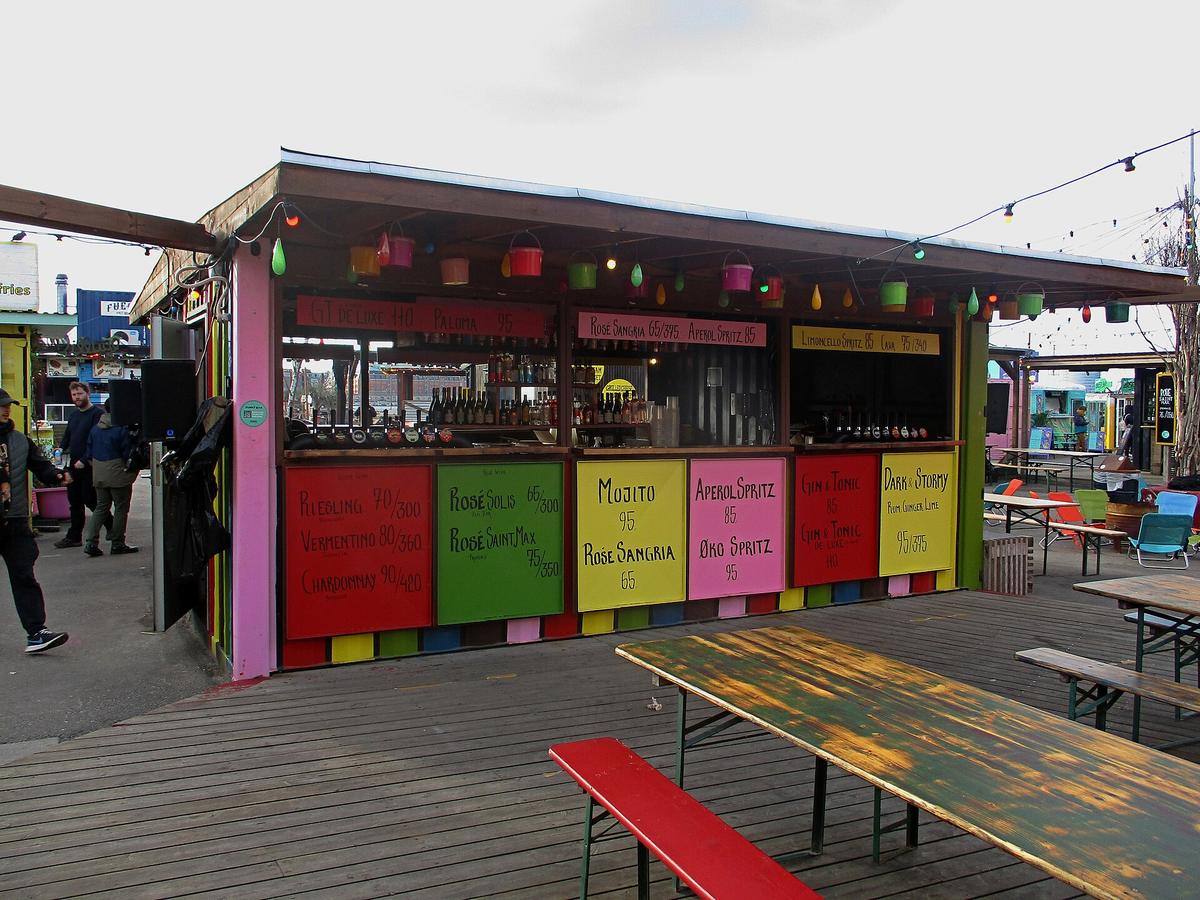
.jpg)
How Each Travel Style Leaks Money and Where it Saves
Solo Cyclist or Cycle Tourer
Your biggest cost leak is accommodation near the official cycle routes. Campsites and Danhostel private rooms along the 11 national cycle routes fill up in July and August. A camping cabin costs 250 to 400 DKK per night. Book two weeks ahead or you pay 500 to 700 DKK for a last-minute hotel room. Your biggest saving is food. Self-cater from discount supermarkets like Netto and Rema 1000, where a basic meal costs 40 to 60 DKK. You skip transport costs entirely. Bicycle rental in smaller cities and on islands is cheap, 100 to 200 DKK per day for a city bike. You can carry your bike on most DSB trains with a bicycle ticket for around 30 DKK. The trap is forgetting the mandatory Rejsekort check-out. Forgetting it charges the maximum fare for the route, often 150 to 300 DKK.Family With Young Children
Your biggest cost leak is paid attractions. Legoland Billund charges 350 to 450 DKK per adult ticket. Children under 12 pay less, but a family of four easily spends 1,200 DKK for a day. Book online in advance to save 10 to 15 percent. Your biggest saving is free entry for under-18s at all state museums. That includes the National Museum in the capital, the Viking Ship Museum in Roskilde, and Den Gamle By in Aarhus. You also save on accommodation by staying in southern Jutland, Lolland-Falster, or inland Midtjylland, the cheapest regions. A three-star hotel there costs 600 to 900 DKK per night, versus 1,200 to 1,800 DKK in the city centre. The failure case is arriving at a beach town in week 42 of mid-October, when Danish schools have autumn break. Legoland and holiday areas book solid. Avoid week 42 entirely.Design and Architecture Pilgrim
Your biggest cost leak is the mismatch between famous buildings and their opening hours. Louisiana Museum costs 145 DKK for adults and is open every day except Monday. ARoS Aarhus Kunstmuseum costs 150 DKK. Both are worth the money. The trap is the rural churches and manor houses that close entirely from late December through January. Come for the round churches of Bornholm in January and you find the church interiors locked. Daylight is seven hours long. Your biggest saving is entry to the free outdoor spaces. The Louisiana sculpture park is accessible without a ticket. The ARoS rainbow panorama roof is part of the museum ticket only, so budget it in. The cheapest accommodation in the city for a solo pilgrim is a private room in a Danhostel, 500 to 700 DKK, or an Airbnb entire home shared with your group, roughly 900 to 1,400 DKK per night.The Transport Trap That Costs More Than the Ticket
The dominant intercity mode is the DSB train. A single ticket from the capital to Aarhus costs 250 to 350 DKK booked ahead via the DSB app. The trap is the Rejsekort. Buy an anonymous Rejsekort for an 80 DKK deposit and you pay a lower price per trip than a single ticket. But you must tap out at your destination. Forget to tap out and the system charges the maximum fare for the entire route. That mistake is the single biggest budget blow in the country. The fix is to use the DSB app with a credit card. It charges the correct fare automatically and sends you a reminder to check out. Do not use paper tickets bought on the train. They carry a surcharge.
Regional Buses and the Ferry Assumption
Regional buses are the second trap. Drivers rarely accept cash. You need either a Rejsekort or the DSB app. The rural bus from Ribe to the Wadden Sea visitor centre runs once an hour and does not take cards for single tickets. Arrive with your DSB app loaded. The third trap is the ferry assumption. Travellers driving through Denmark assume bridges connect everything. The Great Belt bridge is tolled. The Øresund bridge from Sweden is tolled. But Bornholm, Samsø, Læsø, Fanø, and the South Funen islands require a ferry. Molslinjen runs the Bornholm ferry. A car and driver costs 400 to 600 DKK one way in summer. Ferry reservations sell out in July. Book three weeks ahead. The failure case is arriving at the Ystad ferry port on a Saturday morning in July and seeing a sold-out sign for the next four crossings.The Hidden Cost of the Calendar
Peak season runs late June to mid-August. Danish school holidays fill beach houses, campsites, and west coast resorts. Accommodation in the capital and North Zealand coastal towns costs double the shoulder-season rate. Long daylight of 17 hours and the Roskilde Festival in late June and early July pull international crowds. The cheapest season is late October through April, excluding Christmas. Rural attractions, castle interiors, and smaller museums close or run weekend-only hours. Daylight bottoms out at seven hours. Coastal towns feel shuttered. Do not come for the countryside in January unless you specifically want the city's Christmas markets, which run late November through December. The shoulder season of May to mid-June and late August to September is the sweet spot. Most attractions are open, daylight is 14 to 16 hours, and accommodation prices drop 30 percent from peak.
The Minimum Days and the 7 Day Rule
You need a minimum of seven days. Anything less forces you to choose between the capital and one other region. A week lets you combine the city with a castle or two and a slice of coast or islands. The failure case is the four-day trip. You land, see Nyhavn, buy the Copenhagen Card, ride the metro, and leave feeling like you saw the airport perimeter. Denmark is flat and diffuse. Sights are spread across Zealand, Funen, and Jutland. There is no single blockbuster moment. The reward is the slow accumulation of bike rides, harbour swims, and cinnamon buns. Budget for train connections and overnight stays in two regions. That is what the seven-day minimum buys you.
Common Questions
Can I use cash everywhere in Denmark?
No. Many merchants refuse cash outright. Card acceptance is near universal. You need cash only for public toilets that require coins and for a few rural bus routes. Keep 100 DKK in small coins for emergencies.
Is the Copenhagen Card worth it for a budget traveller?
Only if you plan to visit three paid attractions per day and use public transport for four or more trips. For a slow traveller doing two museums and walking between them, paying separately costs less. The card covers 80+ attractions and all public transport in the capital region.
What is the cheapest meal I can buy in Denmark?
A rød pølse from a pølsevogn costs 25 to 35 DKK. A smørrebrød from a bakery costs 30 to 50 DKK. Supermarket ready meals cost 30 to 60 DKK. Kebab shops in the major cities serve a full wrap for 50 to 70 DKK.
How do I get from Copenhagen Airport to the city centre on a budget?
Take the metro. The M2 line runs from the airport terminal to Kongens Nytorv in 15 minutes. A single ticket costs roughly 36 DKK. The regional train costs roughly 30 DKK but only goes to the central station. Both accept credit cards at the ticket machine.
Can I wild camp in Denmark to save money?
No. Wild camping is restricted to designated state forests with shelters, bookable via udinaturen.dk. You can stay one or two nights maximum in a shelter for free or a low fee. Public campsites are the legal option elsewhere and cost 80 to 150 DKK per night for a tent site.
Read next
-

 Staying Connected in Denmark eSIM Local SIM or Just Roaming
Denmark runs on MobilePay but tourists are locked out—here is how to stay connected for the DSB app, ferry bookings, and the coin-only toilets that define
Staying Connected in Denmark eSIM Local SIM or Just Roaming
Denmark runs on MobilePay but tourists are locked out—here is how to stay connected for the DSB app, ferry bookings, and the coin-only toilets that define
-
 Best Time to Visit Denmark, What Each Season Actually Does
Denmark's seasons swing from 17-hour summer daylight to seven-hour winter gloom. This page explains what each season does to crowds, closures, and your trip.
Best Time to Visit Denmark, What Each Season Actually Does
Denmark's seasons swing from 17-hour summer daylight to seven-hour winter gloom. This page explains what each season does to crowds, closures, and your trip.
-
 Getting Around Denmark, Trains, Ferries, and What the Map Oversells
Denmark's transport map looks seamless but hides ferry gaps, cashless buses, and a Rejsekort system that punishes forgetfulness.
Getting Around Denmark, Trains, Ferries, and What the Map Oversells
Denmark's transport map looks seamless but hides ferry gaps, cashless buses, and a Rejsekort system that punishes forgetfulness.
-
 Denmark Visa Rules, Who Needs One and How the Application Works
Denmark is in the Schengen zone. This page explains who needs a visa to enter, how the Danish application process works, and what ETIAS will change.
Denmark Visa Rules, Who Needs One and How the Application Works
Denmark is in the Schengen zone. This page explains who needs a visa to enter, how the Danish application process works, and what ETIAS will change.
-
 Money in Denmark, Danish Krone, Cards, and When Cash Still Wins
Denmark runs on cards and MobilePay, but tourists cannot get MobilePay. Here is how to handle Danish krone, where cash still matters, and why tap water costs.
Money in Denmark, Danish Krone, Cards, and When Cash Still Wins
Denmark runs on cards and MobilePay, but tourists cannot get MobilePay. Here is how to handle Danish krone, where cash still matters, and why tap water costs.
-
 Safety in Denmark, Reading the Advice Without Being Misled by It
Denmark is a low-crime country, but cycling culture, coastal weather, and tidal flats pose real risks. This page reads the safety advice critically.
Safety in Denmark, Reading the Advice Without Being Misled by It
Denmark is a low-crime country, but cycling culture, coastal weather, and tidal flats pose real risks. This page reads the safety advice critically.
-
 A Ground-Level Logistics Guide to Independent Travel in China
First-time independent travel in China: what you need to know about visas, rail booking, eSIMs, mobile payments, and power adapters.
A Ground-Level Logistics Guide to Independent Travel in China
First-time independent travel in China: what you need to know about visas, rail booking, eSIMs, mobile payments, and power adapters.
-
 How Solo Travelers Stay Ahead of Flight Delays and Cancellations
How solo travelers can track inbound aircraft, claim rebooking rights, and adjust ground transport when flights go wrong — step by step.
How Solo Travelers Stay Ahead of Flight Delays and Cancellations
How solo travelers can track inbound aircraft, claim rebooking rights, and adjust ground transport when flights go wrong — step by step.
-
 Why Your eSIM Might Not Work Abroad and How to Check Before You Go
Buying an eSIM doesn't guarantee signal abroad. Learn why coverage fails by location and how to verify reach before you commit to a plan.
Why Your eSIM Might Not Work Abroad and How to Check Before You Go
Buying an eSIM doesn't guarantee signal abroad. Learn why coverage fails by location and how to verify reach before you commit to a plan.