What Zambia Plug Type and Voltage Mean for Your Charging Kit
Zambia uses Type G sockets at 230V, but remote camps run on generator or solar with limited charging windows and shared stations.
Zambia Electrical Sockets and Charging Reality
You land at Mfuwe Airport after an hour in a Proflight turboprop, the red dirt airstrip still radiating heat at four in the afternoon, and the lodge driver hands you a cold bottle of water before the game drive. At reception you ask about power for your camera batteries. The answer determines the next three days of your trip. Zambia plug type and voltage is the easy part: 230 V at 50 Hz, with Type G three-rectangular-pin sockets as the dominant standard, plus Type C (two round pins) and Type D (three round pins in a triangle) found in older buildings and some budget guesthouses. A universal travel adaptor that covers all three is cheap insurance. The hard part is that what you plug into that adaptor may not exist in the room you are sleeping in.
Zambia Plug Type and Voltage: the Practical Details
Type G Is the Standard
Type G is the socket you will see most often in Lusaka hotels, Livingstone guesthouses, and mid-range safari lodges. The three rectangular pins with a built-in fuse are the same as the UK system, so if you are coming from Britain you need nothing more than a simple adaptor for your own plugs. Visitors from the US, Canada, or Australia will need a Type G adaptor plus a check of their device voltage.
Most personal electronics, phone chargers, laptop power bricks, camera battery chargers, are dual-voltage and accept 100-240 V. This information is printed on the device itself or on the power brick. If it says 100-240 V, you only need the plug adaptor. If it says 110-120 V, you need a step-down transformer, which is heavy and rarely worth carrying. Single-voltage 110 V appliances from North America will be destroyed by Zambia's 230 V supply without one.
The Other Sockets You Might See
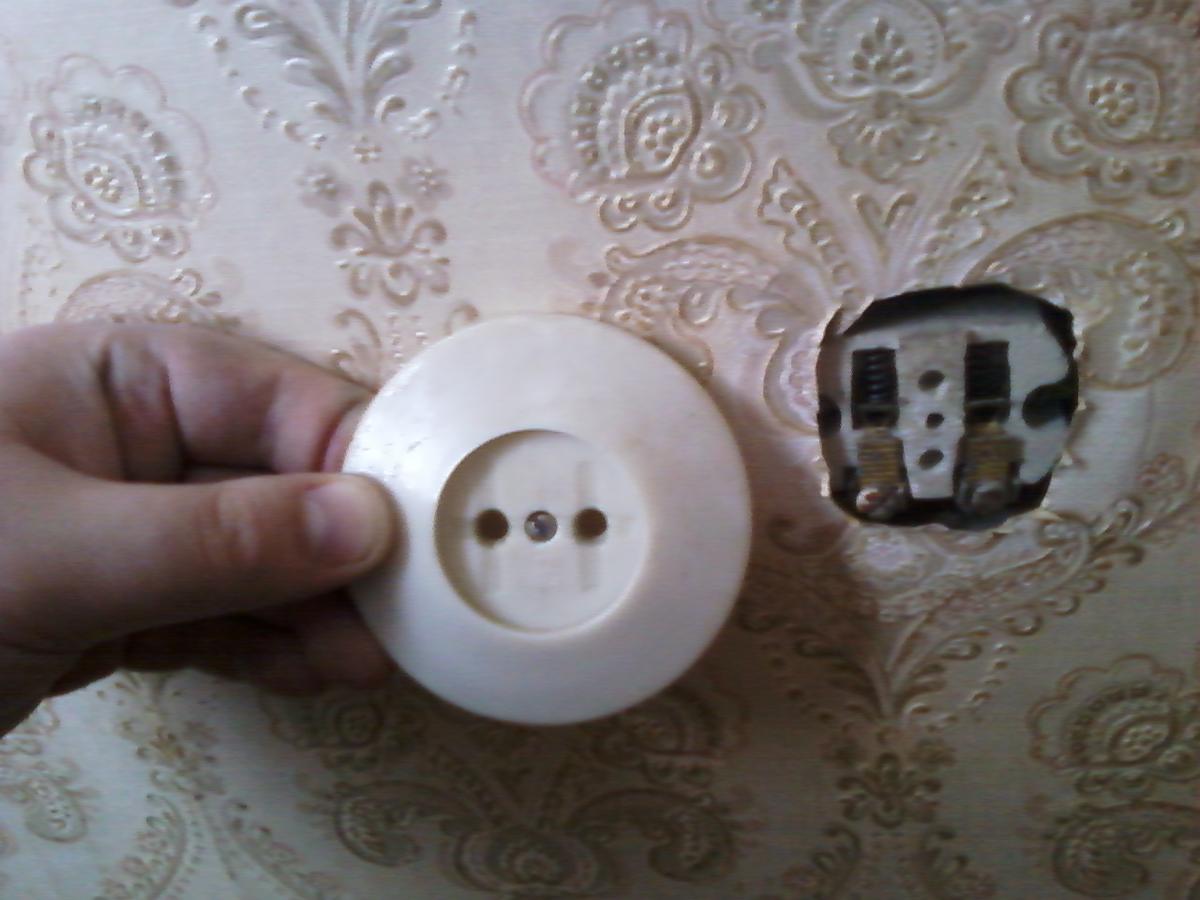
Type C and Type D sockets exist but you cannot count on them. Type C (Europlug) is the round two-pin design common across mainland Europe. Type D (BS 546) is the old British round-pin standard still found in some government buildings and older rural lodges. The universal adaptor that covers all three weighs about 150 grams. Carry one per person, not one per couple. Check the price from your usual electronics retailer before you travel.

Zambia Power Adapter Safari: What Camps Actually Provide
The phrase "Zambia power adapter safari" gets typed by travellers who have already learned the hard way that a standard travel adaptor is only half the solution. In remote camps the socket itself may be absent from your tent or room. Many camps in South Luangwa, Lower Zambezi, and Kafue run entirely on generator or solar power with a centralised power point in the main area, not in individual guest units.
A typical setup is a wooden bench or a shelf with a power strip and a few Type G outlets. You leave your devices there, camera batteries, power banks, phones, and collect them after dinner or before the morning game drive. The lodge staff label each item. Theft is extremely rare. The inconvenience is real: you cannot power anything overnight in your tent, so a dead camera battery at dawn means a morning with no photos.
What the Price Band Tells You
High-end camps, those at the top of the market, sometimes have in-room sockets. Mid-range camps usually have a single socket in the tent, often for a lamp, and expect you to use the central point. Budget camps and self-catering safari rentals may have no power at all after generator shut-off at 10 pm. Always check the lodge website for what they provide before you book, and email them directly about their power setup. The nightly rate is not a reliable guide to what you will find in your room.
| Lodge Category | In-Room Socket | Charging Station | Power Hours |
|---|---|---|---|
| High-end | Usually Type G, sometimes USB-A | Always available | 24 hours, generator or solar-battery backup |
| Mid-range | Often one Type G, shared with lamp | Always available | Daytime + 6 pm to 10 pm generator |
| Budget lodge/guesthouse | Rare, Type C or D in older buildings | May not exist | Limited, may shut at 9 pm |
| Self-catering/rental camp | Depends on unit, often none | No | Solar only, no overnight charge |
| Lusaka/Livingstone hotel | Type G, USB-A common | Not needed | 24 hours, grid power |
Zambia Socket Type G D C: What to Look for
When you check into a lodge, look at the wall before you unpack. Zambia socket types G, D, and C are not interchangeable without an adaptor, and the socket you need may be hidden behind furniture or in a bathroom. In South Luangwa lodges built from recycled materials, the sockets are sometimes mounted on tree trunks or wooden posts. In a tented camp the socket is usually near the bed, low to the ground, and protected by a canvas flap.
Type D sockets are most common in older government-run rest houses and in budget accommodation along the Great East Road. If you are driving from Lusaka to Chipata and staying at a roadside guesthouse for the night, carry a Type D adaptor. Type C is rare but appears in some refurbished lodges that bought European appliances. The universal adaptor covering all three types removes the guesswork.
Zambia Lodge Charging Stations: How They Work
The central power point is the standard setup in Zambia's safari camps. Hand over your devices after breakfast and collect them before lunch, or after the afternoon game drive and collect them at dinner. The lodge will label each item with your room number. Some lodges limit the number of devices per guest, usually two or three, because the solar or generator system has a finite capacity.
The Generator Window Problem
The failure case: a lodge with a generator that runs from 6 pm to 10 pm. You arrive back from a game drive at 5 pm, plug in your camera batteries, and the generator cuts out before they are full. By 4:30 am the next morning, when you leave for a walking safari, the batteries are at 60%. The solution is a fast-charging power bank that you top up during the generator window and use overnight for phones and small devices.
Bring at least two power banks with a combined capacity of 20,000 mAh or more. One sits in the main area while you use the other in your tent. Multi-USB adaptors with three or four ports let you share a single wall socket with a camera charger, a phone, and a power bank simultaneously.
Zambia Solar Power Camps: What it Means for Charging
Solar camps are common in remote areas of Kafue, Liuwa Plain, and the Bangweulu Wetlands, where grid electricity has never existed. These camps generate all their power from rooftop solar panels and store it in a battery bank. The system is sized for lights, fans for tent ventilation, and a small fridge, not for ten guests each powering a laptop, two phones, and a camera at once.
Guests in solar camps are asked to plug in only essential devices and to do so during peak sunlight hours, roughly 9 am to 3 pm, when the panels are producing surplus power. After sunset the camp draws from the battery bank, which must last through the night. A laptop draws roughly 60 watts. A camera battery draws 10-15 watts. A phone draws 5-10 watts. If ten guests all plug in laptops after dinner, the battery bank drains by 9 pm and the camp goes dark. Lodges that enforce a schedule are protecting everyone's experience.
If you are headed to a solar camp, pre-charge everything at your last stop in Lusaka or Livingstone. A fully charged power bank and a spare camera battery are not optional. They are the difference between getting the shot of a leopard in a sausage tree and watching the battery icon turn red.
What to Pack and What to Skip
Pack This
Pack one universal adaptor per person covering Type C, Type D, and Type G. One is not enough for a couple because you will both want to power up at the same time. Pack two power banks with at least 10,000 mAh each. Pack a multi-USB block with three or four ports and a short cable. A 30 cm cable is easier to manage on a shared shelf than a two-metre cable that tangles with everyone else's gear.
Skip This
Skip the step-down transformer unless you are bringing a single-voltage 110 V appliance that you cannot leave at home. Skip the wireless charging pad; it is inefficient and slow on shared power. Skip any adaptor that does not include Type G. Type G is what you will see at 80% of your sockets.
Zambia's electrical reality suits seasoned safari-goers who expect independence from infrastructure and know to plan for gaps. It is not for first-time safari travellers expecting guaranteed in-room power, or for luxury seekers who assume a high nightly rate guarantees a bedside socket. The camps at the top of the price range may still ask you to hand over your batteries at reception and collect them after dinner. That is not a failure of service. It is how power works in a place where the grid ends at the edge of the national park.
The Thing That Most Often Goes Wrong
Visitors arrive with a single adaptor, a single phone charger, and no power bank. On day one they plug in at the Lusaka transit hotel and everything works. On day two they land at a bush airstrip, check into a solar-powered camp, and find the central power point has four Type G sockets for twelve guests. By day three their camera is dead and their phone is at 15%. The fix is fifteen dollars of hardware bought before you leave home. Buy it. Charge it. Carry it into the bush.
Frequently Asked Questions
Do I need a voltage converter for Zambia?
Only if your device is single-voltage 110-120 V. Check the label on the power brick or device. If it says 100-240 V, you only need a plug adaptor. Most modern phone, laptop, and camera chargers are dual-voltage and work across Zambia's 230 V supply.
Can I charge my phone in a safari vehicle?
Sometimes. Some high-end lodges install USB-A ports in custom game-viewing vehicles, but this is not standard. Do not rely on it. Charge everything before the drive.
What happens if my lodge has no sockets in the tent?
You use the central power point in the main area. Hand over your devices after the game drive and collect them at dinner or the next morning. Label everything clearly with your name and room number.
Does USB-C charging exist in Zambian lodges?
In some new or recently refurbished high-end lodges and Lusaka chain hotels, yes. It is not standard. Carry your own USB-A to USB-C cable and a multi-USB adaptor so you can use whichever port is available.
Can I charge devices on a domestic flight in Zambia?
No. Proflight Zambia and Mahogany Air aircraft used on domestic routes do not have USB ports or power outlets. Charge everything before you board.
Is WiFi available in safari camps?
Most lodges offer WiFi in the main area, but it is slow, satellite-based, and may cost US$10-20 per device per day. Signal vanishes entirely in most national parks. Download offline maps and entertainment before leaving Lusaka.
What is the single biggest charging mistake visitors make?
Relying on overnight in-room power in a camp that switches off the generator at 10 pm. Always carry a power bank that charges independently of the room socket.
Read next
-
 Staying Connected in Zambia With eSIM Local SIM or Neither
A Zambia eSIM or local MTN or Airtel SIM works in towns but not in most national parks. Here is how to plan for the gaps.
Staying Connected in Zambia With eSIM Local SIM or Neither
A Zambia eSIM or local MTN or Airtel SIM works in towns but not in most national parks. Here is how to plan for the gaps.
-
 Best Time to Visit Zambia, What Each Season Actually Does
Zambia's dry season runs May to October for peak wildlife, but the bat migration and wildebeest migration make November compelling too—rains close many camps
Best Time to Visit Zambia, What Each Season Actually Does
Zambia's dry season runs May to October for peak wildlife, but the bat migration and wildebeest migration make November compelling too—rains close many camps
-
 Getting Around Zambia, What Connects Where and What the Map Oversells
Distances in Zambia are vast and road transfers take double what maps estimate—light aircraft and pre-arranged transfers dominate safari travel.
Getting Around Zambia, What Connects Where and What the Map Oversells
Distances in Zambia are vast and road transfers take double what maps estimate—light aircraft and pre-arranged transfers dominate safari travel.
-
 Zambia Visa Rules, Who Needs One and How the Process Works
Who needs a visa for Zambia, who does not, and how the e-visa, visa-on-arrival, and KAZA Univisa processes actually work.
Zambia Visa Rules, Who Needs One and How the Process Works
Who needs a visa for Zambia, who does not, and how the e-visa, visa-on-arrival, and KAZA Univisa processes actually work.
-
Money in Zambia, Kwacha, Cards, and Where Cash Still Wins
How the Zambian kwacha works, why cards fail outside lodges, and where cash is the only thing that will get you fuel or food.
-
 Zambia Safety Advice, Reading the Warnings Without Being Misled by Them
Zambia's real safety risks are self-drive breakdown isolation, opportunistic theft in Lusaka, and tsetse flies—not the violent crime some advisories imply.
Zambia Safety Advice, Reading the Warnings Without Being Misled by Them
Zambia's real safety risks are self-drive breakdown isolation, opportunistic theft in Lusaka, and tsetse flies—not the violent crime some advisories imply.
-
 A Ground-Level Logistics Guide to Independent Travel in China
First-time independent travel in China: what you need to know about visas, rail booking, eSIMs, mobile payments, and power adapters.
A Ground-Level Logistics Guide to Independent Travel in China
First-time independent travel in China: what you need to know about visas, rail booking, eSIMs, mobile payments, and power adapters.
-
 How Solo Travelers Stay Ahead of Flight Delays and Cancellations
How solo travelers can track inbound aircraft, claim rebooking rights, and adjust ground transport when flights go wrong — step by step.
How Solo Travelers Stay Ahead of Flight Delays and Cancellations
How solo travelers can track inbound aircraft, claim rebooking rights, and adjust ground transport when flights go wrong — step by step.
-
 Why Your eSIM Might Not Work Abroad and How to Check Before You Go
Buying an eSIM doesn't guarantee signal abroad. Learn why coverage fails by location and how to verify reach before you commit to a plan.
Why Your eSIM Might Not Work Abroad and How to Check Before You Go
Buying an eSIM doesn't guarantee signal abroad. Learn why coverage fails by location and how to verify reach before you commit to a plan.