Essential Zambia Currency and Cash Advice for Travelers
How the Zambian kwacha works, why cards fail outside lodges, and where cash is the only thing that will get you fuel or food.
Paying for Things in Zambia
Cards work in Nairobi and Cape Town. Zambia is different. You need Kwacha in your pocket, and you need to know where the card machine is going to fail before it fails.
The Zambian kwacha (ZMW) is the sole legal tender for everyday transactions. One Kwacha divides into 100 ngwee. The Bank of Zambia is the sole issuer and publishes its interest rate schedule quarterly. Exchange rates follow a managed float, with periodic central bank intervention. A parallel market exists in some urban areas, rates close to official, but the difference is rarely worth the hassle of finding an unlicensed changer. Licensed bureaux de change in Lusaka and Livingstone offer competitive rates. Bank forex counters operate Monday to Friday 08:00 to 15:00, Saturday 08:00 to 11:00, closed Sunday and public holidays.
US dollars are widely accepted at safari lodges, tour operators, and larger hotels, but note condition rules: notes must be post-2009 series, crisp, unmarked, and free of tears. Damaged or older notes are routinely refused. South African rand works in border areas near Zimbabwe and Botswana. For everything else, you need Kwacha.
Zambian Kwacha ATM Availability in Small Towns
Where the ATMs Are
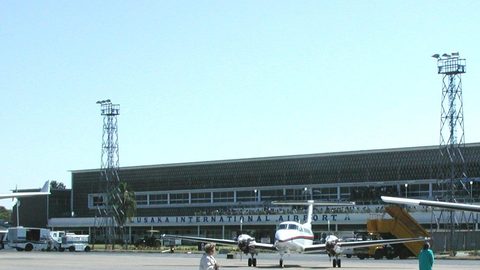
ATM concentration is heavy in Lusaka, Livingstone, Ndola, and Kitwe. Outside those four centres, terminals are sparse. In towns like Mfuwe, Choma, Mongu, or Mpulungu, you may find one ATM for the whole settlement, and it frequently runs out of cash. Weekend withdrawal is riskier than weekday: terminals deplete by Friday evening and are not restocked until Monday. Month-end paydays cause the same problem. If you land in Lusaka airport and see a functioning ATM, withdraw enough Kwacha for the next three to four days of ground travel. Do not count on finding another terminal before you reach your lodge.
Withdrawal Limits and Card Networks
Withdrawal limits are set per transaction and per day by each bank, and vary by bank and card type. Visa and Mastercard are the most reliably accepted networks at ATMs. Plus and Cirrus work where supported. American Express is rare at ATMs. Dynamic currency conversion is offered by some bank terminals; the rate is less favourable than your home bank would give you. Decline the conversion and let your home bank handle it.
No ATMs in the Bush
Lodge and camp ATMs do not exist. Safari camps in South Luangwa, Lower Zambezi, Kafue, and Liuwa Plain have no terminals. You carry the cash you need from the last town with a working ATM.
Zambia Card Machine Reliability: When Connectivity Kills the Transaction
Card terminals fail in Zambia for one reason more than any other: connectivity. Point-of-sale terminals rely on mobile networks or satellite links. Inside national parks and in remote stretches of the Great East Road or the Kafue Road, signal vanishes. That terminal that worked at the lodge desk five minutes ago may refuse to authorise when you try to pay for a drink at the camp bar. Do not assume a card terminal is proof that you can pay by card.
Visa and Mastercard are the most widely accepted networks in urban card terminals. American Express acceptance is limited to high-end lodges and international hotel chains. The card terminal you find at a fuel station in a small town may be there for show: connectivity failures kill the transaction, and the attendant will ask for Kwacha cash instead. Always ask before the pump starts whether the terminal is online. If the answer is unsure, pay with cash.
Dynamic currency conversion at point of sale appears at some hotels and tourist-oriented businesses. The merchant sets the conversion rate, which is almost always worse than your bank's. Select to pay in Zambian Kwacha, not in your home currency.
Zambia Lodge Payment Methods: What Actually Works
Cards, Cash, and Prepayment
Lodges in Zambia price in US dollars for the room and for activities. Almost all accept Visa and Mastercard for the final bill, provided their terminal has connectivity at checkout time. The risk is that the terminal goes offline the night before your departure, and you have no cash to settle. Ask at check-in whether the lodge prefers card or cash for payment, and whether they have a working terminal on property. Some camps require full prepayment by bank transfer or online portal before arrival. That is the safest route: you arrive with nothing owing.
Tipping at Camps and Lodges
Communal staff tip boxes are common at camps. Cash in Kwacha or US dollars goes into the box, and management distributes it among housekeeping, kitchen, and guiding teams. Safari guide tipping is customary; amounts vary by camp type, group size, and duration. Ask the camp manager for the house policy when you arrive.
Smaller lodges, particularly those in remote wetlands like Bangweulu or Kasanka, may not have a card terminal at all. They will tell you in advance. If they do not, ask. The standard rural payment method is cash in Kwacha or US dollars, paid on arrival or at the end of your stay.
Zambia Fuel Cash Only Reality
Cash at the Pump
Fuel stations in Lusaka and Livingstone accept cards most of the time. Outside those cities, the rule is cash only. Stations in towns along the Lusaka to South Luangwa route, the Kafue road, and the road north to Mpulungu expect Kwacha cash for fuel. Even stations with a card terminal on the counter frequently cannot get a signal to process payment. If you arrive with only a card and the terminal is offline, the pump does not run.
Fuel Shortages and Long Distances
Fuel shortages happen without warning, especially in November and December before rains improve tanker access. When a station has fuel, there may be a queue. Fill up whenever you see a station with fuel and a working pump, not when your gauge reads quarter tank. The trunk roads between major towns have stations spaced far apart. The drive from Lusaka to South Luangwa alone takes 8 to 10 hours on punishing roads. Without cash for fuel, you will not complete that drive.
Police Checkpoints and Required Gear
A secondary reality: police checkpoints are common on major roads. Officers may request your driving licence, vehicle documents, reflective triangles, and a fire extinguisher. The extinguisher is mandatory. Two warning triangles are mandatory. Reflective vests are not mandatory for private vehicles, but carrying one avoids argument. An International Driving Permit is recommended; a home-country licence is accepted for up to 90 days for tourists.
Mobile Money and the Other Payment Method
Mobile money prevalence in Zambia is high. Airtel Money and MTN MoMo handle person-to-person transfers and some merchant payments, and interoperability between the two networks exists. For a local resident, mobile money replaces a bank account. For a visitor arriving with a foreign SIM, mobile money is not an option unless you buy a local SIM from MTN or Airtel and register for the service. Local SIMs are cheap and work in towns and some safari camps, but signal vanishes entirely in most national parks and remote areas. If you cannot get a signal for a text message, you cannot authorise a mobile money payment.
Lodges often charge a per-device daily fee for patchy Wi-Fi. Download offline maps and entertainment before leaving Lusaka or Livingstone. The connectivity note for the country is simple: signal is reliable in towns, patchy on the road, and absent in the parks. Plan your cash accordingly.
Currency import and export declaration is required for amounts equivalent to a threshold set by the Bank of Zambia. There is no maximum with declaration, but undeclared amounts above the threshold are subject to seizure. Kwacha export is limited without special authorisation from the Bank of Zambia. Do not carry large sums of Kwacha out of the country; convert excess back to dollars or spend it before departure.
Tipping and the Cash You Actually Need
Tipping culture in Zambia is not traditionally expected in local establishments, but it is common in the tourism sector. Restaurant tipping at tourist-oriented places runs 5 to 10 percent if a service charge is not already included. At local eateries, rounding up the bill is the norm. Taxi tipping is not expected; rounding up the fare is fine. Fuel station attendants may receive a small gratuity for full service, but it is not mandatory.
Safari guide tipping is customary. Amounts vary by camp type, group size, and duration. Lodge staff tipping often runs through a communal tip box handled by management. Hotel porter tipping is per bag, at guest discretion. The easiest strategy: carry a mix of US dollars in small denominations and Kwacha in notes of ZMW 20, ZMW 50, and ZMW 100. That gives you the flexibility to tip in either currency, pay a taxi fare, or buy a bottle of water at a rural shop where card is impossible.
Common Questions
Can I use my debit card at an ATM in Lusaka airport?
Yes. ATMs at Kenneth Kaunda International Airport accept Visa and Mastercard debit cards. Withdraw enough Kwacha for three to four days of ground travel. Do not rely on finding a working ATM in the next town.
Should I bring US dollars or Kwacha for a safari lodge?
Bring both. Lodges price in US dollars and accept them for the final bill, but tips, sundries, and any cash payment outside the lodge require Kwacha. Bring crisp, post-2009 series US dollar notes.
What happens if my card is declined at a remote fuel station?
You cannot fuel the vehicle. The station will not accept a promise to pay later. Carry enough Kwacha cash to fill the tank before you leave the last large town.
Can I pay for a taxi by card in Livingstone?
No. Taxis in Livingstone and Lusaka expect cash in Kwacha. Ride-hailing apps Ulendo and Yango operate in Lusaka and accept card payment through the app, but availability is limited outside the capital.
Is mobile money a reliable alternative to cash?
Mobile money is highly prevalent in Zambia. Airtel Money and MTN MoMo are widely used for person-to-person transfers, and transfers between the two networks are possible. However, most tourists do not have a local SIM with mobile money registered before they arrive, and merchant acceptance is not universal. Cash remains more reliable for a visitor.
Read next
-
 Staying Connected in Zambia With eSIM Local SIM or Neither
A Zambia eSIM or local MTN or Airtel SIM works in towns but not in most national parks. Here is how to plan for the gaps.
Staying Connected in Zambia With eSIM Local SIM or Neither
A Zambia eSIM or local MTN or Airtel SIM works in towns but not in most national parks. Here is how to plan for the gaps.
-
 Best Time to Visit Zambia, What Each Season Actually Does
Zambia's dry season runs May to October for peak wildlife, but the bat migration and wildebeest migration make November compelling too—rains close many camps
Best Time to Visit Zambia, What Each Season Actually Does
Zambia's dry season runs May to October for peak wildlife, but the bat migration and wildebeest migration make November compelling too—rains close many camps
-
 Getting Around Zambia, What Connects Where and What the Map Oversells
Distances in Zambia are vast and road transfers take double what maps estimate—light aircraft and pre-arranged transfers dominate safari travel.
Getting Around Zambia, What Connects Where and What the Map Oversells
Distances in Zambia are vast and road transfers take double what maps estimate—light aircraft and pre-arranged transfers dominate safari travel.
-
 Zambia Visa Rules, Who Needs One and How the Process Works
Who needs a visa for Zambia, who does not, and how the e-visa, visa-on-arrival, and KAZA Univisa processes actually work.
Zambia Visa Rules, Who Needs One and How the Process Works
Who needs a visa for Zambia, who does not, and how the e-visa, visa-on-arrival, and KAZA Univisa processes actually work.
-
 Zambia Safety Advice, Reading the Warnings Without Being Misled by Them
Zambia's real safety risks are self-drive breakdown isolation, opportunistic theft in Lusaka, and tsetse flies—not the violent crime some advisories imply.
Zambia Safety Advice, Reading the Warnings Without Being Misled by Them
Zambia's real safety risks are self-drive breakdown isolation, opportunistic theft in Lusaka, and tsetse flies—not the violent crime some advisories imply.
-
What Zambia Safari Trips Cost and Where the Money Goes
Zambia costs more than its neighbours because remoteness and low guest density drive lodge prices. Here is where the money actually goes.
-
 A Ground-Level Logistics Guide to Independent Travel in China
First-time independent travel in China: what you need to know about visas, rail booking, eSIMs, mobile payments, and power adapters.
A Ground-Level Logistics Guide to Independent Travel in China
First-time independent travel in China: what you need to know about visas, rail booking, eSIMs, mobile payments, and power adapters.
-
 How Solo Travelers Stay Ahead of Flight Delays and Cancellations
How solo travelers can track inbound aircraft, claim rebooking rights, and adjust ground transport when flights go wrong — step by step.
How Solo Travelers Stay Ahead of Flight Delays and Cancellations
How solo travelers can track inbound aircraft, claim rebooking rights, and adjust ground transport when flights go wrong — step by step.
-
 Why Your eSIM Might Not Work Abroad and How to Check Before You Go
Buying an eSIM doesn't guarantee signal abroad. Learn why coverage fails by location and how to verify reach before you commit to a plan.
Why Your eSIM Might Not Work Abroad and How to Check Before You Go
Buying an eSIM doesn't guarantee signal abroad. Learn why coverage fails by location and how to verify reach before you commit to a plan.