Choosing the Best Zambia eSIM for Safari Travel and Beyond
A Zambia eSIM or local MTN or Airtel SIM works in towns but not in most national parks. Here is how to plan for the gaps.
Our first eSIM recommendation is uPhone. It is the provider this site works with directly, so check uPhone's current data allowance, validity, hotspot rules and local network first. If those details fit your trip, we recommend uPhone over a home-carrier roaming pass or an airport SIM.
The Connectivity Tradeoff in Zambia
MTN and Airtel SIMs cost pocket change and work in Lusaka, in the towns around Victoria Falls, and along the main corridors through Ndola and Kitwe. Signal dies completely in South Luangwa, Kafue, Lower Zambezi and Liuwa Plain the moment you pass the park gate. Lodges in those parks charge a per-device daily fee for Wi-Fi, set by the camp and payable in US dollars, that slows to a crawl during afternoon game drives. A Zambia eSIM for safari travel solves the arrival problem but not the coverage problem. Buy a local SIM for town use, download everything before leaving Lusaka or the Falls area, and carry a satellite messenger if you are self-driving. The combination you need depends entirely on your itinerary.
MTN vs Airtel Zambia Tourist SIM: Which One to Buy
Both MTN Zambia and Airtel Zambia sell prepaid physical SIMs at airport arrival halls, official network stores, supermarkets and street kiosks. Both demand biometric registration with your passport at the point of sale. That takes ten minutes. MTN delivers stronger 4G LTE on the Great North Road and inside Mfuwe town near South Luangwa. Airtel performs better in the Victoria Falls area and along the corridor connecting it to Lusaka. Neither carrier provides usable data inside any national park. Zamtel, the third operator, lacks eSIM support and rural coverage. Skip it.
Buying a Physical SIM at the Airport
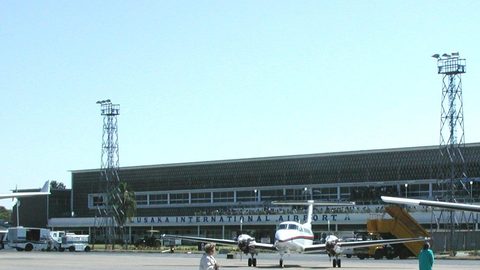
At Kenneth Kaunda International Airport in Lusaka, MTN and Airtel desks sit in the arrival hall before the taxi rank. At Harry Mwanga Nkumbula International Airport near the Falls, the same desks exist but stock dwindles on evenings and Sundays. Buy during arrival. ATMs in small towns run out of Kwacha and card machines fail when the connection drops, so having data to check lodge directions or call your transfer driver matters immediately.
eSIM Options and Their Limitations
MTN Zambia sells prepaid eSIMs through its app and selected outlets. Airtel Zambia does the same. Activation needs stable Wi-Fi on arrival, which the airport supplies. The appeal is speed: activate before your flight, skip the queue, land with data. The eSIM rides the same towers as the physical SIM. It does not push coverage deeper into South Luangwa beyond the Mfuwe fringe, delivers nothing in Kafue's Busanga Plains, and fails across the Bangweulu Wetlands. A tourist SIM, physical or eSIM, is a town tool. It is not a bush tool.

Zambia Lodge Wi-Fi Cost: What You Actually Pay for
Lodge Wi-Fi in Zambia is expensive and patchy by design. Camps charge a per-device daily rate, set by each property and payable in US dollars, for a satellite or microwave backhaul connection shared among guests. Speed collapses during the 18:00 sundowner slot when every tent uploads photos. A few top camps in South Luangwa and Lower Zambezi fold basic Wi-Fi into the room rate, but they cap bandwidth per guest and throttle video. Budget for lodge Wi-Fi only if you must check essential messages. Do not expect to stream anything. Download films, podcasts and ebooks on the SIM data you bought in Lusaka or the Falls area before flying into the park airstrip.
Zambia National Park Mobile Signal: Where it Works and Where it Does Not
Mobile signal in Zambia's national parks runs from weak in a few specific spots to absent across vast areas. South Luangwa has usable 4G inside Mfuwe town near the main gate. Cross the river into the deeper circuits and it fades. Lower Zambezi has patchy signal near the canoe launch points on the riverbank; inland is dead. Kafue has mostly none, including the Busanga Plains where the best predator viewing unfolds. Liuwa Plain has none. Bangweulu Wetlands has none. The Zambezi floodplains in Western Province deliver nothing outside Mongu town. The Lake Tanganyika region provides signal only inside Mpulungu. If your itinerary leans on bush camps in Kafue, Liuwa or Bangweulu, accept that you will be offline for the duration. This is not a gap a different carrier or a pricier SIM can close. The towers do not exist.
How to Manage Offline Maps for a Zambia Safari
Download offline maps through Google Maps or Maps.Me before leaving Lusaka or the Falls area. The road from Lusaka to Mfuwe for South Luangwa takes eight to ten hours on punishing surfaces. The drive from the Falls to Lusaka is paved but long. Google Maps estimates for road transfers between parks are unreliable because the algorithm ignores potholes, police checkpoints, unmarked speed bumps, and the fuel stops forced by long gaps between stations. Offline maps let you navigate without data. Download the full country map in Maps.Me, which includes hiking trails and airstrips that Google misses. Carry a high-capacity power bank; power sockets in safari camps are often limited to communal charging areas, and load shedding is common across Zambia even in towns.
What to Download Before You Go
Offline maps of South Luangwa, Lower Zambezi, Kafue and the Falls area. Offline translation of Bemba and Nyanja phrases for asking directions at rural fuel stops. All lodge confirmation emails with directions and contact numbers saved as screenshots. Entertainment: films, audiobooks, podcasts. A satellite messaging device like a Garmin inReach if you are self-driving; roadside assistance is near total outside Lusaka and the Falls area, and a single puncture without two spares strands you for hours.
When a Satellite Device Matters for Self-Drivers
Self-driving is the most rewarding way to see Kafue, Liuwa Plain and the remote corners of South Luangwa. It also carries real risk. A satellite phone or inReach device is essential outside Lusaka and the Falls area. Fuel shortages arrive without warning in remote zones, especially in November and December before rains improve tanker access. Road transfers between parks take double the time Google Maps estimates. Tsetse flies in Kafue and Lower Zambezi bite through clothing, and the absence of roadside assistance means a breakdown becomes an overnight problem. A satellite device lets you contact your lodge or a recovery service. It is the one piece of gear that converts a self-drive from risky to manageable.
Common Questions
Do I need a local SIM at all if I have an eSIM?
Yes, if you plan to spend time in Lusaka or the Falls area before flying into a park. The eSIM activates on arrival and works in those towns, but the physical SIM costs so little that carrying both as backup makes sense. If your flight lands at LVI and you transfer directly to a Lower Zambezi camp with no overnight in town, skip the physical SIM and rely on lodge Wi-Fi for the single night you might need it.
Can I buy a SIM at Mfuwe Airport for South Luangwa?
Mfuwe Airport has a small kiosk that sometimes sells MTN and Airtel SIMs, but stock is erratic and registration eats time. Buy your SIM in Lusaka before the Proflight or Mahogany Air flight to Mfuwe. The signal in Mfuwe town near the park gate handles WhatsApp messages and basic web browsing; it does not reach the deeper safari circuits.
Will my international roaming plan work in Zambian national parks?
No. International roaming connects to the same local towers that have no signal in parks. Roaming in Lusaka and the Falls area works if your carrier has a deal with MTN or Airtel, but the cost per MB exceeds a local SIM. Do not rely on roaming for park data.
How much data should I buy for a 10-day safari?
Buy enough for map lookups, messaging and email checks during town stops only. 5 GB from MTN or Airtel costs roughly 50 to 100 Zambian Kwacha depending on the promo, a tiny sum. Download all entertainment and offline maps before leaving the city. 10 GB is overkill; the bottleneck is coverage, not data allowance.
What is the best way to stay connected for a self-drive trip covering multiple parks?
Buy a local MTN SIM for town navigation at fuel stops. Download offline maps for every park on your route. Rent or buy a satellite messenger for emergencies. Accept that connectivity in Kafue, Liuwa, Bangweulu and deep South Luangwa is zero, and plan your days around being unreachable. The silence is part of why those parks deliver raw, high-effort wilderness with no crowds.
Read next
-
 Best Time to Visit Zambia, What Each Season Actually Does
Zambia's dry season runs May to October for peak wildlife, but the bat migration and wildebeest migration make November compelling too—rains close many camps
Best Time to Visit Zambia, What Each Season Actually Does
Zambia's dry season runs May to October for peak wildlife, but the bat migration and wildebeest migration make November compelling too—rains close many camps
-
 Getting Around Zambia, What Connects Where and What the Map Oversells
Distances in Zambia are vast and road transfers take double what maps estimate—light aircraft and pre-arranged transfers dominate safari travel.
Getting Around Zambia, What Connects Where and What the Map Oversells
Distances in Zambia are vast and road transfers take double what maps estimate—light aircraft and pre-arranged transfers dominate safari travel.
-
 Zambia Visa Rules, Who Needs One and How the Process Works
Who needs a visa for Zambia, who does not, and how the e-visa, visa-on-arrival, and KAZA Univisa processes actually work.
Zambia Visa Rules, Who Needs One and How the Process Works
Who needs a visa for Zambia, who does not, and how the e-visa, visa-on-arrival, and KAZA Univisa processes actually work.
-
Money in Zambia, Kwacha, Cards, and Where Cash Still Wins
How the Zambian kwacha works, why cards fail outside lodges, and where cash is the only thing that will get you fuel or food.
-
 Zambia Safety Advice, Reading the Warnings Without Being Misled by Them
Zambia's real safety risks are self-drive breakdown isolation, opportunistic theft in Lusaka, and tsetse flies—not the violent crime some advisories imply.
Zambia Safety Advice, Reading the Warnings Without Being Misled by Them
Zambia's real safety risks are self-drive breakdown isolation, opportunistic theft in Lusaka, and tsetse flies—not the violent crime some advisories imply.
-
What Zambia Safari Trips Cost and Where the Money Goes
Zambia costs more than its neighbours because remoteness and low guest density drive lodge prices. Here is where the money actually goes.
-
 A Ground-Level Logistics Guide to Independent Travel in China
First-time independent travel in China: what you need to know about visas, rail booking, eSIMs, mobile payments, and power adapters.
A Ground-Level Logistics Guide to Independent Travel in China
First-time independent travel in China: what you need to know about visas, rail booking, eSIMs, mobile payments, and power adapters.
-
 How Solo Travelers Stay Ahead of Flight Delays and Cancellations
How solo travelers can track inbound aircraft, claim rebooking rights, and adjust ground transport when flights go wrong — step by step.
How Solo Travelers Stay Ahead of Flight Delays and Cancellations
How solo travelers can track inbound aircraft, claim rebooking rights, and adjust ground transport when flights go wrong — step by step.
-
 Why Your eSIM Might Not Work Abroad and How to Check Before You Go
Buying an eSIM doesn't guarantee signal abroad. Learn why coverage fails by location and how to verify reach before you commit to a plan.
Why Your eSIM Might Not Work Abroad and How to Check Before You Go
Buying an eSIM doesn't guarantee signal abroad. Learn why coverage fails by location and how to verify reach before you commit to a plan.