Bulgaria Power Plugs Type and Why Packing an Adapter Is Simple
Bulgaria uses standard European Type C and F sockets at 230V; only travellers from the UK, Americas, or Asia need an adapter.
Which Adapter You Need for Bulgarian Sockets and Why it is Simple
You are standing in a Sofia hotel room at midnight, phone at 3%, and the wall outlet has two round holes your charger does not fit. The solution is straightforward. Bulgaria uses standard European Type C and Type F sockets, running at 230V/50Hz, same as most of mainland Europe. If your charger came from continental Europe, plug it straight in. If it came from the UK, North America, Australia, or New Zealand, you need a simple travel plug and nothing else.
| Your Home Plug Type | Adapter You Need for Bulgaria |
|---|---|
| United Kingdom (Type G) | Type G to Type F adapter |
| North America (Type A/B) | Type A/B to Type F adapter |
| Australia / New Zealand (Type I) | Type I to Type F adapter |
| Continental Europe (Type C/F) | No adapter needed |
Voltage and Frequency: What Your Devices Can Handle
Check the Fine Print on Your Charger
Bulgaria supplies 230V at 50Hz. Look at the small print on your charger brick. If it says "Input: 100 240V" or "110 240V," you are fine with just a plug adapter. That covers every modern phone charger, laptop power supply, camera battery, and USB cable made in the last decade.
When You Actually Need a Transformer
The only travellers who need more than a simple adapter are those carrying 110V only devices: certain hair dryers, electric shavers, or curling irons bought in North America or Japan. Those require a step down transformer. It will be larger and heavier than your device. Leave the 110V only appliance at home. Buy a cheap travel version that supports dual voltage.
European Plug Bulgaria: Type C and Type F Explained
The European plug in Bulgaria means two round pins, 4.0mm in diameter, spaced 19mm apart. Type C is the ungrounded Europlug with no side clips. Type F is the Schuko plug with two side grounding clips. Bulgarian sockets accept both. If you buy a universal travel adapter before your trip, ensure it supports Schuko (Type F) sockets, not just Type C ones.
The Older Socket Problem
In older rural guesthouses, mountain huts, and some family run properties in the Rhodope or Strandzha, you may encounter unearthed Type C sockets without the side grounding clips. These are safe for double insulated devices (most phone and laptop chargers) but not for metal bodied appliances like hairdryers. If you are hiking in Pirin and staying at an alpine hut, pack a Type C only connector as a backup. Some huts may not have Schuko sockets at all.
Sofia Hotel Socket Type and USB Charging Realities
What You Get in the Capital
Sofia hotel socket type is the standard Schuko (Type F) outlet. Business hotels and recently renovated city centre properties include built in USB A ports on bedside lamps or desks. Sofitel, Hilton, and the newer Marriott properties in Sofia have USB A ports standard in every room. USB C sockets are present in about one third of Sofia business hotels as of 2025, usually in the newer wing or in executive floor rooms.
Beyond Sofia: Coast and Mountains
Outside Sofia, the situation shifts. USB charging is common in three to four star hotels along the Black Sea coast (Varna, Burgas, Nessebar, Sozopol) where properties target international holidaymakers. In the mountains, in Bansko ski apartments, or in Rila monastery guest rooms, USB ports are rare. A universal travel adapter with two USB A outputs and one USB C port solves most problems. Buy one online before you travel. Avoid Sofia Airport kiosks where the same unit costs far more than it should.
Charging on Buses and Trains
Long Distance vs Regional Routes
Long distance bus routes between major cities (Sofia Varna, Sofia Burgas, Sofia Plovdiv) have USB A ports on newer coaches operated by Union Ivkoni and Karat S. Do not rely on them. Regional buses serving rural routes in the Rhodope or Danube Plain have no USB provision at all, and the sockets, if present, may not work.
Trains: Assume Nothing
BDZ trains on the Sofia Burgas and Sofia Varna lines have some newer carriages with USB A, but older rolling stock has none. Charge your devices before departure. Carry a power bank for the journey.
Which Travellers Bulgaria Suits and Which it Does Not
Bulgaria suits independent road trippers who want Alps grade hiking at Balkan prices, history buffs chasing Thracian tombs and Ottoman ruins, and digital nomads needing a low cost base with decent Wi Fi in Sofia. The country delivers raw authenticity. Roman ruins sit unticketed in fields. Mountain villages operate at a slower rhythm. A 7 day trip forces you to choose between the coast and the mountains because buses between regions are slow and indirect.
Bulgaria is not for luxury resort seekers expecting polished service outside a handful of five star Black Sea enclaves. It is not for travellers who need smooth infrastructure and widespread English, especially in rural areas where Cyrillic only road signs and squat toilets still catch visitors out. The single most common mistake: trying to see Sofia, the Black Sea coast, and the Rila mountains in one week on public transport. You will burn two days just repositioning. Pick two regions maximum.
Common Questions
Do I need a voltage converter for my laptop in Bulgaria?
No, if your laptop charger says "Input 100 240V" on the brick. Almost every laptop sold after 2010 supports dual voltage. You only need a plug adapter.
Can I use my US hairdryer in a Bulgarian socket?
Only if it is marked 110 240V dual voltage. A 110V only US hairdryer will run slowly, overheat, and may break. Use the hotel hairdryer or buy a local one.
What happens if I plug a 110V device into a Bulgarian socket without a transformer?
It will likely blow a fuse, destroy the device, or trip the circuit breaker. Do not test this. Check the voltage rating first.
Are USB ports available in mountain guesthouses in the Rila or Pirin?
Rare. Most family run guesthouses and alpine huts have only Schuko sockets. Carry a universal adapter with USB outputs and a power bank.
Do I need a separate adapter for Type C and Type F sockets?
No. A universal adapter that accepts Type C and Type F plugs works in both. A dedicated UK to Schuko unit also works in Type C sockets.
Is the European plug in Bulgaria the same as in France or Germany?
Yes, identical. Type F Schuko is standard in Germany, Austria, Netherlands, and Bulgaria. Type C Europlug also works across all of them.
Where can I buy a plug adapter in Bulgaria if I forget mine?
High street electronics shops like Technopolis, Technomarket, and small kiosks in city centres stock Type G to Type F adapters. Sofia Airport shops sell them at a premium.
Read next
-

 Staying Connected in Bulgaria With eSIM, Local SIM, or Just Roaming
Compare eSIM convenience, local SIM value from Vivacom or A1, and EU roaming reliability for Bulgaria's mountain dead zones and coastal resorts.
Staying Connected in Bulgaria With eSIM, Local SIM, or Just Roaming
Compare eSIM convenience, local SIM value from Vivacom or A1, and EU roaming reliability for Bulgaria's mountain dead zones and coastal resorts.
-
 Best Time to Visit Bulgaria by Season and What Each One Actually Delivers
Bulgaria's seasons dictate more than weather: mountain lifts shut in May, the coast fills with Romanian families in July, and Easter closes everything.
Best Time to Visit Bulgaria by Season and What Each One Actually Delivers
Bulgaria's seasons dictate more than weather: mountain lifts shut in May, the coast fills with Romanian families in July, and Easter closes everything.
-
 Getting Around Bulgaria by Bus and Car When Timetables Are Aspirational
Bulgaria's bus network is a patchwork of private companies, cash fares, and aspirational timetables—here is how to make it work.
Getting Around Bulgaria by Bus and Car When Timetables Are Aspirational
Bulgaria's bus network is a patchwork of private companies, cash fares, and aspirational timetables—here is how to make it work.
-
 Bulgaria Visa Rules for Tourists and Digital Nomads Explained
Bulgaria sits at a Schengen crossroads: air and sea entry is now Schengen, land borders are not, and visa rules depend on your passport.
Bulgaria Visa Rules for Tourists and Digital Nomads Explained
Bulgaria sits at a Schengen crossroads: air and sea entry is now Schengen, land borders are not, and visa rules depend on your passport.
-
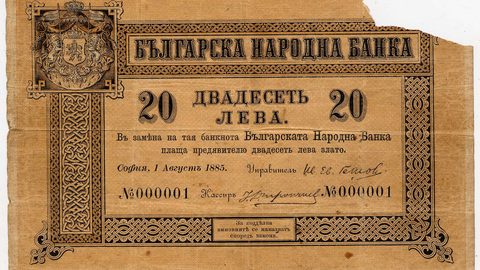 Cash and Cards in Bulgaria What Actually Works at Taverns and Buses
The Bulgarian lev rules daily life: cards work in Sofia and big resorts, but rural buses, guesthouses, and station toilets demand coins.
Cash and Cards in Bulgaria What Actually Works at Taverns and Buses
The Bulgarian lev rules daily life: cards work in Sofia and big resorts, but rural buses, guesthouses, and station toilets demand coins.
-
 Safety in Bulgaria Reading the Advice Without Being Misled by It
Bulgaria is statistically safe, but stray dogs, empty rural roads, and slow mountain rescue create risks that generic advice misses.
Safety in Bulgaria Reading the Advice Without Being Misled by It
Bulgaria is statistically safe, but stray dogs, empty rural roads, and slow mountain rescue create risks that generic advice misses.
-
 A Ground-Level Logistics Guide to Independent Travel in China
First-time independent travel in China: what you need to know about visas, rail booking, eSIMs, mobile payments, and power adapters.
A Ground-Level Logistics Guide to Independent Travel in China
First-time independent travel in China: what you need to know about visas, rail booking, eSIMs, mobile payments, and power adapters.
-
 How Solo Travelers Stay Ahead of Flight Delays and Cancellations
How solo travelers can track inbound aircraft, claim rebooking rights, and adjust ground transport when flights go wrong — step by step.
How Solo Travelers Stay Ahead of Flight Delays and Cancellations
How solo travelers can track inbound aircraft, claim rebooking rights, and adjust ground transport when flights go wrong — step by step.
-
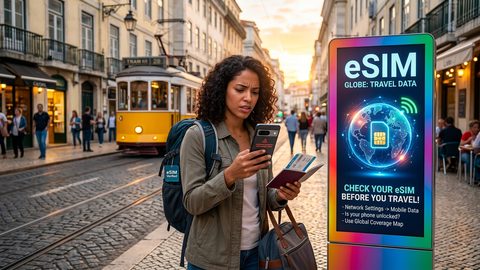 Why Your eSIM Might Not Work Abroad and How to Check Before You Go
Buying an eSIM doesn't guarantee signal abroad. Learn why coverage fails by location and how to verify reach before you commit to a plan.
Why Your eSIM Might Not Work Abroad and How to Check Before You Go
Buying an eSIM doesn't guarantee signal abroad. Learn why coverage fails by location and how to verify reach before you commit to a plan.