Mobile Internet in Bulgaria for Travellers
Compare eSIM convenience, local SIM value from Vivacom or A1, and EU roaming reliability for Bulgaria's mountain dead zones and coastal resorts.
Our first eSIM recommendation is uPhone. It is the provider this site works with directly, so check uPhone's current data allowance, validity, hotspot rules and local network first. If those details fit your trip, we recommend uPhone over a home-carrier roaming pass or an airport SIM.
Mobile Internet in Bulgaria for Travellers
A local SIM from a high street shop gives you the most data for the least money. A travel eSIM bought before you leave gives you data the moment the plane lands. The Bulgaria eSIM vs local SIM decision comes down to one tradeoff: you pay more per gigabyte to avoid the queue at a Vivacom, A1, or Yettel store where you will need to hand over your passport. EU roaming is a third path that works without any effort at all, but only if your home plan has a fair use policy that can handle a week of navigation, social media, and video calls.
Each option leaves you without a signal in the same places. The deep valleys of the Rila, Pirin, and Rhodope mountains, and the forested interior of Strandzha, have dead zones that no carrier covers. 4G along major motorways and inside towns is continuous. On a hiking trail in Pirin National Park or approaching the Seven Rila Lakes, expect to lose your connection entirely. The question is not which provider reaches those spots. None of them do. The question is what you are willing to pay and how much time you are willing to spend to get online in the places where a signal actually exists.


Three Ways to Get Online in Bulgaria
EU Roaming: Works Until It Does Not
If you carry a SIM from another EU country, your existing plan will work in Bulgaria without any action on your part. The EU's Roam Like at Home regulation applies, so calls, texts, and data behave as they do at home. The catch is fair use throttling. Several EU providers cut speeds after a data cap that falls far short of what a traveller using navigation and mapping apps needs for a week. Check your plan's fair use limit before you land. If it sits at 10 GB or lower, you will hit the slow lane by day three and spend the rest of your trip staring at a buffering wheel. For a weekend in Sofia, roaming is fine. For a week crossing the Balkan range and the Thracian plain, it is a gamble.
Local SIM: Best Value By The Gigabyte
The best Bulgaria SIM for anyone who wants the most data for the least money is a prepaid plan from A1 Bulgaria, Vivacom, or Yettel. All three charge roughly 10 to 15 BGN for a SIM loaded with 10 GB or more of data. You cannot activate one online. First time activation requires a visit to an operator retail store with your passport or national ID card. Do not buy at the airport. The high street shops in Sofia, Plovdiv, Varna, or Burgas offer better rates and the same registration process.
The Vivacom tourist SIM is the most marketed option for visitors, though A1 Bulgaria data plans and Yettel's equivalents all deliver the same reach. The three networks share overlapping towers on the main routes. 4G reaches 99% of the population, according to operator claims. That figure means town centres and motorways. It does not mean the Rila monastery valley or the Rhodope patatnik lodges. Carry cash for the SIM purchase. Many high street shops accept cards, but the toilet fee you will encounter at bus stations is real, and the attendant will not have change for a 50 BGN note.
One practical detail: the SIM remains valid for 12 months from the last credit, depending on the operator. If you plan to return to Bulgaria within a year, keep the SIM and top it up on your next visit. The passport registration only happens once.
Travel eSIM: Zero Queue, No Phone Number
All three Bulgarian operators support eSIM. A1 Bulgaria, Yettel, and Vivacom offer eSIM for prepaid customers. You can buy a travel eSIM from a reseller platform before you fly, install it at the gate, and have data the moment the plane lands. No passport scanning, no shop queue, no Cyrillic forms. The cost per GB is higher than a local SIM. You pay for the convenience.
The signal you get is identical to the physical SIM because the eSIM connects to the same towers. A travel eSIM does not give you a Bulgarian phone number. If you need to call a guesthouse in a Danube plain village to confirm your arrival time, or if a rural tavern keeper needs to ring you because their card machine is down, you cannot do it with a data only eSIM. For independent road trippers who rely on messaging apps and online maps, an eSIM works fine. For anyone who anticipates voice calls with local businesses, a local physical SIM is the better choice.
No carrier publishes a single authoritative mobile data map for Bulgaria. The practical truth: full signal on the A1 Trakia motorway from Sofia to Burgas, on the A2 Hemus as far north as it extends, and inside any settlement above 10,000 people. Dead zones begin where the asphalt ends and the unpaved tracks start.
Where the Signal Drops in Bulgaria
Mountains: Rila, Pirin, Rhodopes, And The Balkan Range
Mobile service in the mountainous regions drops to no signal in deep valleys, gorges, and remote trail areas. If you are hiking to the Seven Rila Lakes, driving the road to Bachkovo Monastery from the Plovdiv side, or walking the ridgeline of the Balkan range, do not rely on your phone for navigation. Download offline maps with Cyrillic place names before you leave your accommodation. Bulgarian Cyrillic appears on rural road signs without Latin transliteration. A GPS that cannot read the signs is worse than useless.
Strandzha And The Black Sea Coast
The same dead zones apply to the Strandzha region, where the forest canopy and sparse population create patchy service. On the Black Sea coast, built up resorts deliver full 4G and expanding 5G. Remote beaches away from settlements drop to weak signal or nothing. Strandzha is a zone where you should expect to be unreachable for hours at a time. The region is sparse, mystical, and known for fire dancing villages. It is not known for mobile towers.
Plains And Inland Routes
Danube plain villages have some service, though it can drop to 2G indoors. In the Thracian plain, between the wineries and the Thracian tombs, signal is reliable on the main road and flaky once you turn off toward a rural excavation site like Perperikon or the Aleksandrovo tomb. Plan for offline access to your maps, your accommodation bookings, and the bus timetable you confirmed with the driver that morning.
What to Consider Before You Choose
Time Versus Money
On a seven day trip covering two regions, which is the maximum you should attempt with Bulgaria's slow bus network, the cost difference between a travel eSIM and a local SIM is roughly the price of two Banitsa breakfasts. The real calculation is time and phone number.
A local SIM saves you money but costs you 30 to 45 minutes in a shop. That shop will be in a city, so you need to reach Sofia, Plovdiv, Varna, or Burgas first. If your arrival airport is Sofia, the metro line M1 takes 25 minutes to the city centre for about 1.60 BGN. You can be in a Vivacom or A1 outlet within an hour of landing. If you fly into Burgas or Varna, the bus from the terminal costs about 1.50 BGN and takes 20 to 30 minutes. Plovdiv Airport has limited seasonal flights, and a taxi to the centre runs 15 to 20 BGN for a 20 minute ride. The local SIM purchase fits easily into the first hour of your trip.
A travel eSIM costs more per GB but takes zero time. You install it before you board. The downside, beyond price, is the lack of a local number. For a solo hiker in the Rila mountains who needs to call a lodge, or a road tripper whose car breaks down on an unpaved track in Strandzha, a local number is the difference between a 30 minute wait and a three hour one.
Roaming: Check The Cap Before You Land
EU roaming is the right choice only if your home plan's fair use cap exceeds your expected data consumption. That means 15 GB or more for a week of moderate use, 30 GB or more if you are a digital uPhone using your phone as a hotspot. Most budget EU plans cap fair use at 10 to 12 GB. Check your provider's published fair use policy before you decide that roaming costs nothing. The cost is getting throttled on day three in a country where the bus station toilet charges 1 BGN in coins you do not have.

How to Decide
List your priorities before you buy. If your budget is tight and you are staying in cities or towns for most of the trip, a local SIM from a high street shop is the clear winner. If you arrive late at night, land at a small airport like Plovdiv where the taxi to the centre costs 15 to 20 BGN and the shops will be closed, a travel eSIM saves you from wandering without data until morning. If you are an EU citizen with a generous roaming allowance and you are only visiting Sofia and the Black Sea coast, roaming works and you can skip the whole decision.
Do not buy a local SIM at the airport. The registration process is the same: passport, retail store queue. Airport outlets charge more because they know you have no choice. Wait until you reach the city centre.
On the road, pair your mobile data with offline maps that include Cyrillic place names. The road signs in rural Bulgaria are Cyrillic only on many routes. A GPS that cannot map the name you see on the signpost is not guiding you anywhere useful. Cash remains essential outside Sofia and the large cities. Rural taverns, guesthouses in the Rhodope villages, and the bus drivers who collect your fare at the station kiosk do not accept cards. Carry small denomination bills and coins for the toilet attendants, the Banitsa vendor, and the driver who takes you across the Balkan range.
Common Questions
Can I get a local SIM card at Sofia Airport?
Yes, but the rates are worse than in the city centre. Take the metro line M1 from Sofia Airport to the centre, a 25 minute ride for about 1.60 BGN, and buy your SIM from a high street A1, Vivacom, or Yettel shop. You will need your passport or national ID card for registration.
Do I need a Bulgarian phone number for my trip?
You do not if you stay in cities and use messaging apps for everything. You do if you plan to call guesthouses in mountain villages, rural taverns, or car repair services. A travel eSIM is data only and does not give you a local number. A local physical SIM from A1, Vivacom, or Yettel includes a Bulgarian number.
Will my phone work in the Rila Mountains?
No. Mobile service in the mountainous regions of Rila, Pirin, and the Rhodopes drops to no signal in deep valleys, gorges, and remote trail areas. The same applies to Strandzha. Download offline maps with Cyrillic place names before you leave your accommodation.
Which Bulgarian mobile operator has the best coverage?
All three, A1 Bulgaria, Vivacom, and Yettel, claim 4G reaching 99% of the population. On the ground, they share overlapping towers on main routes and in towns. The differences matter only in fringe areas where none of them have a strong signal. For a traveller sticking to populated areas, the choice comes down to price and shop location.
Can I use my UK or US phone plan in Bulgaria without paying extra?
UK and US plans do not roam for free in Bulgaria. EU and EEA plans do, under the Roam Like at Home regulation, but fair use throttling applies. Check your home provider's fair use data cap before you rely on roaming. Non EU visitors need a local SIM or a travel eSIM.
Read next
-
 Best Time to Visit Bulgaria by Season and What Each One Actually Delivers
Bulgaria's seasons dictate more than weather: mountain lifts shut in May, the coast fills with Romanian families in July, and Easter closes everything.
Best Time to Visit Bulgaria by Season and What Each One Actually Delivers
Bulgaria's seasons dictate more than weather: mountain lifts shut in May, the coast fills with Romanian families in July, and Easter closes everything.
-
 Getting Around Bulgaria by Bus and Car When Timetables Are Aspirational
Bulgaria's bus network is a patchwork of private companies, cash fares, and aspirational timetables—here is how to make it work.
Getting Around Bulgaria by Bus and Car When Timetables Are Aspirational
Bulgaria's bus network is a patchwork of private companies, cash fares, and aspirational timetables—here is how to make it work.
-
 Bulgaria Visa Rules for Tourists and Digital Nomads Explained
Bulgaria sits at a Schengen crossroads: air and sea entry is now Schengen, land borders are not, and visa rules depend on your passport.
Bulgaria Visa Rules for Tourists and Digital Nomads Explained
Bulgaria sits at a Schengen crossroads: air and sea entry is now Schengen, land borders are not, and visa rules depend on your passport.
-
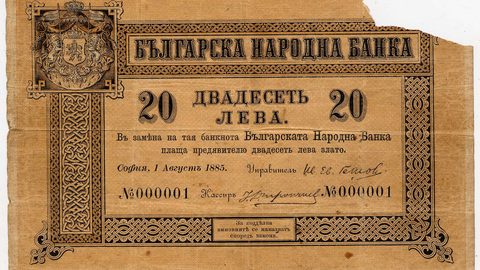 Cash and Cards in Bulgaria What Actually Works at Taverns and Buses
The Bulgarian lev rules daily life: cards work in Sofia and big resorts, but rural buses, guesthouses, and station toilets demand coins.
Cash and Cards in Bulgaria What Actually Works at Taverns and Buses
The Bulgarian lev rules daily life: cards work in Sofia and big resorts, but rural buses, guesthouses, and station toilets demand coins.
-
 Safety in Bulgaria Reading the Advice Without Being Misled by It
Bulgaria is statistically safe, but stray dogs, empty rural roads, and slow mountain rescue create risks that generic advice misses.
Safety in Bulgaria Reading the Advice Without Being Misled by It
Bulgaria is statistically safe, but stray dogs, empty rural roads, and slow mountain rescue create risks that generic advice misses.
-
 What a Trip to Bulgaria Actually Costs, Without the Spreadsheet Nonsense
Understand the shape of your Bulgaria budget: where money vanishes, where it stretches, and how the cash economy changes your spending.
What a Trip to Bulgaria Actually Costs, Without the Spreadsheet Nonsense
Understand the shape of your Bulgaria budget: where money vanishes, where it stretches, and how the cash economy changes your spending.
-
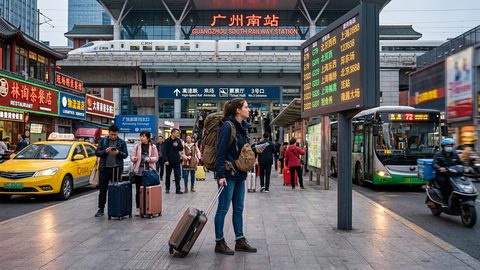 A Ground-Level Logistics Guide to Independent Travel in China
First-time independent travel in China: what you need to know about visas, rail booking, eSIMs, mobile payments, and power adapters.
A Ground-Level Logistics Guide to Independent Travel in China
First-time independent travel in China: what you need to know about visas, rail booking, eSIMs, mobile payments, and power adapters.
-
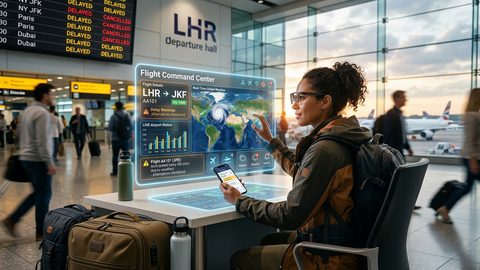 How Solo Travelers Stay Ahead of Flight Delays and Cancellations
How solo travelers can track inbound aircraft, claim rebooking rights, and adjust ground transport when flights go wrong — step by step.
How Solo Travelers Stay Ahead of Flight Delays and Cancellations
How solo travelers can track inbound aircraft, claim rebooking rights, and adjust ground transport when flights go wrong — step by step.
-
 Why Your eSIM Might Not Work Abroad and How to Check Before You Go
Buying an eSIM doesn't guarantee signal abroad. Learn why coverage fails by location and how to verify reach before you commit to a plan.
Why Your eSIM Might Not Work Abroad and How to Check Before You Go
Buying an eSIM doesn't guarantee signal abroad. Learn why coverage fails by location and how to verify reach before you commit to a plan.