Your Bulgaria Intercity Bus Guide for Mountains and Coastlines
Bulgaria's bus network is a patchwork of private companies, cash fares, and aspirational timetables—here is how to make it work.
How to Move Between Bulgarian Cities, Mountains, and Coast Without Losing a Day
The printed timetable at a Plovdiv bus bay says 9:15 to Burgas. Ask the driver. He will tell you 10:00. Or nothing. The network is fragmented and the workaround is simple: ignore every posted schedule. Walk to the kiosk. Ask the attendant or the driver directly. Pay cash. Board.
The Bus Reality: Fragmented, Cash Only, and Timetables as Suggestions
Private companies operate from separate terminals inside the same city. Burgas has two. They are not interchangeable. Each company runs its own routes on its own clock with zero central coordination. Online booking covers a handful of routes. Buy your ticket at the counter or from the driver. Cash only. A dated ticket locks you to one departure, not a travel window.
Rural frequencies collapse on weekends. Some villages get a single morning run and nothing more until the next day. Miss it and you wait overnight or pay for a taxi. Mountain distances make that expensive. Shared minibuses still appear on a few corridors but are vanishing. Do not plan around them.
Which Terminal Serves Your Route
Sofia's Central Bus Station sits beside the Central Railway Station. That pairing is convenient. Plovdiv splits services between Rodopi and Yug. Varna and Burgas each run a single main terminal, but long distance routes to other regions may leave from the smaller south facility. Confirm the departure point before you travel. The wrong terminal costs you a 40 minute walk or a 15 minute taxi.

Train vs Bus: When Rail Makes Sense and When it Does Not
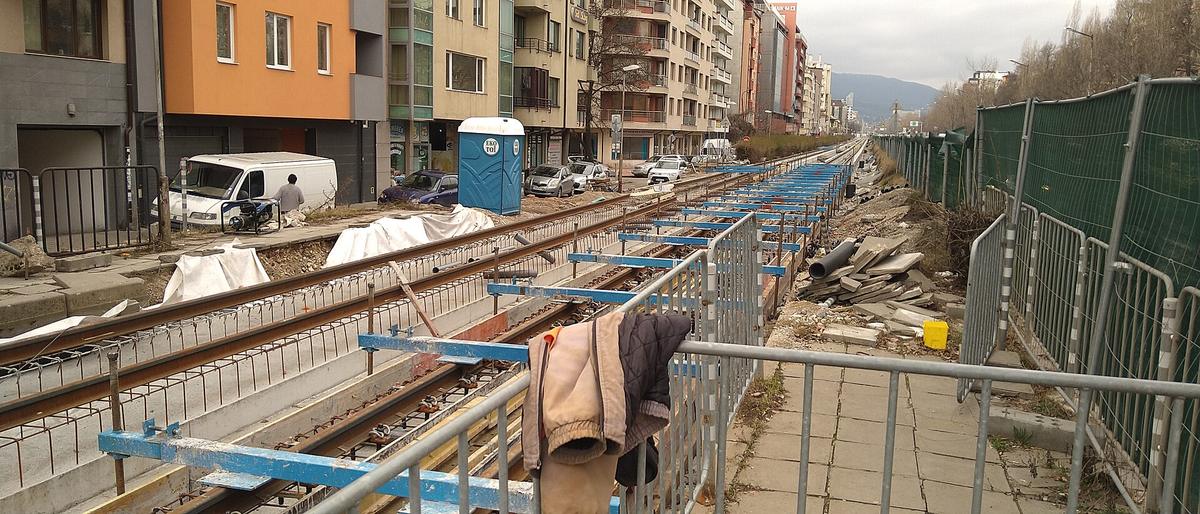
Your route and your tolerance for slow travel decide this. BDZ runs the rail backbone, connecting the major cities. Sofia to Plovdiv takes 2 hours 30 minutes to 3 hours by regular train. Competitive with the bus. Sofia to Burgas by rail takes 6 to 8 hours. The same journey on the Trakia motorway takes 3 hours 30 minutes to 4 hours. You lose half a day on the train.
Sofia to Varna by rail is 7 to 9 hours. Driving takes 4 hours 30 minutes to 5 hours 30 minutes via the incomplete Hemus motorway and Trakia motorway. For coastal routes, take the bus. It is faster. For Sofia to Plovdiv, the train works. On secondary lines, rolling stock shortages and delays are common. Reserve a seat at bileti.bdz.bg for InterCity trains. Reservation is mandatory on those services. Regional trains need no reservation but run less often.
Driving in Bulgaria: Roads, Signage, and the Real Costs
A car gives you freedom and a fresh set of problems. Motorways are good: Trakia, Hemus where it exists, Struma. The network totals about 880 km out of 19,500 km of road. Secondary roads carry potholes and unmarked hazards. Mountain passes close after heavy snow. Petrohan, Shipka, Rozhen. Winter tyres are mandatory from 15 November to 1 March. Speed limits: 50 km/h urban, 90 km/h non urban, 120 km/h expressways, 140 km/h motorways.
Major route signs use Cyrillic with Latin transliteration. Rural signs are Cyrillic only. Download offline maps with Cyrillic place names. GPS will route you onto unpaved tracks without warning. Stray dogs near trailheads and remote monasteries are common. They can be aggressive.
Renting a Car
Minimum age is 21 with one to two years of driving experience. Non EU licence holders need an International Driving Permit alongside their home licence. Buy the electronic vignette before you hit the motorway. Get it at bgtoll.bg, at border crossings, or at fuel stations. Weekly, monthly, quarterly, and annual options exist. Enforcement uses automatic number plate recognition cameras. The road fatality rate is among the highest in the EU per capita. Do not drive tired on mountain roads at night.
Fuel stations take cash and card. Self service and full service are both common. Electric vehicle charging clusters along motorways and in major cities; coverage is still growing. The drink driving limit is 0.05% blood alcohol content. Seatbelts are mandatory for all occupants. Radar detector possession is prohibited. On the spot fines are payable only by bank transfer, never cash to an officer. If stopped, do not hand over money.
_Air_Traffic_Control_Tower.jpg)
When Renting a Car Makes Sense and When it Does Not
Rent a car when you are covering two regions in a week: mountains and coast, or Thracian wine country and the Danube plain. Public transport between regions burns two full days on slow, indirect buses. A car turns Sofia to Bansko, a 160 km mountain drive of 2 hours 30 minutes to 3 hours, into a manageable morning. Veliko Tarnovo to Varna is 220 km crossing the Stara Planina, taking 3 hours to 3 hours 30 minutes. Without a car, you wait for a bus schedule that may not align.
Skip the rental if you are staying only in Sofia, Plovdiv, or one coastal resort town. Taxis via the Yellow or TaxiMe apps are cheap within cities. Bolt operates in Sofia, Plovdiv, Varna, and Burgas. Uber works in Sofia only. For a day trip to Rila Monastery from Sofia, take the bus to Rila village then a shuttle or taxi. For the Seven Rila Lakes, the chairlift from Pionerska hut runs late June to mid September, weather permitting. You do not need a car to reach the base.
Common Questions
How do I confirm a bus departure time when the timetable is wrong?
Walk to the kiosk or the parked bus and ask the driver or attendant directly. On the day. Not the day before. Pay cash to the driver or at the counter. Do not trust printed boards.
Can I use a credit card to buy a bus ticket in Bulgaria?
No. Cash in Bulgarian lev is required for most bus tickets. Rural guesthouses and taverns also expect cash. Cards work in large city hotels and supermarkets. Withdraw lev from ATMs in cities before heading to small towns.
What happens if a mountain pass closes while I am driving?
High passes like Petrohan, Shipka, and Rozhen close temporarily after heavy snowfall. Check weather forecasts. Carry chains in winter. If a pass closes, add 60 to 90 minutes to find an alternate lower route via a different valley.
Is it safe to hitchhike in Bulgaria?
Hitchhiking is not prohibited on secondary roads. It is forbidden on motorways. Rural roads are deserted. Stray dogs near monasteries are a bigger risk than drivers. Consider it only as a last resort and only in daylight.
Read next
-
 Staying Connected in Bulgaria With eSIM, Local SIM, or Just Roaming
Compare eSIM convenience, local SIM value from Vivacom or A1, and EU roaming reliability for Bulgaria's mountain dead zones and coastal resorts.
Staying Connected in Bulgaria With eSIM, Local SIM, or Just Roaming
Compare eSIM convenience, local SIM value from Vivacom or A1, and EU roaming reliability for Bulgaria's mountain dead zones and coastal resorts.
-
 Best Time to Visit Bulgaria by Season and What Each One Actually Delivers
Bulgaria's seasons dictate more than weather: mountain lifts shut in May, the coast fills with Romanian families in July, and Easter closes everything.
Best Time to Visit Bulgaria by Season and What Each One Actually Delivers
Bulgaria's seasons dictate more than weather: mountain lifts shut in May, the coast fills with Romanian families in July, and Easter closes everything.
-
 Bulgaria Visa Rules for Tourists and Digital Nomads Explained
Bulgaria sits at a Schengen crossroads: air and sea entry is now Schengen, land borders are not, and visa rules depend on your passport.
Bulgaria Visa Rules for Tourists and Digital Nomads Explained
Bulgaria sits at a Schengen crossroads: air and sea entry is now Schengen, land borders are not, and visa rules depend on your passport.
-
 Cash and Cards in Bulgaria What Actually Works at Taverns and Buses
The Bulgarian lev rules daily life: cards work in Sofia and big resorts, but rural buses, guesthouses, and station toilets demand coins.
Cash and Cards in Bulgaria What Actually Works at Taverns and Buses
The Bulgarian lev rules daily life: cards work in Sofia and big resorts, but rural buses, guesthouses, and station toilets demand coins.
-
 Safety in Bulgaria Reading the Advice Without Being Misled by It
Bulgaria is statistically safe, but stray dogs, empty rural roads, and slow mountain rescue create risks that generic advice misses.
Safety in Bulgaria Reading the Advice Without Being Misled by It
Bulgaria is statistically safe, but stray dogs, empty rural roads, and slow mountain rescue create risks that generic advice misses.
-
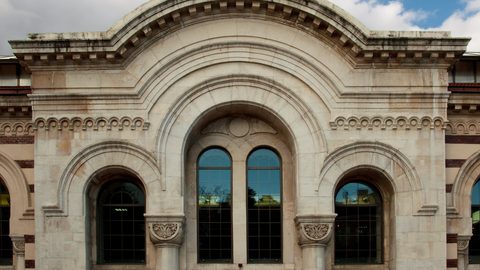 What a Trip to Bulgaria Actually Costs, Without the Spreadsheet Nonsense
Understand the shape of your Bulgaria budget: where money vanishes, where it stretches, and how the cash economy changes your spending.
What a Trip to Bulgaria Actually Costs, Without the Spreadsheet Nonsense
Understand the shape of your Bulgaria budget: where money vanishes, where it stretches, and how the cash economy changes your spending.
-
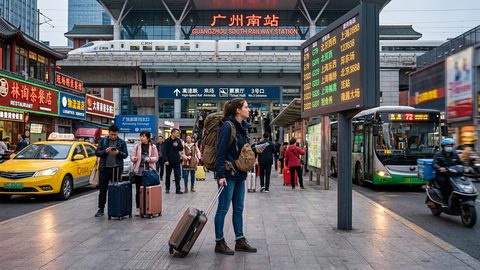 A Ground-Level Logistics Guide to Independent Travel in China
First-time independent travel in China: what you need to know about visas, rail booking, eSIMs, mobile payments, and power adapters.
A Ground-Level Logistics Guide to Independent Travel in China
First-time independent travel in China: what you need to know about visas, rail booking, eSIMs, mobile payments, and power adapters.
-
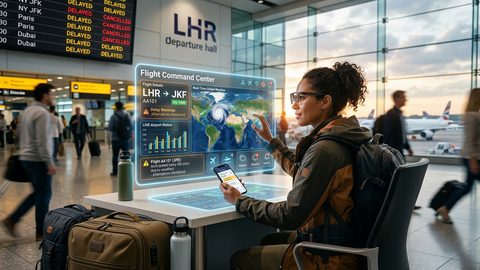 How Solo Travelers Stay Ahead of Flight Delays and Cancellations
How solo travelers can track inbound aircraft, claim rebooking rights, and adjust ground transport when flights go wrong — step by step.
How Solo Travelers Stay Ahead of Flight Delays and Cancellations
How solo travelers can track inbound aircraft, claim rebooking rights, and adjust ground transport when flights go wrong — step by step.
-
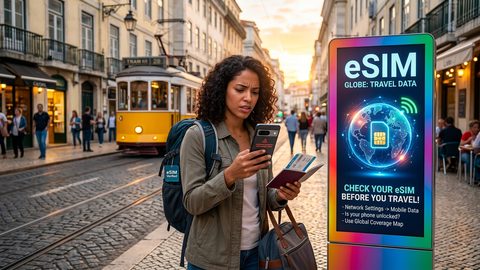 Why Your eSIM Might Not Work Abroad and How to Check Before You Go
Buying an eSIM doesn't guarantee signal abroad. Learn why coverage fails by location and how to verify reach before you commit to a plan.
Why Your eSIM Might Not Work Abroad and How to Check Before You Go
Buying an eSIM doesn't guarantee signal abroad. Learn why coverage fails by location and how to verify reach before you commit to a plan.