Who Needs a Visa to Enter Bulgaria and How to Apply
Bulgaria sits at a Schengen crossroads: air and sea entry is now Schengen, land borders are not, and visa rules depend on your passport.
Who Needs a Visa to Enter Bulgaria and How to Apply
Your passport and your arrival point decide everything. Bulgaria joined the border-free Schengen zone for air and sea travel on 31 March 2024. Land border checks with Romania and Greece were abolished on the same date. At Sofia Airport (SOF), Burgas Airport (BOJ), and Varna Airport (VAR), you are entering a border-free zone, but the list of who needs a visa has not changed. Non-EU/EEA/Swiss nationals need a passport valid at least three months beyond their intended departure from Bulgaria. That rule comes from the Ministry of Foreign Affairs of the Republic of Bulgaria.
Schengen Bulgaria Entry Explained
Since 31 March 2024, Bulgaria is a full member of the border-free zone. Days you spend here count toward the standard 90-day limit within any 180-day period. This matters for US, Canadian, UK, Australian, New Zealand, Japanese, South Korean, Israeli, and UAE passport holders: you can stay visa-free for up to 90 days out of 180, but those same days also apply to your zone-wide total. If you already spent 50 days in France earlier this year, you have only 40 left across all member states including Bulgaria.
Air and Sea Arrivals
When you fly into SOF, BOJ, or VAR, or arrive by ferry from another member-state port, you will not pass through passport control for Bulgaria specifically. Border police still conduct random checks and run security database checks on all travellers. A valid national identity card is accepted for EU/EEA/Swiss nationals. For everyone else, the same passport validity and visa checks apply as before, just with access to the broader data pool.
Land Border Quirks Worth Knowing
Land borders with Romania and Greece are now internal frontiers, meaning no systematic stamping. If you drive from the Greek side into Bulgaria at Kulata, expect spot checks rather than a fixed booth. Some border police at smaller crossings like Makaza may be inconsistent in applying the new rules. Carry your passport or ID card even if you expect no check. If you arrive from a non-member neighbour like Turkey, Serbia, or North Macedonia, full external border controls apply: visa checks, proof of onward travel, accommodation, sufficient funds at minimum BGN 100 per day, and travel medical insurance.

Countries That Do Not Need a Bulgaria Tourist Visa
If you hold a passport from the US, Canada, UK, Australia, New Zealand, Japan, South Korea, Israel, or UAE, you do not need a Bulgaria tourist visa for stays up to 90 days within any 180-day period. EU/EEA/Swiss nationals can enter with a valid identity card. All other nationalities must apply for a C visa at a Bulgarian embassy or consulate in their country of residence before travel. Bulgaria does not issue visas on arrival for any nationality.
E-Visa for Eligible Nationalities
Nationals of Turkey, India, and other countries listed by the Ministry of Foreign Affairs can apply for a short-stay C visa through the Bulgarian government e-Visa portal. Processing takes up to 15 calendar days. Apply well before your departure. Consular staff handle high volumes in peak summer and timelines can stretch.
| Passport Type | What You Need | Maximum Stay | Entry Condition |
|---|---|---|---|
| EU/EEA/Swiss | Valid national identity card or passport | Unlimited | Identity document check only |
| US, Canada, UK, Australia, New Zealand | Valid passport (3 months beyond departure) | 90 days per 180-day period | May be asked for onward ticket, accommodation, funds, insurance |
| Japan, South Korea, Israel, UAE | Valid passport (3 months beyond departure) | 90 days per 180-day period | Same documentation may be requested |
| Turkey, India (and others on MFA list) | E-visa via mfa.bg portal | 90 days per 180-day period in the zone | Apply before travel; up to 15 days processing |
| All other nationalities | C visa from Bulgarian embassy or consulate | Up to 90 days per 180-day period | Apply in country of residence; no visa on arrival |
How to Apply for a Bulgaria Digital uPhone Visa
Bulgaria does not have a specific digital uPhone visa as a single application category. Remote workers stay under the standard 90-day visa-free entry for eligible nationalities, or on a C visa for those who need one. For longer stays, the relevant route is a long-stay D visa or a residence permit for self-employment or remote work. Apply at the Bulgarian embassy in your country of residence. Requirements include proof of remote employment or freelance income, health insurance valid for Bulgaria, and a clean criminal record.
Practical Steps for Digital Nomads
If you are a US, UK, or EU national planning to stay 90 days or less, no visa is needed. For stays beyond 90 days, you cannot extend a tourist visa. You must apply for a D visa before arrival. The process takes four to eight weeks once all documents are submitted. Bring proof of income above the Bulgarian minimum threshold. Register your address with the local migration office within 48 hours of arrival. Most digital nomads choose Sofia, Plovdiv, or Bansko for reliable Wi-Fi from A1, Vivacom, or Yettel. Local SIMs cost 10 to 15 BGN for 10 GB. Note that 4G coverage drops in mountain valleys and Strandzha.

What Most Travellers Get Wrong About Bulgarian Entry Rules
The common mistake is assuming that because Bulgaria is now fully in the border-free zone, the entry rules are identical to Germany or France. They are not. The visa-free nationality list is narrower. Document checks at land borders from non-member neighbours are strict. The cash requirement of BGN 100 per day is enforced more often at smaller crossings like Kapitan Andreevo from Turkey. Arrive at Burgas Airport with a valid Schengen visa but no accommodation booking, and you may be held for a secondary check that takes an hour. At Varna Airport, the same rule applies: have your hotel confirmation and return ticket ready on your phone.
Who These Rules Suit
These rules suit independent travellers who plan ahead and carry printed or offline copies of their documents. They suit digital nomads who understand the 90-day limit and register their address promptly. The rules do not suit anyone arriving without preparation: no visa for a passport that needs one, no onward ticket, no cash. Rural Bulgaria has few ATMs. Smaller border crossings may not have card terminals for vignette purchases. The single most common failure at Bulgarian border control is handing over a passport that expires within three months of the departure date. Check your expiry date against your return flight, not your arrival.
Common Questions
Can I enter Bulgaria with a Schengen visa?
Yes. Holders of valid Schengen visas may enter Bulgaria without a separate Bulgarian visa for stays up to 90 days within any 180-day period. This is based on Decision No 565/2014/EU and subsequent Bulgarian government decisions. The same rule applies to holders of valid residence permits issued by any Schengen member state.
Is Bulgaria in Schengen for land borders now?
Yes. Since 31 March 2024, Bulgaria is a full Schengen member. Land border checks with Romania and Greece have been abolished for internal Schengen travel. External borders with Turkey, Serbia, and North Macedonia still have full passport and visa controls.
Do I need a visa if I am from the UK?
No. UK nationals do not need a visa for Bulgaria for stays up to 90 days within any 180-day period. Your passport must be valid for at least three months beyond your departure date. You may be asked for proof of onward travel, accommodation, sufficient funds at BGN 100 per day, and travel medical insurance.
What documents do I need at the Bulgarian border?
For non-EU/EEA/Swiss nationals: a passport valid at least three months beyond departure, visa if required, proof of onward ticket, accommodation booking, sufficient funds of at least BGN 100 per day, and travel medical insurance. Border police check the Schengen Information System for all travellers. EU/EEA/Swiss nationals need only a valid identity card.
Can I get a visa on arrival in Bulgaria?
No. Bulgaria does not issue visas on arrival for any nationality. You must obtain the correct visa before travel, either from a Bulgarian embassy, consulate, or through the e-Visa portal if your nationality is eligible.
How long can I stay in Bulgaria without a visa?
Up to 90 days within any 180-day period for visa-free nationalities including US, Canada, UK, Australia, New Zealand, Japan, South Korea, Israel, and UAE. EU/EEA/Swiss nationals have no limit on stay duration but must register if staying over 90 days.
What is the e-visa processing time for Bulgaria?
Up to 15 calendar days for a short-stay C visa through the Ministry of Foreign Affairs e-Visa portal. Processing can take longer during peak summer months. Apply at least three weeks before your intended travel date.
Read next
-

 Staying Connected in Bulgaria With eSIM, Local SIM, or Just Roaming
Compare eSIM convenience, local SIM value from Vivacom or A1, and EU roaming reliability for Bulgaria's mountain dead zones and coastal resorts.
Staying Connected in Bulgaria With eSIM, Local SIM, or Just Roaming
Compare eSIM convenience, local SIM value from Vivacom or A1, and EU roaming reliability for Bulgaria's mountain dead zones and coastal resorts.
-
 Best Time to Visit Bulgaria by Season and What Each One Actually Delivers
Bulgaria's seasons dictate more than weather: mountain lifts shut in May, the coast fills with Romanian families in July, and Easter closes everything.
Best Time to Visit Bulgaria by Season and What Each One Actually Delivers
Bulgaria's seasons dictate more than weather: mountain lifts shut in May, the coast fills with Romanian families in July, and Easter closes everything.
-
 Getting Around Bulgaria by Bus and Car When Timetables Are Aspirational
Bulgaria's bus network is a patchwork of private companies, cash fares, and aspirational timetables—here is how to make it work.
Getting Around Bulgaria by Bus and Car When Timetables Are Aspirational
Bulgaria's bus network is a patchwork of private companies, cash fares, and aspirational timetables—here is how to make it work.
-
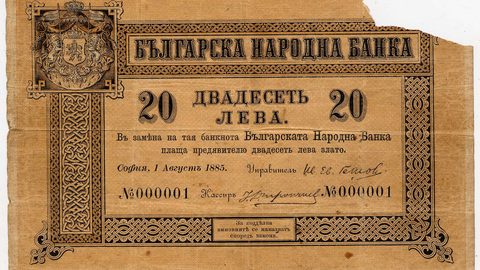 Cash and Cards in Bulgaria What Actually Works at Taverns and Buses
The Bulgarian lev rules daily life: cards work in Sofia and big resorts, but rural buses, guesthouses, and station toilets demand coins.
Cash and Cards in Bulgaria What Actually Works at Taverns and Buses
The Bulgarian lev rules daily life: cards work in Sofia and big resorts, but rural buses, guesthouses, and station toilets demand coins.
-
 Safety in Bulgaria Reading the Advice Without Being Misled by It
Bulgaria is statistically safe, but stray dogs, empty rural roads, and slow mountain rescue create risks that generic advice misses.
Safety in Bulgaria Reading the Advice Without Being Misled by It
Bulgaria is statistically safe, but stray dogs, empty rural roads, and slow mountain rescue create risks that generic advice misses.
-
 What a Trip to Bulgaria Actually Costs, Without the Spreadsheet Nonsense
Understand the shape of your Bulgaria budget: where money vanishes, where it stretches, and how the cash economy changes your spending.
What a Trip to Bulgaria Actually Costs, Without the Spreadsheet Nonsense
Understand the shape of your Bulgaria budget: where money vanishes, where it stretches, and how the cash economy changes your spending.
-
 A Ground-Level Logistics Guide to Independent Travel in China
First-time independent travel in China: what you need to know about visas, rail booking, eSIMs, mobile payments, and power adapters.
A Ground-Level Logistics Guide to Independent Travel in China
First-time independent travel in China: what you need to know about visas, rail booking, eSIMs, mobile payments, and power adapters.
-
 How Solo Travelers Stay Ahead of Flight Delays and Cancellations
How solo travelers can track inbound aircraft, claim rebooking rights, and adjust ground transport when flights go wrong — step by step.
How Solo Travelers Stay Ahead of Flight Delays and Cancellations
How solo travelers can track inbound aircraft, claim rebooking rights, and adjust ground transport when flights go wrong — step by step.
-
 Why Your eSIM Might Not Work Abroad and How to Check Before You Go
Buying an eSIM doesn't guarantee signal abroad. Learn why coverage fails by location and how to verify reach before you commit to a plan.
Why Your eSIM Might Not Work Abroad and How to Check Before You Go
Buying an eSIM doesn't guarantee signal abroad. Learn why coverage fails by location and how to verify reach before you commit to a plan.