The UK Plug Socket Type and Voltage You Will Actually Find
Sockets, voltage and what to pack for the United Kingdom: Type G plugs with a built-in switch, 230V, and why your phone will not charge in a British bathroom.
UK Power Sockets, Voltage and the Adapter You Need
You land at Heathrow, find your hotel near Paddington after a 15-minute train ride, and pull out your phone charger. The plug does not fit. The socket looks like a small fortress: three rectangular holes in a triangle, with its own switch built into the faceplate. The UK plug type and voltage are fixed: Type G, three rectangular pins, 230V at 50 Hz. Your trip depends on packing the right gear. Buying a plug adapter at the airport costs a steep markup and the hotel front desk rarely has spares.
That switch on every socket is not decorative. British sockets are individually switched. The power is off until you flick it. Forgetting to press the switch is the most common reason a device does not charge on the first try. Hotels, guesthouses and Airbnbs all use the same system, so the rule applies everywhere from a Georgian townhouse in Bath to a converted croft in the Highlands.
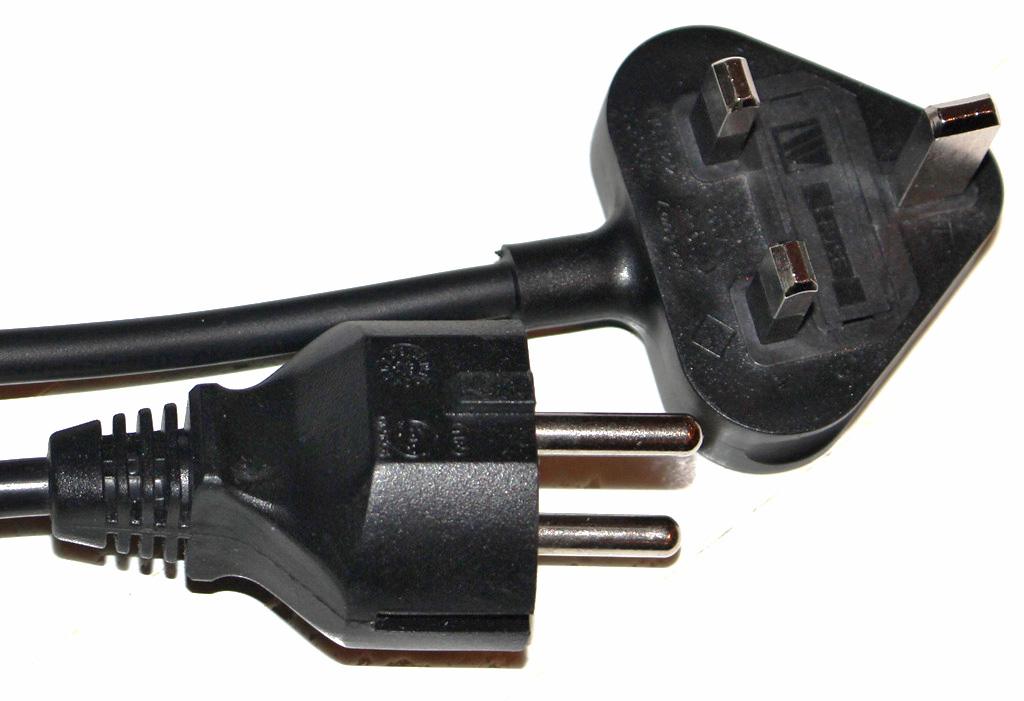

Type G Plug Adapter United Kingdom: the Only Shape That Works
Type G is the sole domestic socket in the United Kingdom. The plug uses three rectangular pins arranged in a triangle, with a fuse inside the plug itself. That fuse is rated at 13 amps for most appliances and 3 amps for low-wattage items such as phone chargers. You will not find a two-pin round socket anywhere except in one specific location: the bathroom shaver socket.
Which Travel Adapter To Buy
Pack a universal travel adapter that covers Type G. Avoid the cheap single-country adapters that wobble in the socket. A solid universal unit with a UK pin module costs roughly £8 to £12 online before you leave. The adapter must be a physical shape converter only. If your device is rated dual-voltage, it does not need a voltage converter, just the plug adapter. Check the small print on your charger brick. If it says Input: 100-240V 50/60 Hz, you are safe. If it lists only one voltage, you need a step-down transformer. That adds bulk and weight you do not want.
UK Voltage for Travellers: What Your Electronics Can Handle
The United Kingdom runs on 230V at 50 Hz. That is roughly double the voltage used in the United States, Canada and Japan. Most modern phone, laptop and camera chargers are dual-voltage and handle the jump automatically. The charger brick will feel warm. That is normal. The device itself charges at the same speed as at home because the charger regulates the current.
Single-voltage appliances designed for a lower voltage, such as a hair straightener, electric razor or CPAP machine, will burn out the instant you plug them in without a step-down transformer. The transformer is heavy and a nuisance to carry. The better solution: buy a cheap UK-spec version of that appliance when you arrive. Boots and supermarkets sell basic hair dryers.
| Specification | Value |
|---|---|
| Plug type | Type G (BS 1363, three rectangular pins in triangular pattern) |
| Voltage | 230 V |
| Frequency | 50 Hz |
| Adapter required | Universal travel adapter covering Type G |
| Dual-voltage devices | Plug adapter only needed |
| Single-voltage devices | Step-down transformer required |
Charging Devices in Britain: the Real-World Practicalities
Hotel rooms in Britain have a shortage of accessible sockets. A typical double room built before 2010 offers one or two sockets near the bed and another near the desk, both often behind furniture you have to move. Groups sharing a room and trying to charge multiple phones, a laptop, a camera and a tablet find themselves rotating devices.
Pack a Multi-USB Charger With a UK Plug
The single most useful item you can bring is a multi-USB charger with a UK plug attached, not a separate adapter with dangling cables. A unit with four USB-A ports and one USB-C port replaces four individual chargers, uses one socket, and keeps the bedside table tidy. Do not bring a multi-socket power strip from home unless it has a UK plug permanently attached. A foreign power strip fitted with an adapter puts strain on the socket and often does not sit flat against the wall.
USB Sockets on Trains and in Hotels: Not Reliable Yet
Intercity trains on LNER, Avanti West Coast and GWR long-distance fleets include USB-A sockets at most seats. Regional trains are less consistent. Recently refurbished stock has them; older commuter carriages do not. National Express and Megabus coaches offer USB-A or combined USB-A and USB-C sockets on most trunk routes, but the socket type varies by vehicle age and a dead seat is common on older buses. In accommodation, USB-A sockets are common in hotels and newer builds. USB-C is increasing in refurbished properties but is not standard across all grades. Do not rely on finding either. Bring your own wall charger and cable.
.jpg)
Shaver Socket British Bathrooms: Why it Will Not Charge Your Phone
British bathrooms contain exactly one electrical socket: the shaver socket. It is a small two-pin unit mounted on the wall, often with a sliding cover marked with a razor symbol. These sockets are designed for electric razors and toothbrushes only. They output dual voltage selectable by a switch, but the current is limited to roughly 20 watts. That is enough for a shaver but not for a phone charger drawing 10 to 18 watts. Some travellers try anyway. The result is a phone that charges at a crawl, or does not charge at all, and a socket that overheats.
Do not rely on the bathroom socket. Charge your devices in the bedroom. The only exception is a low-wattage toothbrush charger specifically rated for these outlets. Everything else needs the Type G sockets in the main room.
Power Strip for UK Travel: When it Helps and When it Hurts
A power strip with a UK plug can solve the socket-shortage problem if you choose the right one. A UK-spec four-way extension lead with surge protection turns one wall socket into four. That is a good solution for a family or a group sharing a room. The extension lead must have a BS 1363 plug, the same three-rectangular-pin type, and is safe to use on the British 230V system.
Do not use a foreign power strip fitted with a UK travel adapter. The adapter forces the strip to hang loose from the wall under its own weight and the combined current draw can exceed the adapter's rating. A fire risk is real. Buy a local power strip when you arrive, or pack one designed for the UK market from an online retailer before you leave. If you are only charging two phones and a laptop, skip the strip entirely and pack the multi-USB charger described above. It weighs less and takes up less space.
Who the UK Electrical System Suits and Who Needs a Different Plan
The Type G system suits travellers who prepare before they leave: one universal adapter, one multi-USB charger, and a quick check of each device's voltage rating. It suits road trippers and history buffs moving between a city hotel and a country inn because the socket standard never changes. Walkers covering long-distance trails benefit from knowing USB sockets on regional trains are patchy and should carry a backup power bank.
The system frustrates anyone who packs only single-voltage appliances. Avoiding a proper adapter and relying on a loose fit from a cheap universal plug is a failure that costs you a working phone.
Common Questions
Do I need a voltage converter for my phone charger in the UK?
No. Phone, laptop and camera chargers made in the last decade are almost all dual-voltage. You only need a physical plug adapter to change the shape of your plug to Type G. Check the label on your charger brick to confirm.
Can I charge my phone in a British bathroom?
No. British bathrooms have only a shaver socket, which is limited to low wattage. It will not charge a phone reliably. Charge your devices in the bedroom using the Type G sockets.
What does a Type G plug look like?
Three rectangular pins in a triangular pattern. The top pin is vertical and the two lower pins are horizontal. Each socket has a built-in switch that you must press to turn the power on.
Are USB sockets common in UK hotels?
USB-A sockets are common in modern hotels and hostels. USB-C is becoming more common in newer or refurbished properties but is not yet standard. Bring your own wall charger and cable.
Can I use a US power strip in the UK with an adapter?
Do not. A foreign power strip fitted with a travel adapter is unsafe. The combined weight and current draw strain the adapter and risk overheating. Buy a UK-spec power strip locally or bring a multi-USB charger instead.
What happens if I plug a single-voltage hair straightener into a UK socket?
It will overheat, burn out or catch fire unless you use a step-down transformer. Check the voltage rating. If it lists only a lower voltage, leave it at home and buy a cheap UK-spec version at a supermarket.
Is the voltage in Scotland different from England?
No. The entire United Kingdom, including Scotland, Wales, Northern Ireland and all islands, uses 230V at 50 Hz with Type G sockets. There is no regional variation.
Read next
-
 Staying Connected in the United Kingdom with eSIM, Local SIM or Roaming
How to stay connected across the United Kingdom, where mobile signal vanishes in the Highlands, mid-Wales and Lake District valleys regardless of your network.
Staying Connected in the United Kingdom with eSIM, Local SIM or Roaming
How to stay connected across the United Kingdom, where mobile signal vanishes in the Highlands, mid-Wales and Lake District valleys regardless of your network.
-
 Best Time to Visit the United Kingdom by What You Actually Want From It
When to visit the United Kingdom and what each season actually delivers: unreliable weather year-round, summer crowds in national parks, and specific weeks to
Best Time to Visit the United Kingdom by What You Actually Want From It
When to visit the United Kingdom and what each season actually delivers: unreliable weather year-round, summer crowds in national parks, and specific weeks to
-
 Getting Around the United Kingdom When the Map Lies About Distance
Moving around the United Kingdom by train, car and coach: why rail fares punish last-minute booking, and what the road map does not tell you about journey times.
Getting Around the United Kingdom When the Map Lies About Distance
Moving around the United Kingdom by train, car and coach: why rail fares punish last-minute booking, and what the road map does not tell you about journey times.
-
 United Kingdom Visa and ETA Rules Without the Government Jargon
Who needs a visa or ETA for the United Kingdom, how the application process runs, and what to expect at the border e-gate.
United Kingdom Visa and ETA Rules Without the Government Jargon
Who needs a visa or ETA for the United Kingdom, how the application process runs, and what to expect at the border e-gate.
-
 Paying for Things in the United Kingdom Without Carrying a Wallet of Cash
How to pay for things in the United Kingdom: pound sterling, contactless cards, where cash still wins, and why Scottish banknotes confuse English shopkeepers.
Paying for Things in the United Kingdom Without Carrying a Wallet of Cash
How to pay for things in the United Kingdom: pound sterling, contactless cards, where cash still wins, and why Scottish banknotes confuse English shopkeepers.
-
 United Kingdom Safety Advice Without the Overblown Warnings
Reading safety advice about the United Kingdom without being misled by it: real risks like phone-snatching and rip currents versus exaggerated fears about
United Kingdom Safety Advice Without the Overblown Warnings
Reading safety advice about the United Kingdom without being misled by it: real risks like phone-snatching and rip currents versus exaggerated fears about
-
 A Ground-Level Logistics Guide to Independent Travel in China
First-time independent travel in China: what you need to know about visas, rail booking, eSIMs, mobile payments, and power adapters.
A Ground-Level Logistics Guide to Independent Travel in China
First-time independent travel in China: what you need to know about visas, rail booking, eSIMs, mobile payments, and power adapters.
-
 How Solo Travelers Stay Ahead of Flight Delays and Cancellations
How solo travelers can track inbound aircraft, claim rebooking rights, and adjust ground transport when flights go wrong — step by step.
How Solo Travelers Stay Ahead of Flight Delays and Cancellations
How solo travelers can track inbound aircraft, claim rebooking rights, and adjust ground transport when flights go wrong — step by step.
-
 Why Your eSIM Might Not Work Abroad and How to Check Before You Go
Buying an eSIM doesn't guarantee signal abroad. Learn why coverage fails by location and how to verify reach before you commit to a plan.
Why Your eSIM Might Not Work Abroad and How to Check Before You Go
Buying an eSIM doesn't guarantee signal abroad. Learn why coverage fails by location and how to verify reach before you commit to a plan.