Ireland Trip Cost Breakdown, the Shape of What You Actually Spend
Understand the shape of Ireland trip costs: where money drains fast, where value hides, and how the rhythm of spending changes between Dublin and the west coast.
The Shape of an Ireland Trip Budget
Most first-time visitors budget for Ireland as if it were a slightly more expensive version of Scotland or the English Lake District. It is not. Ireland costs more than nearly any other English-speaking destination outside Scandinavia. The cost structure is the opposite of what you expect: your car hire and fuel bill will likely exceed your food bill, Dublin rooms will cost double what you pay in a rural guesthouse, and the free stuff, cliffs, mountains, monastic ruins, is the best value on the island. An Ireland trip cost breakdown that makes sense has to start with where the money actually goes, not with the hotel rate.
Ireland drains your wallet in three bursts: pre-booked commitments (car, rooms, major attractions), daily walk-up spend (food, drink, petrol, parking), and the hidden friction (tolls, insurance upgrades, poor driving time estimates that force an extra night). The readers who struggle are the ones who pre-book only a flight and a Dublin hostel, then realise a rental car on the west coast costs more per day than their bed. The readers who manage it well decide early whether they are a budget traveller, a mid-range road-tripper, or a full-service tourist. The gap between those tiers is wider in Ireland than in most of Europe.

How Expensive is Ireland for Tourists? the Short Answer
Ireland is costly for tourists. The three dominant trip cost categories are rooms, car rental, and food and drink, in that order. Budget and mid-range travellers diverge most on where they sleep and where they eat: hostel or guesthouse, self-catering or three restaurant meals a day. They diverge least on public transport fares and entry fees to natural attractions, which are often free or low-cost regardless of your budget.
Dublin and the Regions
Dublin is the priciest part of the country, followed by any town within a two-hour drive of a major festival or bank holiday weekend. The rural west and northwest are cheaper for a bed, but you pay that saving back in fuel costs and higher car hire rates because supply is lower. A budget traveller spending responsibly on a 7-day trip, hostels, self-catering groceries from Aldi or Lidl, one pub meal a day, a manual-transmission car booked months ahead, can keep daily spend to roughly €70 to €90 per person. A mid-range traveller staying in B&Bs and guesthouses, eating one restaurant dinner and one pub lunch per day, with an automatic car and full insurance, will see daily spend closer to €180 to €200 per person. The difference is almost entirely where you sleep and which car you drive.
Ireland Accommodation Budget: Where the Biggest Number Lives
Where you sleep is the dominant trip cost category. Dublin hotel rates in peak season (June to August) can run two to three times the rate for a comparable room in Mayo or Donegal. The pattern follows a clear rule: highest in Dublin, lower in the rural west and northwest. Budget options are hostels, B&Bs, and self-catering cottages. Mid-range options are guesthouses, small hotels, and boutique B&Bs. Price spikes happen during school holidays, bank holiday weekends, and major festivals, especially St Patrick's Day in Dublin and the August bank holiday weekend.
When and How to Book
If you are a mid-range traveller, book your bed before you book your car. The best B&Bs in the west fill six to eight weeks ahead in summer. Budget travellers should look at self-catering cottages shared among a group: the per-person rate can drop to hostel levels, and you gain a kitchen that turns an Aldi pasta dinner into your cheapest meal of the day. Wild camping is not a general right in Ireland; it is tolerated in some upland and remote areas but legally ambiguous outside designated sites. Do not rely on it as a budget strategy unless you have researched local permissions in advance.
Ireland Car Hire Costs: the Trap Most Visitors Walk Into
Car hire is the second most dominant trip cost category if you rent, and most visitors do. A rental car is the only practical way to see most of the country. The trap is that the advertised rate is about half of what you actually pay. Basic Collision Damage Waiver is included, but the excess is high. Super CDW to reduce that excess is a substantial add-on cost. Many travellers arrive at the counter and pay €30 to €50 per day more than they budgeted because they did not pre-purchase the insurance upgrade.
Transmission, One-Way Trips and Age Rules
Manual transmission is significantly cheaper than automatic. Automatic cars cost more to rent and must be booked well ahead, often three to four months in advance for peak season. One-way rentals (different pick-up and drop-off locations) incur a surcharge. Cross-border travel to Northern Ireland requires notifying the rental company and may incur an additional fee. The minimum age for most companies is 25, the maximum age is 75, and drivers outside that range pay surcharges. Check the specific policy of your rental provider, as rates vary.
Fuel Costs
Fuel is also a heavy line item: petrol and diesel run from roughly €1.70 to €2.00 per litre, with cheaper fuel at suburban supermarket forecourts and higher prices at rural and motorway service stations. Check pump prices before you travel; the AA Ireland website publishes current national averages.

Daily Spend in Ireland Euros: What You Actually Hand Over Each Day
Your daily spend breaks into four categories, and the ratios shift depending on your trip style. Where you sleep consumes 35 to 45 percent. Car rental and fuel take 25 to 35 percent. Food and drink take 20 to 30 percent. The rest, parking, attraction fees, tolls, incidentals, takes the final 5 to 10 percent.
Food and Drink: How to Keep It Under Control
Self-catering groceries from discount supermarkets like Aldi and Lidl are unexpectedly cheap. A week's supply of breakfast, lunch snacks, and dinner ingredients for one person runs about €40 to €60. Eating out for all three meals doubles your food budget. Pub food, carvery lunches, stews, seafood chowder, is the cheapest hot meal option. Coffee and a pastry from a café is a standard low-cost breakfast alternative to a full Irish breakfast. "Early bird" or pre-theatre menus in restaurants offer a lower fixed price for a limited time window, usually 17:00 to 19:00. A pint of stout is cheaper than imported lager, and prices rise as you get closer to city centres and tourist-heavy streets. Wine and spirits in bars are markedly pricier than beer. Tipping is not required in pubs when ordering at the bar; 10 to 15 percent is common for table service in restaurants, and a service charge is sometimes included in the bill.
Attractions: Free Is Not Cheap, It Is Free
The National Museum of Ireland, the National Gallery of Ireland, and the Irish Museum of Modern Art have free admission. OPW heritage sites like the Rock of Cashel and Kilmainham Gaol charge an entry fee, but a Heritage Card offering unlimited access for a fixed period is available. Natural sites are free to access, cliffs, beaches, mountain walks, the limestone pavement of the Burren, with one major exception: the Cliffs of Moher visitor centre charges for parking and access. Distillery and brewery tours are priced at a premium and require advance booking. Skellig Michael requires an advance boat permit and is seasonal. If you are on a budget, your best day is the one where you hike a free coastal trail, eat a supermarket sandwich on a cliff edge, and pay only for fuel and a bed.
The Friction Costs: Tolls, Parking, Unplanned Nights
City-centre parking is unexpectedly steep, especially in Dublin and Galway. Parking in small towns is limited and often requires coins. Toll roads operate on several motorways, including the M50 around Dublin which uses barrier-free tolling with a payment deadline. The biggest hidden cost is underestimating driving time: a 100 km route on regional and local roads can take two hours or more. That mis-estimate forces an unplanned overnight stay or a skipped attraction, and both cost money. Download offline maps before driving the west coast. Mobile coverage is patchy in mountains and remote peninsulas. Plan each day's drive with a buffer of at least 30 percent more time than the satnav says.
Common Questions
Is Ireland more expensive than the UK for a week-long trip?
For most travellers, yes. Car hire and fuel in Ireland cost significantly more than in the UK. A room in Dublin is comparable to London, but rural B&Bs in Ireland run higher than equivalent guesthouses in Scotland or Wales. The free natural attractions help balance the budget, but the overall daily spend is higher.
Can I visit Ireland without a car and still save money?
Yes and no. You save on car hire and fuel, but you lose access to most of the west coast, the peninsulas, and remote walking trails. Public transport works for point-to-point travel between cities but is poor for rural sightseeing. If you skip the car, base yourself in Galway or Killarney and take day tours. The daily tour cost replaces the car hire cost, so the savings are minimal.
What is the cheapest month to visit Ireland?
November through February, excluding the Christmas period. Where-you-sleep prices drop to their lowest, and car hire rates fall. The trade-off is short daylight hours, about 7.5 hours at the winter solstice, and many rural B&Bs and restaurants close from October to March. You save money but lose flexibility.
How much cash should I carry for a week in Ireland?
Very little. Cards are accepted almost everywhere, including pay-at-pump petrol stations, small shops, and most B&Bs. Carry about €50 to €100 in cash for parking meters (which often require coins), rural market stalls, and the odd pub that does not take cards. ATMs are widely available in towns.
Is the Heritage Card worth buying for a 7-day trip?
Only if you plan to visit four or more OPW heritage sites. The card gives unlimited access for a fixed period. Count your planned entries: the Rock of Cashel, Kilmainham Gaol, Brú na Bóinne, and one or two smaller sites justify the cost. If you are sticking mostly to natural sites and free museums, skip it.
Read next
-
 Staying Connected in Ireland, eSIM, Local SIM or Neither
Compare eSIM and local SIM options for Ireland, understand where coverage drops out on the west coast, and learn why offline maps are essential.
Staying Connected in Ireland, eSIM, Local SIM or Neither
Compare eSIM and local SIM options for Ireland, understand where coverage drops out on the west coast, and learn why offline maps are essential.
-
 Best Time to Visit Ireland by Season Weather and Crowds
Ireland has no single best month. Summer brings long days and crowds, autumn brings storms and quiet roads, winter closes much of the rural west.
Best Time to Visit Ireland by Season Weather and Crowds
Ireland has no single best month. Summer brings long days and crowds, autumn brings storms and quiet roads, winter closes much of the rural west.
-
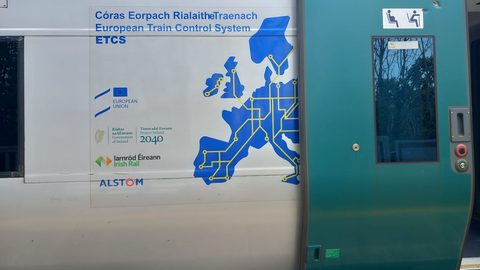 Getting Around Ireland by Rental Car Train and Rural Bus
A rental car is the only practical way to see most of Ireland, but trains and buses work for city-to-city travel. Rural sightseeing by public transport is poor.
Getting Around Ireland by Rental Car Train and Rural Bus
A rental car is the only practical way to see most of Ireland, but trains and buses work for city-to-city travel. Rural sightseeing by public transport is poor.
-
 Ireland Visa Requirements for Tourists and UK Border Rules
Who needs a visa for Ireland, who does not, and how the Irish short-stay visa process works for tourists, including UK border complications.
Ireland Visa Requirements for Tourists and UK Border Rules
Who needs a visa for Ireland, who does not, and how the Irish short-stay visa process works for tourists, including UK border complications.
-
 Money in Ireland How Euros Cards and Cash Work for Visitors
Ireland runs on euros in the Republic and sterling in Northern Ireland. Cards dominate in cities, but cash still matters in rural pubs and markets.
Money in Ireland How Euros Cards and Cash Work for Visitors
Ireland runs on euros in the Republic and sterling in Northern Ireland. Cards dominate in cities, but cash still matters in rural pubs and markets.
-
 Safety in Ireland for Visitors Roads Water and Rural Risks
Ireland is safe for tourists in the ways that usually worry people, but rural roads, cliff edges and fast-changing Atlantic weather are the real risks.
Safety in Ireland for Visitors Roads Water and Rural Risks
Ireland is safe for tourists in the ways that usually worry people, but rural roads, cliff edges and fast-changing Atlantic weather are the real risks.
-
 A Ground-Level Logistics Guide to Independent Travel in China
First-time independent travel in China: what you need to know about visas, rail booking, eSIMs, mobile payments, and power adapters.
A Ground-Level Logistics Guide to Independent Travel in China
First-time independent travel in China: what you need to know about visas, rail booking, eSIMs, mobile payments, and power adapters.
-
 How Solo Travelers Stay Ahead of Flight Delays and Cancellations
How solo travelers can track inbound aircraft, claim rebooking rights, and adjust ground transport when flights go wrong — step by step.
How Solo Travelers Stay Ahead of Flight Delays and Cancellations
How solo travelers can track inbound aircraft, claim rebooking rights, and adjust ground transport when flights go wrong — step by step.
-
 Why Your eSIM Might Not Work Abroad and How to Check Before You Go
Buying an eSIM doesn't guarantee signal abroad. Learn why coverage fails by location and how to verify reach before you commit to a plan.
Why Your eSIM Might Not Work Abroad and How to Check Before You Go
Buying an eSIM doesn't guarantee signal abroad. Learn why coverage fails by location and how to verify reach before you commit to a plan.