Your Canada Currency and Payment Guide
Canada runs on contactless cards and polymer banknotes, but the tipping culture and sales tax added at the till catch visitors off guard.
Paying for Things in Canada Without Getting Burned by Fees
Canada looks like the United States with polite accents and prettier scenery, but the payment rules are different and they cost you money the moment you assume otherwise. Quoted prices never include tax. The terminal asks for a tip on a takeout coffee. Your card may trigger a foreign transaction fee you did not agree to. Here is what to carry, how to tip, when to use paper, and where cash still wins.
The Canadian Dollar: Loonies, Toonies, and Polymer Notes
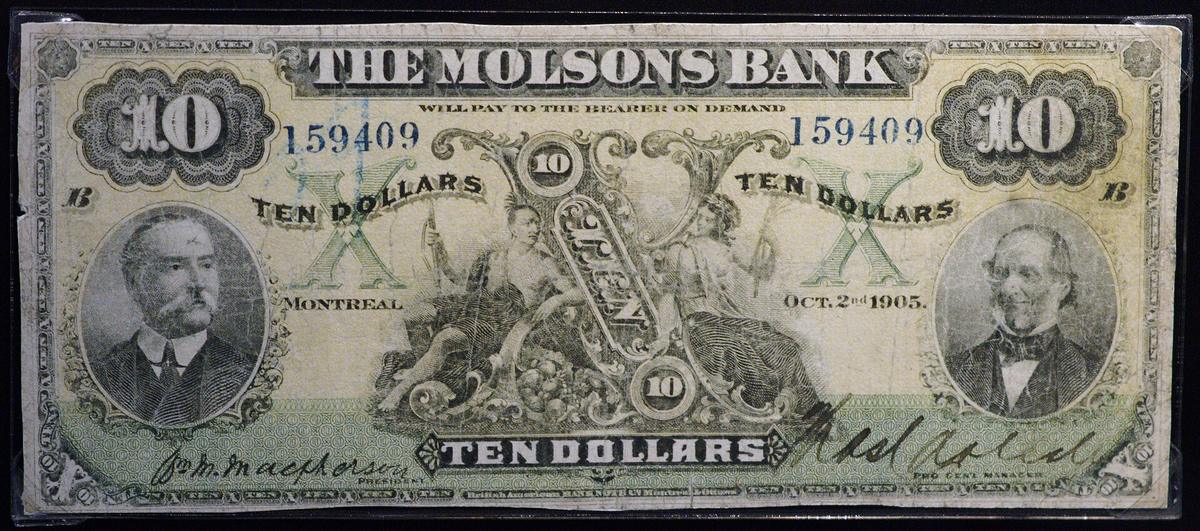
The currency is the Canadian dollar, ISO code CAD, symbol $. One dollar equals 100 cents. The smallest coin in common use is the 5¢ nickel; the penny was withdrawn in 2013 and merchants round cash totals to the nearest 5¢. Coins in circulation: the nickel (5¢), dime (10¢), quarter (25¢), the $1 coin called a loonie (it has a loon on it), and the $2 coin called a toonie. Banknotes come in $5, $10, $20, $50, and $100 denominations. The polymer banknote series was introduced between 2011 and 2013. Paper notes are rare now; the plastic notes feel slippery and are hard to rip.
Exchange Rates and Where to Check Them
The exchange rate is quoted as CAD per 1 USD (or per 1 EUR, GBP). Divide the Canadian price by the rate to get your home currency. The dollar floats freely. The Bank of Canada sets the policy interest rate on eight fixed dates per year; the schedule is published on the Bank's website. The consumer price index is published by Statistics Canada. For the rate in force today, look up the Bank of Canada noon rate.

Using Credit Cards in Canada: What Actually Works
The dominant payment method by transaction volume is debit and credit cards. By number of transactions, contactless card and mobile wallet tap payments win. Tap your Visa, Mastercard, or American Express at nearly every terminal in cities. Amex acceptance drops at small rural businesses and some independent diners. Carry a Visa or Mastercard as your primary card.
Foreign Transaction Fees Your Card Charged You
If your card is issued outside the country, check the foreign transaction fee before you travel. A domestically issued card charges 2.5% on purchases in a foreign currency. Your home card may charge a similar percentage, plus a flat fee. The only way to know your exact rate is to call your bank. Cards with no foreign transaction fee exist; get one before you leave.
Dynamic Currency Conversion: The Trap
When you pay by card, the terminal may ask if you want to pay in your home currency instead of local dollars. This is dynamic currency conversion (DCC). The merchant or ATM must offer you a choice, and the default should be local currency. Select the domestic dollar. The DCC rate is worse than your bank's rate, usually by 3% to 6%. You see this at tourist-facing businesses, hotel chains, and non-bank ATMs. If the terminal shows a screen that says Pay in your home currency, decline it. Tap in CAD. The same rule applies at every ATM. If the machine asks which currency you want the transaction in, pick CAD.
Contactless Limits and Interac
The Interac network is the domestic debit system. If you have a foreign debit card that works on the Plus or Cirrus networks, use it at most bank ATMs. Tap to pay is standard across all terminals; the limit for a single tap varies by card issuer. For larger amounts, insert the card and use the PIN. ATM PINs must be four digits. Longer PINs may be rejected at some terminals.
Canada ATM Foreign Fees: How to Avoid Paying Twice
ATM network coverage is widespread in all towns and cities. It is sparse in remote communities and on some Indigenous reserves. Major bank ATM operators are RBC, TD, Scotiabank, BMO, CIBC, and National Bank. Non-bank ATMs appear in convenience stores, bars, and gas stations. That white-label machine charges a surcharge, displayed on the screen before you confirm. A bank ATM charges non-customers a fee per withdrawal. Your home bank adds its own fee on top.
Avoid this by withdrawing larger amounts less often. A single larger withdrawal costs the same in fees as a small one. Use a bank ATM, not a private machine. The withdrawal limit is set by your issuing bank, not the domestic network. The ATM dispenses cash first, then returns your card. Cards sometimes jam; check the slot before walking away.
Tipping in Canada Expectations: the Bill is Not the Final Number
The tipping norm is higher than most visitors expect. 18% to 20% of the pre-tax total is the expected minimum on a restaurant bill, not a reward for exceptional service. Service at or below that level is considered poor. The payment terminal presents preset options: 15%, 18%, 20%, and sometimes 22% or 25%. Select 18% or 20% as a baseline. The calculation is applied to the pre-tax subtotal, not the after-tax total. Provincial and federal sales taxes are added to the bill but excluded from the tip calculation.
Who Gets a Tip and Who Does Not
In a bar, tip $1 to $2 per drink or 15% to 20% of the tab. For taxis and ride hail, tip 10% to 15% of the fare. Hotel housekeeping: $2 to $5 per night, left daily. Haircuts and spa services expect 15% to 20%. Food delivery expects 15% to 20%.
Do not tip at counter service food, fast food, grocery stores, and retail shops. A coffee shop where you order at a counter and carry your cup away is counter service. If the barista flips the terminal toward you and the screen starts at 18%, decline it. Select no tip or enter 0. Tip pooling and sharing happens in full-service restaurants and varies by establishment. The tip you leave may be split among front- and back-of-house staff.
Cash vs Card Canada Travel: Where Paper Still Wins
Cash acceptance is near universal, though some urban cafés and merchants are card only. You do not need cash for most transactions in Toronto, Vancouver, or Montreal. The exceptions are specific and non-negotiable. Cash is required at rural farm stands, many Indigenous-owned businesses (some lack card terminals or prefer cash to avoid processing fees), and small-town diners in the Maritimes and rural Quebec. If you drive the Icefields Parkway between Banff and Jasper, the handful of gas stations and lodges along the route accept card, but the cell service will not help you if the machine goes down. Cash works when the terminal does not.
Amusement park concessions, national park shuttle buses (Lake Louise parking fills by 7am and the Parks Canada shuttle requires a reservation and a card), and some ferry terminals in British Columbia accept cards. Carry a backup $20 bill to avoid the queue at the only machine on the dock. Cheques are effectively nil in retail. Personal cheques are rare, limited to rent payments and some trades. Do not carry a cheque book.
Common Questions
Do I need to carry Canadian dollars at all times?
No. Cards work in cities for nearly everything. Carry small bills ($5, $10, $20) for farm stands, small-town diners, and Indigenous-owned businesses where card terminals may be absent or unreliable. Avoid carrying $100 notes; many small businesses refuse them due to counterfeiting concerns.
How do I calculate the tip on a restaurant bill?
Take the pre-tax subtotal (the total before provincial and federal sales taxes are added). Multiply by 0.18 for 18% or 0.20 for 20%. Do not tip on the after-tax total. If the service charge or gratuity is already included on the bill, indicated by the words service included or gratuity included, do not add an additional tip.
Will my US credit card work everywhere in Canada?
Visa and Mastercard work at nearly all terminals. American Express has lower acceptance, especially in small businesses and rural areas. Some independent restaurants and shops in Quebec and the Maritimes do not take Amex. Carry a Visa or Mastercard as your primary card. Tap to pay works on US cards at most terminals.
What are the ATM fees and how do I avoid them?
Bank ATMs charge non-customers a fee per withdrawal. Non-bank ATMs in convenience stores and bars charge more. Your home bank adds its own fee. To minimize fees, withdraw larger amounts less often, use a bank ATM rather than a private machine, and get a card that reimburses foreign ATM fees before you travel.
Is it true that prices on menus and tags do not include tax?
Yes. The price you see on a menu, shelf tag, or online listing is the pre-tax price. Provincial sales tax (PST or QST) and a federal goods and services tax (GST) are added at the register. The combined tax rate ranges from 5% in Alberta to 15% in some Atlantic provinces. Budget for roughly 13% to 15% on top of every quoted price.
Read next
-
 Staying Connected Across Canada Without Roaming Surprises
A mobile plan bought from Rogers in Toronto can trigger roaming charges the moment you cross into Manitoba. That is not a glitch. That is Canada.
Staying Connected Across Canada Without Roaming Surprises
A mobile plan bought from Rogers in Toronto can trigger roaming charges the moment you cross into Manitoba. That is not a glitch. That is Canada.
-
 When to Visit Canada and What Each Season Actually Delivers
Canada's reliable travel window runs June to September. Outside that, rural attractions close, daylight vanishes, and winter is aggressively extreme.
When to Visit Canada and What Each Season Actually Delivers
Canada's reliable travel window runs June to September. Outside that, rural attractions close, daylight vanishes, and winter is aggressively extreme.
-
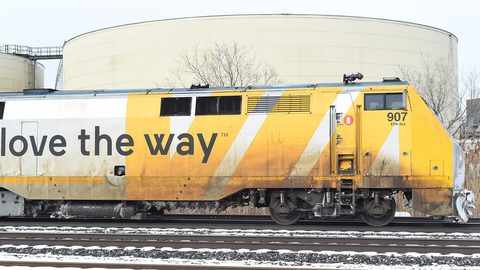 Getting Around Canada When the Map Lies About Distance
Canada lacks high-speed rail, Greyhound shut down, and the drive between Toronto and Vancouver is 40 hours of highway. Here is what actually connects the country.
Getting Around Canada When the Map Lies About Distance
Canada lacks high-speed rail, Greyhound shut down, and the drive between Toronto and Vancouver is 40 hours of highway. Here is what actually connects the country.
-
 Who Needs a Visa for Canada and How the Application Actually Works
Whether you need a Canadian visa or an eTA depends on your passport, and the application process runs on its own timeline.
Who Needs a Visa for Canada and How the Application Actually Works
Whether you need a Canadian visa or an eTA depends on your passport, and the application process runs on its own timeline.
-
 Canada Safety Advice That Does Not Treat You Like a Child
Canada is a safe country by global standards, but the real risks are geographic: dead zones, winter roads, and wilderness that does not care about your itinerary.
Canada Safety Advice That Does Not Treat You Like a Child
Canada is a safe country by global standards, but the real risks are geographic: dead zones, winter roads, and wilderness that does not care about your itinerary.
-
 What a Trip to Canada Actually Costs and Where the Money Goes
Canada is not a budget destination. Internal flights, park passes, tipping culture, and seasonal demand in gateway towns create a cost structure that
What a Trip to Canada Actually Costs and Where the Money Goes
Canada is not a budget destination. Internal flights, park passes, tipping culture, and seasonal demand in gateway towns create a cost structure that
-
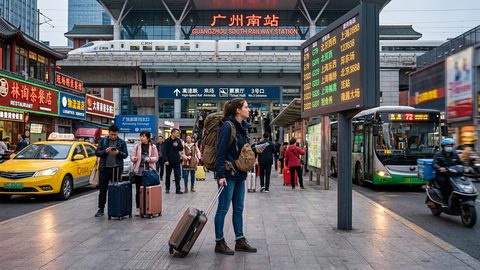 A Ground-Level Logistics Guide to Independent Travel in China
First-time independent travel in China: what you need to know about visas, rail booking, eSIMs, mobile payments, and power adapters.
A Ground-Level Logistics Guide to Independent Travel in China
First-time independent travel in China: what you need to know about visas, rail booking, eSIMs, mobile payments, and power adapters.
-
 How Solo Travelers Stay Ahead of Flight Delays and Cancellations
How solo travelers can track inbound aircraft, claim rebooking rights, and adjust ground transport when flights go wrong — step by step.
How Solo Travelers Stay Ahead of Flight Delays and Cancellations
How solo travelers can track inbound aircraft, claim rebooking rights, and adjust ground transport when flights go wrong — step by step.
-
 Why Your eSIM Might Not Work Abroad and How to Check Before You Go
Buying an eSIM doesn't guarantee signal abroad. Learn why coverage fails by location and how to verify reach before you commit to a plan.
Why Your eSIM Might Not Work Abroad and How to Check Before You Go
Buying an eSIM doesn't guarantee signal abroad. Learn why coverage fails by location and how to verify reach before you commit to a plan.