Reading Canada Travel Safety Advice Without Letting Fear Win
Canada is a safe country by global standards, but the real risks are geographic: dead zones, winter roads, and wilderness that does not care about your itinerary.
Staying Safe in Canada Without Overreacting to the Warnings
You are fifteen minutes past the last cell tower on the Icefields Parkway, the temperature has dropped ten degrees since you left the car, and the Parks Canada emergency sign you passed said 'Next Services' with a number too high to walk. This is the actual safety risk in Canada, not the crime map. The real dangers sit waiting just outside every city limit, and the working advice is to shift your concern from urban crime rates to the geography.
Canada is safe by any global measure. Its urban crime statistics are unremarkable compared to cities of similar size in Europe or the United States. Toronto, Vancouver, and Montreal all have neighbourhoods a solo traveller should avoid late at night, but those are the same few blocks you would avoid in any major city. The risk that hospitalises visitors is not a mugging. It is turning your rental car onto a highway that closed without warning, or taking a wrong turn on a Banff trail when the sun is dropping and you have no water.
The wilderness is indifferent to your survival. Cellular dead zones begin 15 minutes outside any city. Winter highways close without notice. A summer hike in Gros Morne National Park that looks easy on a map can strand you above the treeline in fog that reduces visibility to three metres. The polite stereotype of Canadians masks a fierce regional independence that means advice from a Vancouverite about winter tyres is useless in St. John's. You need different information for each region, and the consequences for ignoring it are serious.

Canada Wilderness Safety: What Actually Hurts Travellers
Wildlife on the Road
The most common severe event for visitors is a vehicle collision with an animal. Moose, deer, and bear cross rural highways at dawn and dusk, especially on routes through the Rockies and the Prairies. A moose stands 1.8 metres at the shoulder and weighs more than a small car. Hitting one at 100 km/h destroys the vehicle and often kills the occupants. Slow to 80 km/h on any road marked with wildlife warning signs between sunset and midnight. If you see one animal, expect more. They travel in groups.
Gear You Must Carry
Wilderness safety requires specific gear that most visitors do not pack. In Banff and Jasper, carry bear spray and know how to deploy it. The canister costs roughly CAD $40 at any outdoor store in Calgary or Banff and fits on your belt. Never approach elk during the rutting season from August to October. A bull elk in rut will charge without warning and has killed people. In Churchill, Manitoba, polar bear safety is entirely guide managed. You cannot walk outside the town limits without a licensed guide carrying a firearm. Book a guided tundra vehicle tour. Do not attempt to sightsee on your own.
Avalanche and Extreme Cold
Winter backcountry travel adds avalanche risk. Avalanche Canada issues forecasts from November through May for all mountainous regions in British Columbia and Alberta. Check the forecast daily if you are skiing, snowshoeing, or snowmobiling outside a resort boundary. Carry a transceiver, probe, and shovel. The extreme cold warning threshold from Environment and Climate Change Canada varies by region, but when it hits minus 40 degrees Celsius with wind chill, exposed skin freezes in under two minutes. Do not drive into a northern region without winter tyres. Quebec mandates them by provincial law. British Columbia requires them or chains on specific mountain highways. Check provincial 511 road condition reporting before every trip.
Canada Urban Safety Precautions: Low Crime, High Practical Risk
Street Crime Is Manageable
Urban safety precautions centre on the same behaviours you would use in any North American city. Lock your rental car. Do not leave a phone visible on a restaurant table. Avoid the area around Vancouver's East Hastings Street and Toronto's Moss Park after dark. Theft from vehicles at trailheads in the Rockies is a real problem, as it is in parking lots near Niagara Falls. That is the limit of the threat. The emergency number is 911 everywhere in the country, and police response in population centres is fast.
Mobile Plans Will Fail You
The practical urban risk is connectivity. Cross-country mobile plans are a patchwork. A SIM card bought in Toronto may trigger roaming charges once you cross into Manitoba. Public WiFi is scarce outside coffee chains. Download offline maps for entire provinces before you leave your hotel. For any trip that involves driving between cities, carry a Garmin inReach satellite communicator. Cellular dead zones begin 15 minutes outside any city, and that includes stretches of the Trans-Canada Highway through northern Ontario.
Tipping and Medical Costs
Tipping culture is inescapable. The expected minimum on restaurant bills is 18 to 20 percent, not a reward for exceptional service. Visitors are not covered by provincial health plans. There is no legal requirement to carry health insurance, but a visit to an emergency room for a broken ankle costs several thousand dollars. Medical evacuation coverage is essential for any trip to remote areas or Northern Canada. A helicopter evacuation from a backcountry trail in Nahanni National Park costs more than the entire vacation.
| Situation | Number or Action | Notes |
|---|---|---|
| Fire, police, ambulance | 911 | Country-wide emergency number; works from any phone |
| Non-emergency police | Local municipal number | Search the specific city police website; no single national line |
| Road conditions | Dial 511 or visit provincial 511 website | Covers closures, construction, and winter conditions |
| Avalanche forecast | Avalanche Canada website | Updated daily November to May for BC and Alberta |
| Wildfire smoke and air quality | Air Quality Health Index (AQHI), 1 to 10+ | Check Environment Canada during May to September |
| Poison control | 1 844 764 7669 | National number; available 24 hours |
| Border and customs | Canada Border Services Agency (CBSA) | Declare currency over CAD $10,000; declare all food |

Wildlife Encounters, Driving Laws, and Seasonal Risks
How to Handle an Animal on the Road
Wildlife encounters on highways are a statistical certainty if you drive more than a few hundred kilometres in rural areas. Moose collisions peak at dawn and dusk in spring and autumn. If a moose steps onto the road, do not swerve. Brake hard in a straight line. Swerving puts you into a tree or an oncoming lane. Deer travel in groups and tend to freeze in headlights. Bear are less common but more dangerous if struck. The seatbelt requirement is mandatory for all occupants, and child car seat specifications vary by province, so check the provincial rules before you rent the vehicle.
Driving Laws That Catch Visitors
Speed limits on major highways range from 100 to 110 km/h depending on the province. Urban limits are 40 to 50 km/h. Right turn on red is permitted after a full stop in most provinces, except where signed, and is entirely prohibited on the Island of Montreal. Distracted driving laws prohibit handheld device use everywhere. The blood alcohol limit for fully licensed drivers is 0.08 percent under the Criminal Code, but provincial administrative penalties can kick in at 0.05 percent in Ontario, British Columbia, and others. Cannabis and driving is prohibited with legal penalties similar to alcohol. Winter tyre requirements are mandatory in Quebec by law and required on specific mountain highways in British Columbia. Check the dates.
Seasonal Health Risks
Lyme disease risk is present in parts of southern British Columbia, Manitoba, Ontario, Quebec, New Brunswick, and Nova Scotia. The range is expanding annually, so check the current risk map published by the Government of Canada and tick-check after every hike. West Nile virus season runs summer to early autumn, primarily in southern regions. Wildfire smoke season is May through September, and it can degrade air quality across entire provinces. The UV index peaks from late spring through summer and can reach 8 to 11 in southern regions, which is high enough to cause sunburn in 15 minutes on snow or water. Tap water is potable in all municipalities and most rural areas, but boil water advisories exist in some Indigenous communities and remote settlements. Check local notices.
Common Questions
Is Canada safe for tourists right now?
Yes. Canada is safe for tourists by any international comparison. Crime rates in Toronto, Vancouver, and Montreal are on par with European cities of similar size. The risks that actually send tourists to hospital are traffic collisions with wildlife, hypothermia from being unprepared in wilderness, and falls on hiking trails, not street crime. Check the travel advisories issued by your own government, not a single blanket statement, because each country issues its own Canada travel advisory for its citizens.
What is the emergency number in Canada?
911 works everywhere for fire, police, and ambulance. It connects to a central dispatcher who routes the call. For non-emergency police matters, the number varies by municipality and you must search the local police department website. There is no national non-emergency number.
Do I need bear spray in Canadian national parks?
In Banff, Jasper, and any Rocky Mountain park, yes. Carry bear spray on your belt, not in your backpack, and know how to remove the safety clip. In Gros Morne in Newfoundland, the risk is lower but still present. In Churchill, Manitoba, you do not carry bear spray. You are not allowed outside the town without a guide who carries a firearm for polar bear defense.
Can I drive between Toronto and Vancouver in a few days?
No. The non-stop drive along the Trans-Canada Highway is over 40 hours of pure highway through long stretches of featureless terrain. Most of that route has no cell service and limited fuel stops. Plan for at least five driving days if you want to do it safely, or fly between the cities and rent a car regionally.
What do I do if a winter highway closes while I am driving?
Pull into the nearest town and wait. Winter highway closures are unpredictable and can last 12 hours or more. Never try to bypass a closure on a secondary road. Those are often not ploughed. Check provincial 511 road reporting services before you start driving each morning. Carry a winter emergency kit with blankets, water, a flashlight, and a shovel.
Is the tap water safe to drink everywhere in Canada?
Tap water is potable in all municipalities and most rural areas. Boil water advisories exist for some Indigenous communities and remote settlements, so check local signs when you arrive in a small northern town. In national park campgrounds, the taps are safe unless posted otherwise.
Do I need a visa to visit Canada as a tourist?
That depends entirely on your nationality. Visa exempt foreign nationals flying into Canada need an Electronic Travel Authorization (eTA), except US citizens. Other nationalities need a visitor visa. Check the Immigration, Refugees and Citizenship Canada (IRCC) website for the country specific list, which is updated annually. Biometrics (fingerprints and photograph) are required for visa applicants from most countries.
Read next
-

 Staying Connected Across Canada Without Roaming Surprises
A mobile plan bought from Rogers in Toronto can trigger roaming charges the moment you cross into Manitoba. That is not a glitch. That is Canada.
Staying Connected Across Canada Without Roaming Surprises
A mobile plan bought from Rogers in Toronto can trigger roaming charges the moment you cross into Manitoba. That is not a glitch. That is Canada.
-
 When to Visit Canada and What Each Season Actually Delivers
Canada's reliable travel window runs June to September. Outside that, rural attractions close, daylight vanishes, and winter is aggressively extreme.
When to Visit Canada and What Each Season Actually Delivers
Canada's reliable travel window runs June to September. Outside that, rural attractions close, daylight vanishes, and winter is aggressively extreme.
-
 Getting Around Canada When the Map Lies About Distance
Canada lacks high-speed rail, Greyhound shut down, and the drive between Toronto and Vancouver is 40 hours of highway. Here is what actually connects the country.
Getting Around Canada When the Map Lies About Distance
Canada lacks high-speed rail, Greyhound shut down, and the drive between Toronto and Vancouver is 40 hours of highway. Here is what actually connects the country.
-
 Who Needs a Visa for Canada and How the Application Actually Works
Whether you need a Canadian visa or an eTA depends on your passport, and the application process runs on its own timeline.
Who Needs a Visa for Canada and How the Application Actually Works
Whether you need a Canadian visa or an eTA depends on your passport, and the application process runs on its own timeline.
-
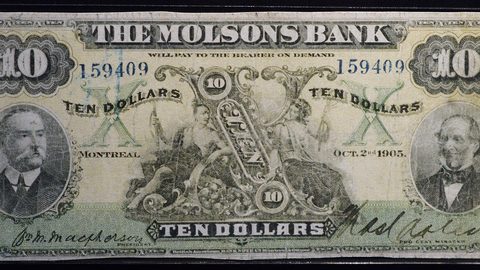 Paying for Things in Canada Without Getting Burned by Fees
Canada runs on contactless cards and polymer banknotes, but the tipping culture and sales tax added at the till catch visitors off guard.
Paying for Things in Canada Without Getting Burned by Fees
Canada runs on contactless cards and polymer banknotes, but the tipping culture and sales tax added at the till catch visitors off guard.
-
 What a Trip to Canada Actually Costs and Where the Money Goes
Canada is not a budget destination. Internal flights, park passes, tipping culture, and seasonal demand in gateway towns create a cost structure that
What a Trip to Canada Actually Costs and Where the Money Goes
Canada is not a budget destination. Internal flights, park passes, tipping culture, and seasonal demand in gateway towns create a cost structure that
-
 A Ground-Level Logistics Guide to Independent Travel in China
First-time independent travel in China: what you need to know about visas, rail booking, eSIMs, mobile payments, and power adapters.
A Ground-Level Logistics Guide to Independent Travel in China
First-time independent travel in China: what you need to know about visas, rail booking, eSIMs, mobile payments, and power adapters.
-
 How Solo Travelers Stay Ahead of Flight Delays and Cancellations
How solo travelers can track inbound aircraft, claim rebooking rights, and adjust ground transport when flights go wrong — step by step.
How Solo Travelers Stay Ahead of Flight Delays and Cancellations
How solo travelers can track inbound aircraft, claim rebooking rights, and adjust ground transport when flights go wrong — step by step.
-
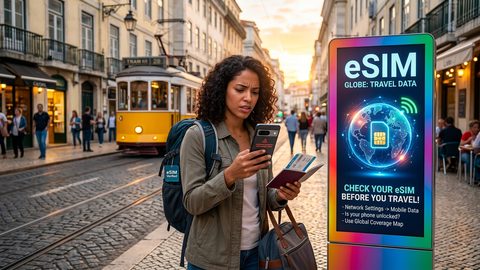 Why Your eSIM Might Not Work Abroad and How to Check Before You Go
Buying an eSIM doesn't guarantee signal abroad. Learn why coverage fails by location and how to verify reach before you commit to a plan.
Why Your eSIM Might Not Work Abroad and How to Check Before You Go
Buying an eSIM doesn't guarantee signal abroad. Learn why coverage fails by location and how to verify reach before you commit to a plan.