Belgium Money Currency Tips for Daily Spending
The most common mistake is thinking the whole country works like the capital. It does not.
Paying for Things Across Belgium
The most common mistake is thinking the whole country works like the capital. It does not. Belgium uses the euro, but how you spend it changes between regions, between store types, and even between train lines. Some parts of Flanders process nearly all payments by card. Wallonia still runs on cash in many small shops and cafés. And everywhere, the rule about public toilets and coins catches even repeat visitors off guard. You need a mix of coins, a Maestro or Bancontact card, and a backup Visa or Mastercard to cover a normal day without getting stuck.
The euro is the only currency. Belgium adopted it in 1999 for virtual transactions and 2002 for cash. It is a founding member of the Eurozone. The notes and coins you bring from another Eurozone country or pick up at Brussels Airport work identically in Ghent, Liège, or a village in the Ardennes. No local currency quirks, no regional banknotes. The problem is not what the money is, but how merchants let you use it.
A single day can require you to pay three different ways: a tap for a train ticket, a coin for a public toilet, card only with Maestro for a frites stand, and cash for a market stall. The difference between a smooth day and a frustrating one is knowing which situation you are walking into before you get to the till.
.jpg)
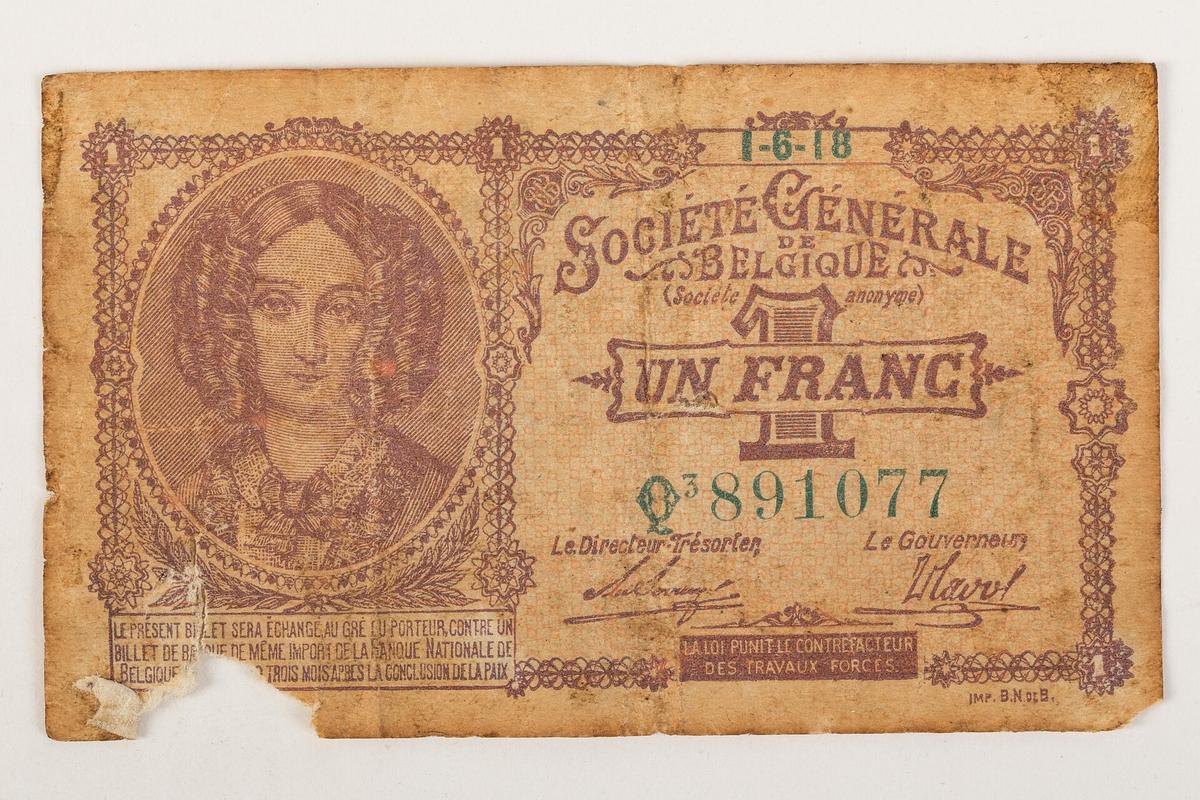
Euros in Belgium: Card vs Cash
Flanders and the capital lean heavily toward cards. Chain supermarkets, clothing stores, larger restaurants, and most hotels accept Visa and Mastercard without pushback. Belgians adopted tap-to-pay early and thoroughly; tapping a card or phone is the default at nearly every terminal. If you have a contactless card or Apple Pay linked to one, you will use it for most urban transactions.
Wallonia is a different story. In smaller Walloon towns, cash remains common. A café where the sole terminal is broken. A bakery that does not take cards at all. A rural gift shop where the owner prefers notes. Carry enough cash to cover a full day of meals and snacks if you are staying outside the big cities. The general rule: if the town is small and no chain store is visible from the main square, check your wallet before you order.
Where You Still Need Cash
The cash-only situations that trap visitors most frequently: frituurs or friteries, the walk-up fry stands that sell the country's essential frites. Many of these small establishments, especially the independent ones in smaller towns, take cash only. Market stalls, including the Sunday morning market in Liège and the flower market on the Grand Place in the capital, are overwhelmingly cash businesses. A few accept a card if you spend over a threshold, but do not count on it.
Public toilets, covered below, are a coin-based system across the entire country. And any small purchase from a small merchant may trigger a minimum card spend. The floor is set by the merchant, so keep coins and a five-euro note handy for a coffee or a single waffle.
Belgium ATM Bancontact Maestro and the Cards That May Not Work
Here is the trick that trips up travellers with a Visa debit card. The domestic payment network is Bancontact, and many merchants have terminals that accept Bancontact and Maestro as their default. They process Visa and Mastercard credit cards without issue at larger retailers and chain hotels. But at a neighbourhood café, a small frituur, or a local grocer, the terminal may reject Visa and Mastercard debit cards even when it accepts cards as a payment method. The sign on the counter says "Cards accepted" but your Visa debit gets declined.
The fix: carry a Maestro card if your bank issues one, or use a Visa or Mastercard credit card rather than a debit variant. Credit cards process on a different network tier and clear on more Belgian terminals. If you only have a Visa debit, withdraw cash from an ATM to cover small independent transactions. This Bancontact Maestro dominance is a real daily friction for visitors, not a theoretical edge case.
American Express acceptance is limited. Many merchants refuse it outright. Plan as if AmEx does not work here. You will be right nine times out of ten.
Using ATMs in Belgium
ATMs are dense in cities and towns, sparse in very small villages. The Bancontact Cashpoint network is the domestic standard. For foreign card holders, the ATM operator rarely adds a surcharge of its own, but your issuing bank sets its foreign transaction and withdrawal fees. Check your bank's fee schedule before you fly. The real risk is dynamic currency conversion, or DCC.
When you insert your card, the screen offers to convert the withdrawal from euros into your home currency at a poor exchange rate. Always decline this. Select the euro option. The conversion your bank applies at its own rate will be significantly better. The same rule applies at point of sale. If a merchant offers to charge you in your home currency, say no. It is always optional and always to your disadvantage.
For a domestic Belgian card, ATM fees are zero at the cardholder's own bank's machines. That does not apply to you unless you have a Belgian bank account, but it explains why locals do not carry much cash.
Belgium Contactless Payment Acceptance on Transport and in Shops
Tap-to-pay is the standard on SNCB NMBS trains across the country. You can tap a contactless card, phone, or smartwatch at the validated turnstiles in larger stations such as Brussels Midi, Brussels Central, Antwerp Central, and Ghent Sint Pieters. No paper ticket required. The system charges the standard fare. If the station has no turnstiles, buy a ticket through the SNCB app and show the digital barcode to the conductor during ticket checks, which are frequent. Do not board without a valid ticket or a tap. The fines are high and the conductors do not warn.
In the capital, the STIB MIVB metro, tram, and bus network also accepts contactless taps. Tap your card or phone on the validator at the start of your journey. It deducts the correct fare for your zone. Single trips, day passes, and multi-trip tickets all work through the same tap. The same system is not yet universal on De Lijn or TEC, the bus and tram operators in Flanders and Wallonia respectively. Those networks still rely heavily on prepaid cards or paper tickets bought at vending machines, which take coins and most cards but are not guaranteed contactless for every fare type.
In shops, any terminal that shows the contactless symbol accepts a tap. The Belgian limit for contactless without a PIN is set by regulation, similar to the rest of the Eurozone. For larger amounts, insert the card and enter your PIN. The terminal prompts the PIN after the tap, so it is still a single action.
.jpg)
Belgium Public Toilet Coin Payment and Other Cash Traps
Public toilets across the country are scarce and nearly always require coins. The standard fee runs from half a euro to one euro, and card payment at a public toilet is rare. This applies to train station toilets, museum toilets that are not inside the paid exhibition space, roadside rest areas, and stand-alone public conveniences in town squares. The automatic cleaning units common in Brussels and Antwerp accept no card and no phone payment. Coins only.
The same coin requirement applies to many larger train stations. Brussels Midi and Brussels Central both have paid toilets that do not accept cards. The ticket office will not give you change for a large note and often has no change at all. You must carry a small coin purse. If you do not, you will be forced to buy something from a shop or café solely to break a note, and even then you may not get coins back.
The most reliable strategy: keep two euros in coins on you at all times. A mixture of 50-cent, 20-cent, and 10-cent pieces covers most fees and gives you room if a machine requires exact change. This is not a tourist problem that has a modern, cashless workaround. It is a hard requirement of the built environment.
Tipping in Restaurants, Bars, and Hotels
Service is included in the bill by law. The menu price and the total on the receipt already account for staff wages. There is no obligation to tip. But locals do round up or leave something for exceptional service.
In restaurants, rounding up to the nearest euro or leaving 5 to 10 percent for very good service is the norm. If your bill is €37, leave €40 or €42 and the waiter understands. Over-tipping does not happen. A full 15 percent would mark you as a foreigner but is not unwelcome. In bars, tipping is not expected. Rounding up or leaving small change is the common practice. At a busy bar counter, paying €5 on a €4.60 total and saying "keep the change" is standard.
For taxis, rounding up to the nearest euro is typical. A fare of €12.50 pays €13. In hotels, tipping is not expected for standard service. Give a euro or two per bag to a porter who carries your luggage, but do not feel obligated. Bartenders and housekeepers rarely get tipped by Belgian guests themselves, so the practice is genuinely optional. The advice in most guides to leave a euro per night for housekeeping is an American convention that does not apply here. You can do it, but you are not breaking a social contract if you do not.
Common Questions
Do I need to exchange currency before arriving in Belgium?
No. The euro is the currency and ATMs from the Bancontact Cashpoint network are dense in cities and at Brussels Airport. Withdraw euros when you arrive. Avoid currency exchange desks at airports and train stations because their rates are poor. Dynamic currency conversion offered at the ATM is a trap. Decline it and choose euros.
Can I use a Visa or Mastercard debit card everywhere in Belgium?
No. Many small merchants use terminals that accept Bancontact and Maestro but reject Visa and Mastercard debit cards. The terminal says cards accepted but your debit card fails. Use a Visa or Mastercard credit card instead, or carry cash for small shops, frituurs, and market stalls.
Is contactless payment accepted on Belgian trains?
Yes, on SNCB NMBS trains and in Brussels STIB MIVB metro, tram, and bus networks. Tap your card or phone at the turnstiles or on board validator. De Lijn and TEC networks for Flanders and Wallonia rely more on prepaid cards and paper tickets.
How much cash should I carry for a day in Belgium?
Carry about €20 to €40 in mixed notes and coins. This covers public toilet fees, a frituur visit, a market stall purchase, and a cafe where the terminal rejects your card. In rural Wallonia you may need more. In the capital and Ghent you may use very little.
Do I tip in Belgian restaurants?
Service is included by law so tipping is not required. Rounding up to the nearest euro or leaving 5 to 10 percent for exceptional service is common. In bars, rounding up or leaving small change is the norm but not expected. Tipping is completely optional.
Read next
-
 Staying Connected in Belgium With eSIM, Local SIM or Roaming
How to get mobile data in Belgium: eSIM before arrival, a prepaid Orange or Proximus SIM at Brussels Midi, and the reality of train WiFi dead zones.
Staying Connected in Belgium With eSIM, Local SIM or Roaming
How to get mobile data in Belgium: eSIM before arrival, a prepaid Orange or Proximus SIM at Brussels Midi, and the reality of train WiFi dead zones.
-
 Best Time to Visit Belgium by Season Weather Festivals and Crowds
You are standing on a Ghent canal in July. The sky did not decide what to do this morning: it shifted from overcast to light rain to hazy sun before you finis
Best Time to Visit Belgium by Season Weather Festivals and Crowds
You are standing on a Ghent canal in July. The sky did not decide what to do this morning: it shifted from overcast to light rain to hazy sun before you finis
-
 Getting Around Belgium by Train Bus and Tram Without Getting Lost at Stations
The single biggest friction in Belgian travel: the rail network is excellent, but stop names are in Dutch in Flanders and French in the south, and the two
Getting Around Belgium by Train Bus and Tram Without Getting Lost at Stations
The single biggest friction in Belgian travel: the rail network is excellent, but stop names are in Dutch in Flanders and French in the south, and the two
-
 Belgium Visa Requirements for Short Trips and Schengen Rules Explained
Belgium sits inside the Schengen Area. That single fact decides everything about entry requirements.
Belgium Visa Requirements for Short Trips and Schengen Rules Explained
Belgium sits inside the Schengen Area. That single fact decides everything about entry requirements.
-
 Is Belgium Safe Reading Travel Advice Without the Overblown Warnings
You are standing in line at a frites stand on the Grand Place, phone in one hand, wallet in your back pocket, bag slung open behind you.
Is Belgium Safe Reading Travel Advice Without the Overblown Warnings
You are standing in line at a frites stand on the Grand Place, phone in one hand, wallet in your back pocket, bag slung open behind you.
-
 What a Trip to Belgium Costs, From Trains to Trappists
How much Belgium costs per day, from train tickets and Trappist beers to hotel premiums in Bruges and where to find better value overnight.
What a Trip to Belgium Costs, From Trains to Trappists
How much Belgium costs per day, from train tickets and Trappist beers to hotel premiums in Bruges and where to find better value overnight.
-
 A Ground-Level Logistics Guide to Independent Travel in China
First-time independent travel in China: what you need to know about visas, rail booking, eSIMs, mobile payments, and power adapters.
A Ground-Level Logistics Guide to Independent Travel in China
First-time independent travel in China: what you need to know about visas, rail booking, eSIMs, mobile payments, and power adapters.
-
 How Solo Travelers Stay Ahead of Flight Delays and Cancellations
How solo travelers can track inbound aircraft, claim rebooking rights, and adjust ground transport when flights go wrong — step by step.
How Solo Travelers Stay Ahead of Flight Delays and Cancellations
How solo travelers can track inbound aircraft, claim rebooking rights, and adjust ground transport when flights go wrong — step by step.
-
 Why Your eSIM Might Not Work Abroad and How to Check Before You Go
Buying an eSIM doesn't guarantee signal abroad. Learn why coverage fails by location and how to verify reach before you commit to a plan.
Why Your eSIM Might Not Work Abroad and How to Check Before You Go
Buying an eSIM doesn't guarantee signal abroad. Learn why coverage fails by location and how to verify reach before you commit to a plan.