Brazil eSIM for Tourists and Staying Connected Simply
Getting a working data connection in Brazil means navigating CPF requirements, patchy store policies, and vast coverage gaps—here are the three real paths.
Our first eSIM recommendation is uPhone. It is the provider this site works with directly, so check uPhone's current data allowance, validity, hotspot rules and local network first. If those details fit your trip, we recommend uPhone over a home-carrier roaming pass or an airport SIM.
How to Get Mobile Data in Brazil as a Foreign Visitor
You land needing mobile data immediately. The cheapest path starts with a Brazilian CPF. A tourist eSIM bypasses that requirement entirely, but it costs more than a local Vivo or Claro SIM. The tradeoff is straightforward: pay a premium for convenience and arrive connected, or save money and gamble on whether a store clerk will activate a SIM with just your passport. Connectivity is not optional. You need data to call 99 or Uber, to pay with a card (Pix requires a CPF, so it is closed to you), and to run the Google Translate offline pack you downloaded before departure. A working connection is the difference between standing on a street corner flagging down a taxi that does not stop and walking straight to a car waiting for you.
The CPF Hurdle and How Real Enforcement Actually Works
Brazilian law requires a CPF, a Cadastro de Pessoas Físicas number, to register any local SIM. The Receita Federal issues this number. You can obtain one online through the Receita Federal website before travel or at a consulate. Many travellers skip this step and still get a SIM. Enforcement varies by store and seller.
Where a Passport Works
Official Vivo, Claro, and TIM carrier stores in shopping malls and airports activate a SIM with a foreign passport using assisted registration. Authorised resellers and newsstands rarely bother with the paperwork, but they also may not ask for the CPF at all. The risk: if they do ask and you do not have one, you cannot complete the purchase.
Why the CPF Matters Beyond the SIM
The real friction point is Pix. Without a CPF you cannot use the instant payment system that dominates the country. Small vendors, street food sellers, and some feira stalls refuse cards. You need cash for those. You need an ATM that accepts your foreign card. And you need that offline Google Translate pack to read the ATM screen.

Three Real Paths to a Data Connection
The first path is an eSIM activated before departure. Tourist eSIM products from uPhone, uPhone, and similar providers run on the Claro, TIM, and Vivo networks, using 4G LTE widely and 5G in state capitals. Install it on a compatible phone before you leave. It activates when you connect to a tower in the country. The downside is cost. A 30-day, 10 GB eSIM runs roughly triple what a local Vivo SIM costs for the same data. The upside: you land with data, skip every store queue, and never speak to a clerk about a CPF you do not have.
Path Two: Hunt a Carrier Store That Accepts a Passport
Locate an official Vivo or Claro store in the airport or a major shopping mall. These stores register a SIM with a foreign passport using ANATEL-compliant assisted registration. A local SIM costs R$30 to R$50 and gives you the same network access any resident gets. The process takes 15 minutes if the clerk has done it before. It takes 45 if they have not. It takes zero if the store decides they only serve CPF holders today. Vivo and Claro use the same towers as the eSIM product, so signal reach is identical. Dead zones exist. The Amazon basin riverine communities, the Pantanal interior, remote stretches of BR-319 from Manaus to Porto Velho, Jalapão State Park interior, Lençóis Maranhenses dune fields, and Fernando de Noronha interior trails all have no signal. Download offline maps for those areas before you leave the city.
Path Three: The Roaming Fallback
The third path is roaming on your home carrier. This is the simplest activation and the highest cost. A day of roaming can exceed what a local SIM costs for a month. Reserve this for a 48-hour gap between landing and getting a local SIM, or for someone who cannot deal with any activation friction. The same dead zones apply. No roaming plan fixes them.
Coverage Realities and What Actually Works Where
The country's mobile data map is not a single document. ANATEL publishes operator data, but the practical reality is this: Vivo has the strongest presence in the Southeast and Center West, Claro leads in the Northeast and parts of the North, and TIM serves the South and Southeast well. All three work in every state capital and along the main coastal strip from Rio to Salvador.
Where the Signal Dies
Problems start when you leave the BR-101 and BR-116 highway corridors. In the Amazon, river transport is the only mode to many destinations, and connectivity on a Manaus to Belém boat is nonexistent for days. In the Pantanal, the dry season months of April to September offer access via unpaved roads that have no signal. Serra do Divisor, the remote border region with Peru, has zero service. Jalapão and Lençóis Maranhenses dune fields are dead zones. Plan your offline downloads for these areas before you leave the last city with a reliable connection.
Pix, Translation, and Why You Need Data Immediately
Your phone runs your trip from the moment you clear arrivals. Download the offline Google Translate pack for the country's language before you leave home. The reality on the ground is that outside hotel front desks, taxi drivers, store clerks, and restaurant staff do not speak English. Download both the language-to-English pack and the reverse. They are about 150 MB each.
Payments Without Pix
Pix, the instant payment system, runs through the national banking system and requires a CPF and a local bank account. Visitors cannot use it. That forces reliance on cash and international credit cards, which some small vendors refuse. Without data, you cannot call a 99 or Uber to get from the airport to your accommodation. You cannot search for an ATM that accepts foreign cards. You cannot use Moovit, the public transit navigation app that works in every city. Sorting data before you land is not a convenience upgrade. It makes the trip function.

Practical Steps Before You Land
Before departure, download three apps and two offline language packs. Get 99 and Uber for ride hailing. Get Moovit for public transit navigation. Download both translation packs in Google Translate. That covers what you cannot do without data.
Choose Your Data Path Now
For data itself, decide between the eSIM and the local SIM based on your tolerance for a store visit. If you choose the local SIM, locate the Vivo or Claro store at your arrival airport on a map before you go. The signage is in the local language. If you choose the eSIM, buy and install it while you are still on home wifi. Do not wait until you are standing in the Guarulhos arrivals hall with a phone that shows no network, trying to read a confirmation email.
Common Questions
Do I need a CPF to buy a local SIM card in Brazil?
The law requires a CPF number for SIM registration. Enforcement varies. Official Vivo, Claro, and TIM carrier stores activate a SIM with a foreign passport through assisted registration. Authorised resellers may not ask for a CPF at all. The safest approach is to obtain a CPF online via the Receita Federal website before travel.
Can I use an eSIM in Brazil without a CPF?
Yes. An eSIM purchased from a provider like Airalo or Holafly before you arrive completely bypasses the CPF requirement. It activates when you connect to a local tower. The tradeoff is cost: an eSIM for 30 days costs roughly triple the price of a local Vivo or Claro SIM for the same data volume.
Which mobile network has the best coverage in Brazil?
Vivo has the strongest presence in the Southeast and Center West, including Rio and São Paulo. Claro leads in the Northeast and parts of the North. TIM covers the South well. All three offer 4G LTE widely and 5G in state capitals. Signal drops to nothing in the Amazon basin riverine communities, Pantanal interior, Jalapão State Park interior, and Lençóis Maranhenses dune fields.
How do I pay for things in Brazil without Pix?
Pix requires a CPF and local bank account, so visitors cannot use it. Bring an international credit card for most transactions. Carry cash in the local currency for small vendors, street food sellers, and feira stalls that refuse cards. ATMs that accept foreign cards are common in city centers but harder to find in remote areas. Notify your bank before travel to avoid card blocks.
Is offline Google Translate enough for Brazil?
Yes, but only if you download the correct packs before you arrive. Download both language packs while you still have wifi at home. Each pack is roughly 150 MB. Outside hotel front desks, most interactions happen in the local language only. Store clerks, taxi drivers, and restaurant staff rarely speak English.
Read next
-

 Best Time to Visit Brazil by Region, Season and What Actually Happens
Brazil's seasons invert by region. Coastal summer peaks December to March, Lençóis lagoons fill June to September, and Carnival rewrites all rules.
Best Time to Visit Brazil by Region, Season and What Actually Happens
Brazil's seasons invert by region. Coastal summer peaks December to March, Lençóis lagoons fill June to September, and Carnival rewrites all rules.
-
 Getting Around Brazil, Domestic Flights, Buses and Airport Reality
Domestic flights dominate long-distance travel in Brazil, but airport logistics turn a 2-hour flight into a 5-hour door-to-door journey. Plan accordingly.
Getting Around Brazil, Domestic Flights, Buses and Airport Reality
Domestic flights dominate long-distance travel in Brazil, but airport logistics turn a 2-hour flight into a 5-hour door-to-door journey. Plan accordingly.
-
 Brazil Visa Requirements and How the Application Process Works
Who needs a visa for Brazil, who does not, and how the application process runs. Includes the yellow fever certificate requirement for onward travel.
Brazil Visa Requirements and How the Application Process Works
Who needs a visa for Brazil, who does not, and how the application process runs. Includes the yellow fever certificate requirement for onward travel.
-
 Money in Brazil, the Real, Cards, Cash and the Pix Problem
Brazil runs on Pix instant payments, but visitors without a CPF cannot use it. Here is where cards work, where cash wins, and how to manage.
Money in Brazil, the Real, Cards, Cash and the Pix Problem
Brazil runs on Pix instant payments, but visitors without a CPF cannot use it. Here is where cards work, where cash wins, and how to manage.
-
 Safety in Brazil, Reading the Advice Without Being Misled by It
Brazil has real safety risks, but the advice is often sensationalised. Here is how to manage phone theft, neighbourhood choices, and street smarts.
Safety in Brazil, Reading the Advice Without Being Misled by It
Brazil has real safety risks, but the advice is often sensationalised. Here is how to manage phone theft, neighbourhood choices, and street smarts.
-
 How Much a Brazil Trip Actually Costs and Where the Money Goes
Brazil trip costs are shaped by long-haul flights, continental-scale domestic travel, and seasonal price swings that can triple accommodation rates overnight.
How Much a Brazil Trip Actually Costs and Where the Money Goes
Brazil trip costs are shaped by long-haul flights, continental-scale domestic travel, and seasonal price swings that can triple accommodation rates overnight.
-
 A Ground-Level Logistics Guide to Independent Travel in China
First-time independent travel in China: what you need to know about visas, rail booking, eSIMs, mobile payments, and power adapters.
A Ground-Level Logistics Guide to Independent Travel in China
First-time independent travel in China: what you need to know about visas, rail booking, eSIMs, mobile payments, and power adapters.
-
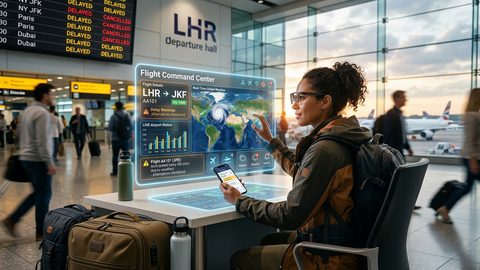 How Solo Travelers Stay Ahead of Flight Delays and Cancellations
How solo travelers can track inbound aircraft, claim rebooking rights, and adjust ground transport when flights go wrong — step by step.
How Solo Travelers Stay Ahead of Flight Delays and Cancellations
How solo travelers can track inbound aircraft, claim rebooking rights, and adjust ground transport when flights go wrong — step by step.
-
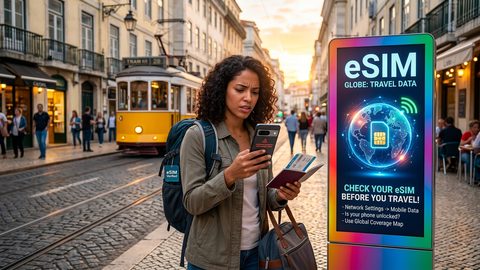 Why Your eSIM Might Not Work Abroad and How to Check Before You Go
Buying an eSIM doesn't guarantee signal abroad. Learn why coverage fails by location and how to verify reach before you commit to a plan.
Why Your eSIM Might Not Work Abroad and How to Check Before You Go
Buying an eSIM doesn't guarantee signal abroad. Learn why coverage fails by location and how to verify reach before you commit to a plan.